Category: Uncategorized

  • A Stunning Escalation: U.S. and Israeli Strikes on Iran and the Death of Ayatollah Khamenei

    On February 28, 2026, live coverage from PBS News captured a dramatic and consequential moment: coordinated strikes by the United States and Israel on Iran that, according to the outlet’s live updates, resulted in the death of Iran’s supreme leader, Ayatollah Ali Khamenei.

    The PBS report framed the attacks as opening “a stunning new chapter” in U.S. intervention in Iran. The piece also noted a striking pattern: these strikes marked the second time in eight months that the Trump administration had launched an attack on Iran amid negotiations over the country’s nuclear program.

    Beyond the immediate shock of the leader’s death and the scale of the operation, the PBS live updates underscored how the action signaled a clear shift in U.S. policy and raised urgent questions about what comes next for regional stability, diplomatic efforts, and the nuclear talks that were already underway.

    The live-report format of PBS’s coverage emphasized the unfolding nature of the story — a reminder that in moments like this, facts are still emerging even as the implications ripple across capitals and communities. For now, the confirmed elements in the report are simple but seismic: a major U.S.-Israeli operation, the reported killing of Iran’s supreme leader, and the recognition that this intervention represents a consequential new phase in relations between Tehran and Washington.


  • After a Record Crypto Crash, Markets Rush for Protection

    After a Record Crypto Crash, Markets Rush for Protection

    A Reuters report describes how the options market reacted after what it calls the largest crypto liquidation in history. In the wake of that sharp selloff, investors in options have been repositioning quickly—less focused on making bold directional bets and more focused on bracing for what could come next.

    At the center of the story is a scramble for downside protection. According to the article, traders have been aggressively putting on trades designed to hedge against another potential freefall in major cryptocurrencies, including bitcoin and ether. The takeaway is not subtle: after a shock of that size, the market’s immediate instinct is to buy insurance.

    What makes this moment notable is the timing and intensity. The report frames the move as a direct response to the crash, with options positioning reflecting expectations for continued volatility and the possibility of further declines. In other words, the liquidation event didn’t close the book on risk—it appears to have reset the market’s near-term outlook around the idea that turbulence could persist.

    The broader narrative is a familiar one for crypto markets, but the scale described by Reuters underscores why hedging demand can surge so suddenly. When forced selling ripples through the system, options can become the tool of choice for investors trying to define their risk in advance—especially when confidence is shaky and price swings feel less like exceptions and more like the default setting.

    For anyone watching crypto from the sidelines, the message from this episode is clear: sentiment can pivot fast, and the derivatives market often shows that shift first. As Reuters portrays it, the post-crash environment is one where market participants are paying up for protection—because the fear isn’t just what already happened, but what might happen again.

  • I can’t write the blog post yet—only search snippets were provided

    I can’t write the blog post yet—only search snippets were provided

    The content you shared is a list of web search results (titles/snippets/links), not the text of a single full news article. Your instructions require me to base the blog post on one specific article and to use only information from that article.

    Please paste the full text of one article from the list (or provide the article’s body/cleaned text), and tell me which link you want me to use. Once I have that single article’s content, I’ll write the blog post in the required JSON format.

  • Why Claude Code Is Trending Beyond Developers

    Why Claude Code Is Trending Beyond Developers

    Something about Claude Code has started showing up everywhere—LinkedIn feeds, product podcasts, Slack communities—and the chatter isn’t limited to engineers. Product managers, writers, researchers, consultants and other non-technical roles are talking about it too.

    What stands out in the coverage is how approachable the tool feels. Instead of wrestling with detailed setup or repeating instructions, you can simply start a new chat and type a task—”Do a competitive analysis for competitor A,” for example—and the system takes it from there. That ability to hand off procedural context in a single prompt appears to be a big part of why people outside of engineering are taking notice.

    The article frames Claude Code as more than a developer-only toy: it’s being discussed under topics like Claude Code Recipes and generative AI, and positioned as a practical assistant for real product and research workflows. The buzz across professional communities suggests it’s filling a gap for people who need powerful help with structured work but don’t want to become prompt-engineering experts.

    If the early signals are any indication, Claude Code’s mix of accessibility and task-oriented workflows is why it’s captured attention across disciplines—not just within the engineering team. For people who spend their days turning messy inputs into clear outputs, that kind of friction reduction is worth paying attention to.

  • Singapore’s 2026 Budget: Clear Signals for AI Adoption with Support Measures and Tax Breaks

    Singapore’s 2026 Budget: Clear Signals for AI Adoption with Support Measures and Tax Breaks

    Singapore’s 2026 Budget puts artificial intelligence squarely on the map for businesses, unveiling targeted support measures and tax incentives aimed at accelerating AI adoption. The move is designed to help firms that are using AI to transform how they operate, encouraging investment in tools and capabilities that can boost productivity and competitiveness.

    One concrete change announced in the Budget is an expansion of eligible expenditures to explicitly include AI-related spending. For 2027 and 2028, AI expenditures will be capped at 50,000 Singapore dollars per year (about $39,654), allowing companies to claim support for a defined portion of their AI investments.

    The Budget’s focus on backing firms through both direct support measures and tax breaks signals a pragmatic approach: not just talking about AI as a strategic priority, but lowering the financial barriers for companies to experiment, deploy and scale AI solutions. For businesses weighing whether to invest in AI, the new rules provide a clearer, more predictable incentive to move forward.

    While details on the full suite of measures and how firms can access them will matter, the central message of the 2026 Budget is straightforward — Singapore is leaning into AI and is prepared to back companies making the transition. That encouragement could shape the next wave of digital transformation across local industries as firms respond to the opportunity and aim to modernize their operations.

  • Speaking for the 5 ‘U’s: A Call for Dignity and Fairness in Singapore Budget 2026

    Speaking for the 5 ‘U’s: A Call for Dignity and Fairness in Singapore Budget 2026

    “Work harder. Upgrade more. Adapt faster… yet many workers still ask: ‘Will I be okay tomorrow?’”

    That question is at the heart of a recent message from Patrick Tay Teck Guan, who took to Parliament during Budget 2026 and later shared his thoughts on LinkedIn. He urged that this year’s Budget must speak to more than macroeconomic growth — it must protect dignity, reward effort, and restore confidence for workers facing rapid change.

    Tay framed his appeal around the five ‘U’s: Unemployed, Under‑Employed, Under‑Represented, Untrained and Under‑Served. These groups, he argued, need the Budget’s attention so that opportunities are real and accessible — not just promises on paper. His message was plain: Singaporeans aren’t asking for guarantees, but for fairness and tangible pathways to progress.

    In an era of technological disruption and shifting job demands, Tay’s plea is a reminder that policy must be worker‑centric. For him, progress only counts when no worker is left behind — and when the country moves forward together.

    If his words resonate, he encouraged others to amplify the message: fairness and real opportunity should be central to how we design support for workers in Budget 2026.

  • The New Arms Race: How AI Is Reshaping War

    The New Arms Race: How AI Is Reshaping War

    Artificial intelligence is no longer a laboratory curiosity or a tech-industry buzzword — it’s touching every area of human life. As the Georgetown Journal of International Affairs piece notes, the past decade has seen a dramatic rise in the development and deployment of AI across civilian and military domains.

    The article’s central warning is stark: the weaponization of AI today mirrors the nuclear arms race of the Cold War. Rather than explosive warheads, however, the new competitive edge is coming from automated weapons systems — increasingly autonomous platforms that change how states prepare for, think about, and fight wars.

    That parallel — between nuclear escalation and the rapid spread of automated systems — reframes the debate about future conflict. If the dynamics of competition, deterrence, and escalation can be driven by software, the stakes and the pace of change look very different from past eras.

    Whatever policies or ethics we decide to pursue, the takeaway from the article is clear: AI’s growing role in conflict is no longer hypothetical. The world is already grappling with the implications of automated systems on the battlefield, and those implications demand urgent attention.

  • Singapore Petrol Prices 2026: A Quick Comparison from Motorist.sg

    Singapore Petrol Prices 2026: A Quick Comparison from Motorist.sg

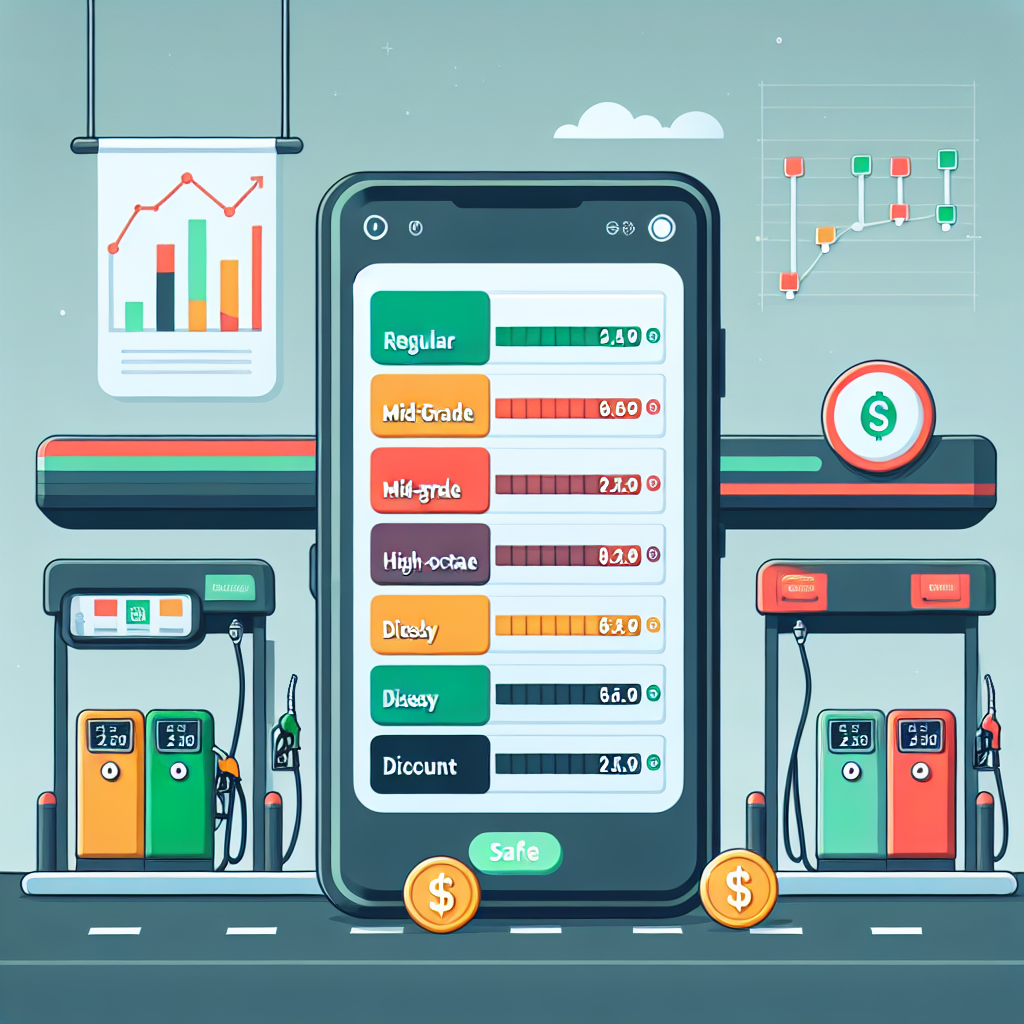
    If you’re following fuel costs in Singapore, Motorist.sg’s 2026 petrol price comparison is a handy snapshot. The site lists current prices across common grades and shows discounted rates alongside standard prices — useful when you’re planning a fill-up.

    What Motorist.sg shows (sample prices):
    – 95 octane: $2.26 (discounted) / $2.27 (regular)
    – 98 octane: $2.65 (discounted) / $2.68 (regular)
    – Premium: – / $2.85
    – Diesel: $2.07 (discounted) / $2.08 (regular)

    The Motorist.sg page also highlights price comparisons for major retailers (Esso, Shell, SPC, Caltex, Sinopec), historical petrol trends and available credit-card discounts, making it a useful one-stop resource for motorists who want to compare grades, spot bargains and track short-term price movements.

    Next time you plan a drive, check a comparison like Motorist.sg’s to see which stations and payment methods give you the best price for the grade you need.

  • A Sky Full of “Beads on a String”: The 2026 Planetary Parade to Watch For

    A Sky Full of “Beads on a String”: The 2026 Planetary Parade to Watch For

    A busy year for skywatchers is shaping up in 2026, and one standout moment comes with a simple promise: look up after sunset and you may catch six planets sharing the same stretch of sky.

    According to a NASA roundup of the year’s most notable astronomical events, the evening of February 28 is set to deliver an eye-catching “planet parade.” On that date, Mercury, Venus, Neptune, Saturn, Uranus, and Jupiter will all be in the evening sky at once—an alignment that can make the planets appear like a line of bright points tracing the plane of our solar system.

    The appeal here is the scale of the lineup. It’s not one or two planets stealing the show, but a crowd—six worlds visible in the same general region of the night sky. For anyone who enjoys casual stargazing, it’s the kind of event that turns an ordinary twilight into something memorable, and for more dedicated observers it’s a chance to track multiple planets in a single session.

    NASA frames this alignment as one of the key highlights in a year packed with skywatching opportunities. If you’ve been looking for a reason to step outside and spend time with the night sky in 2026, February 28 is a date worth circling—because it’s not often you get so many planets together in one view.

  • Ozempic and the Promise–Peril of New Weight‑Loss Drugs

    Ozempic and the Promise–Peril of New Weight‑Loss Drugs

    Hundreds of thousands of people around the world have turned to drugs like Ozempic to try to lose weight. That surge in interest has raised a simple, urgent question: what do we actually know about the benefits and the risks?

    On the benefit side, these medications have generated real attention because they can promote meaningful weight loss for many people — enough that interest and use have grown rapidly. That promise is why so many are considering them as a tool in managing weight.

    But the emerging picture isn’t only positive. Clinical-trial data reported in a recent article show that adverse effects are common: in a U.S. trial nearly half (48.6%) of people taking semaglutide experienced side effects. Nausea is one example specifically reported in that coverage. Those figures underscore that these drugs are not without cost for many users.

    The takeaway from the article is straightforward: these medicines carry both potential benefits and notable risks. The fast-growing popularity makes it more important than ever for anyone considering them to weigh the possible gains against the likelihood of side effects and to discuss both with an informed health professional.

    This is a developing story — as use spreads, more evidence will refine what we know about who benefits most and who is most likely to be harmed. For now, the existing trial data give cause for both optimism and caution.