Author: day2 n8n

  • HI-FI Indy: From Cozy Lounge to Fountain Square’s 400-Capacity Music Hub

    HI-FI Indy: From Cozy Lounge to Fountain Square’s 400-Capacity Music Hub

    Tucked inside Indianapolis’ Murphy Art Center in the heart of Fountain Square, HI-FI Indy has become a compact but energetic destination for live music and events. What began as the cozy Do317 Lounge has grown and evolved into a 400-capacity concert and special-events venue that reflects the city’s expanding appetite for live performance.

    HI-FI’s transformation speaks to a simple, compelling story: a neighborhood with a burgeoning community of music lovers needed a space to hear artists up close, and the venue adapted to meet that demand. The room’s modest size promises an intimate atmosphere where audiences can feel close to the action — a contrast to larger arenas and a reminder of the power of smaller venues to shape local music scenes.

    Located within the creative hub of the Murphy Art Center, HI-FI benefits from being in Fountain Square, an area known for arts, culture, and nightlife. As a concert and special-events space, it positions itself as a flexible spot for both touring acts and community-focused happenings, contributing to the neighborhood’s cultural pulse.

    For fans of live music in Indianapolis, HI-FI represents the kind of local venue that helps keep a city’s scene vital: rooted in community, intimate in scale, and continually evolving to serve the people who come for the sound and stay for the experience.


  • A Morning Ritual: Toasted Wheat Bread, Sausages, Egg and Coffee

    A Morning Ritual: Toasted Wheat Bread, Sausages, Egg and Coffee

    On April 5, 2025, a Facebook post captured a simple, satisfying morning: toasted wheat bread with butter, sausages, an egg—and, of course, coffee. 🍞🥐🥚🍴☕️

    No frills, no fuss: just a warm slice of wheat toast spread with butter, hearty sausages, a cooked egg, and a cup of coffee to pull it all together. That combination, shared in a short post, is a quiet reminder that some mornings call for the familiar comforts of a straightforward breakfast.

    Whether you picture the steam rising from the coffee or the crisp edges of buttered toast, this little moment highlights how routine meals can feel restorative. It’s a small ritual that sets the tone for the day—simple ingredients delivering straightforward pleasure.

  • One Search, Many Paths: The Internet’s No-Nonsense Guide to Making Friends as an Adult

    One Search, Many Paths: The Internet’s No-Nonsense Guide to Making Friends as an Adult

    Making friends as an adult can feel oddly mysterious — like everyone else got a manual you somehow missed. But the search results above tell a clear story: you’re not alone, and there isn’t just one “right” way to build a social life. Different corners of the internet are tackling the same question from different angles, from blunt Reddit honesty to polished lifestyle advice.

    A recurring theme across the results is that friendship doesn’t simply “happen” on its own — it’s something you pursue on purpose. One headline from the Guardian frames it directly: friendship can falter when people assume it should form organically, and the fix is making a conscious effort to be social.

    Other pieces focus on practical entry points. BuzzFeed’s result points to people sharing real-life methods for making friends as an adult, with examples like volunteering, dogs, and clubs — suggesting that consistent, shared environments can make connection easier. Vox takes that idea and sharpens it into a specific proposal: if you want more friends, start a club — a structured way to create repeated contact and a shared reason to show up.

    Meanwhile, Reddit threads capture the frustration more rawly. Titles like “how the hell to actually make friends?” and “How on earth do you make friends as an adult?” highlight the same sticking point: after school or university, the built-in systems for meeting people disappear, and many adults feel stuck trying to recreate that sense of community.

    Across the list, the narrative is less about a single magic trick and more about pattern recognition:

    – Put yourself where people are (and keep showing up).
    – Use shared activities — clubs, volunteering, interest-based spaces — to lower the pressure of “cold” socializing.
    – Treat friendship as something you actively build rather than passively wait for.

    In other words, the throughline in these results is encouraging: if you feel like making friends takes effort now, that doesn’t mean you’re doing it wrong. It means you’re doing it like an adult — intentionally.

  • AI Coaching Gets Real: Standards, Experiments, and What Comes Next

    AI Coaching Gets Real: Standards, Experiments, and What Comes Next

    AI coaching is no longer a vague promise—it’s showing up in communities, professional standards, and major learning platforms, all at once.

    One snapshot comes from a Reddit thread in r/ProductivityApps where a user asks whether anyone has found an “AI life coaching or assistant app that’s actually useful.” They mention trying Summit AI after seeing lots of ads, but finding it “kind of meh,” and they’re looking for better alternatives. The discussion captures a common moment in the AI-tools cycle: curiosity sparked by marketing, followed by the tougher question of whether the day-to-day experience truly helps.

    At the professional end of the spectrum, the International Coaching Federation (ICF) signals that AI coaching is moving into more formal territory. Its “Coaching and Technology” resource notes that artificial intelligence coaching has been constructed and is in early deployment phases—and points to an ICF AI Coaching Framework and Standards developed by an Artificial Intelligence Coaching Standards Working Group. That emphasis on standards hints at a field trying to define expectations and guardrails as AI enters spaces traditionally dominated by human relationships, confidentiality, and ethics.

    Meanwhile, AI coaching is being positioned as a product feature inside established learning ecosystems. LinkedIn Learning’s “AI-Powered Coaching” announcement describes a new chatbot designed to help the platform achieve its learning goals “more effectively than ever.” The pitch is straightforward: coaching, delivered through AI, integrated into learning to increase engagement and guidance.

    Academic voices are also imagining broader applications. Stanford University’s School of Engineering highlights “the future of AI coaching,” describing a computer scientist bringing AI to the classroom and the gym—and looking ahead to a world where AI coaches help make us “smarter … and healthier.” It’s a forward-looking frame that places AI coaching not just in self-help apps or corporate training, but in everyday skill-building and personal performance.

    Put together, these threads tell a cohesive story: AI coaching is simultaneously being tested by regular users, formalized by industry institutions, packaged by major platforms, and envisioned by researchers. The open question isn’t whether AI coaching will exist—it already does in multiple forms. The harder question, reflected in that Reddit post, is which implementations feel genuinely useful in practice, and how standards and product design will shape what “coaching” means when the coach is software.

  • I need the article text to write the blog post

    I need the article text to write the blog post

    You shared a list of search results, but not the content of a single article.

    Please paste the full text (or main body) of one article from the results—e.g., the UCLA Health “6 health benefits of drinking black tea” page—and I’ll write an engaging blog post based strictly on that article. If you want, tell me which link to use.

  • A 93-Year-Old’s Longevity Formula: Daily Workouts, Beans, and Family

    A 93-Year-Old’s Longevity Formula: Daily Workouts, Beans, and Family

    At 93, she says she still feels like she’s 50 — and she credits three simple things: daily exercise, a diet that includes beans, and staying close to family. That’s the portrait painted in a Business Insider profile by Gabby Landsverk (Nov. 18, 2025) of a nonagenarian who makes the gym part of her everyday life.

    Her routine is strikingly straightforward. She’s a regular at her gym, where a program she follows emphasizes balance and stability — key longevity traits that are especially important for older adults because they help prevent fall injuries. The combination of movement and training that targets steadiness and strength is a central thread in how she preserves mobility and confidence.

    Food and social ties are the other pillars. The article highlights that beans are a staple in her diet, and she points to family and social connections as vital sources of energy and purpose. Together, these elements — consistent physical activity, nutritious, simple eating, and strong relationships — form the low-tech, human recipe she credits for staying strong and full of life.

    Her story is a reminder that longevity often comes down to everyday habits: keep moving, eat well, and stay connected. For anyone looking for achievable ways to age with vitality, her approach offers an encouraging, relatable example.

  • Panadol and Paracetamol: What One Article Says About Use and Side Effects

    Panadol and Paracetamol: What One Article Says About Use and Side Effects

    Paracetamol is one of those medicines many of us keep within easy reach—taken for everyday pain and fever, often without much thought. An NHS medicines information page on “Side effects of paracetamol for adults” (covering common brand names including Panadol, Disprol, Hedex and Medinol) offers a straightforward reminder: while paracetamol is widely used, side effects can still happen, even if they are rare.

    ## A familiar medicine with a clear purpose
    The NHS article frames paracetamol as a commonly used option for adults, often chosen because it’s generally well tolerated. It’s also notable that the page explicitly links paracetamol with well-known brands—Panadol included—making it easier for people to connect the ingredient name on a label with the product in their medicine cabinet.

    ## The key message: side effects are unusual, but worth knowing about
    The central takeaway from the NHS page is simple: **paracetamol very rarely causes side effects if taken correctly**. That reassurance matters, but the article’s focus is really on awareness—understanding what could occur and what steps to take if you notice anything concerning.

    Because the information is presented as practical NHS guidance, the tone is less about alarming readers and more about helping them recognize potential issues early and respond appropriately.

    ## Why it’s helpful to read guidance even for “everyday” medicines
    The NHS page underscores a broader point: over-the-counter familiarity can sometimes make a medicine feel “too ordinary” to double-check. But paracetamol is still a drug with defined dosing advice and safety information—so having an official reference that explains side effects and what you can do about them can be valuable.

    ## A quick note on naming: Panadol is paracetamol
    If you’ve searched specifically for “Panadol side effects,” the NHS page is relevant because it treats Panadol as one of the brand names under the paracetamol umbrella. The article helps bridge that gap between brand recognition and ingredient-based safety guidance.

    *This post is based solely on the NHS article “Side effects of paracetamol for adults.”*

  • The 4-Day Workweek Isn’t a Fantasy Anymore—It’s a Movement

    The 4-Day Workweek Isn’t a Fantasy Anymore—It’s a Movement

    Talk about the four-day workweek has shifted from “nice idea” to “serious experiment,” and the evidence base keeps growing.

    According to a January 2025 article from the American Psychological Association, employees are enthusiastic about shorter and more flexible schedules—and, so far, results from trials have been “fairly consistent across companies and across countries” and “fairly positive.” That consistency matters: the four-day week isn’t being framed as a quirky perk that only works in one industry or one culture, but as a model that multiple organizations are testing in the real world.

    What stands out most in the APA’s reporting is the human response. Workers in these experiments have been “extremely satisfied,” suggesting that the impact isn’t limited to spreadsheets and output metrics. Satisfaction is a meaningful workplace outcome in its own right, tied to how people experience their jobs day to day and whether a schedule feels sustainable.

    The story of the four-day workweek, at least in this snapshot, is less about doing everything faster and more about rethinking how work is structured. Flexible, shorter schedules are drawing enthusiasm precisely because they change the rhythm of the week—offering employees more room to recover, plan, and live.

    The four-day workweek still raises big practical questions for employers and workers alike, but the direction of travel is clear in the APA’s piece: the experiments aren’t isolated, and the early pattern is more positive than skeptics might expect. If the results continue to hold across countries and companies, the “standard” workweek may be headed for its most significant redesign in generations.

  • Easy One‑Pot Hainanese Chicken Rice: Juicy Steamed Chicken and Ginger‑Garlic Rice

    Easy One‑Pot Hainanese Chicken Rice: Juicy Steamed Chicken and Ginger‑Garlic Rice

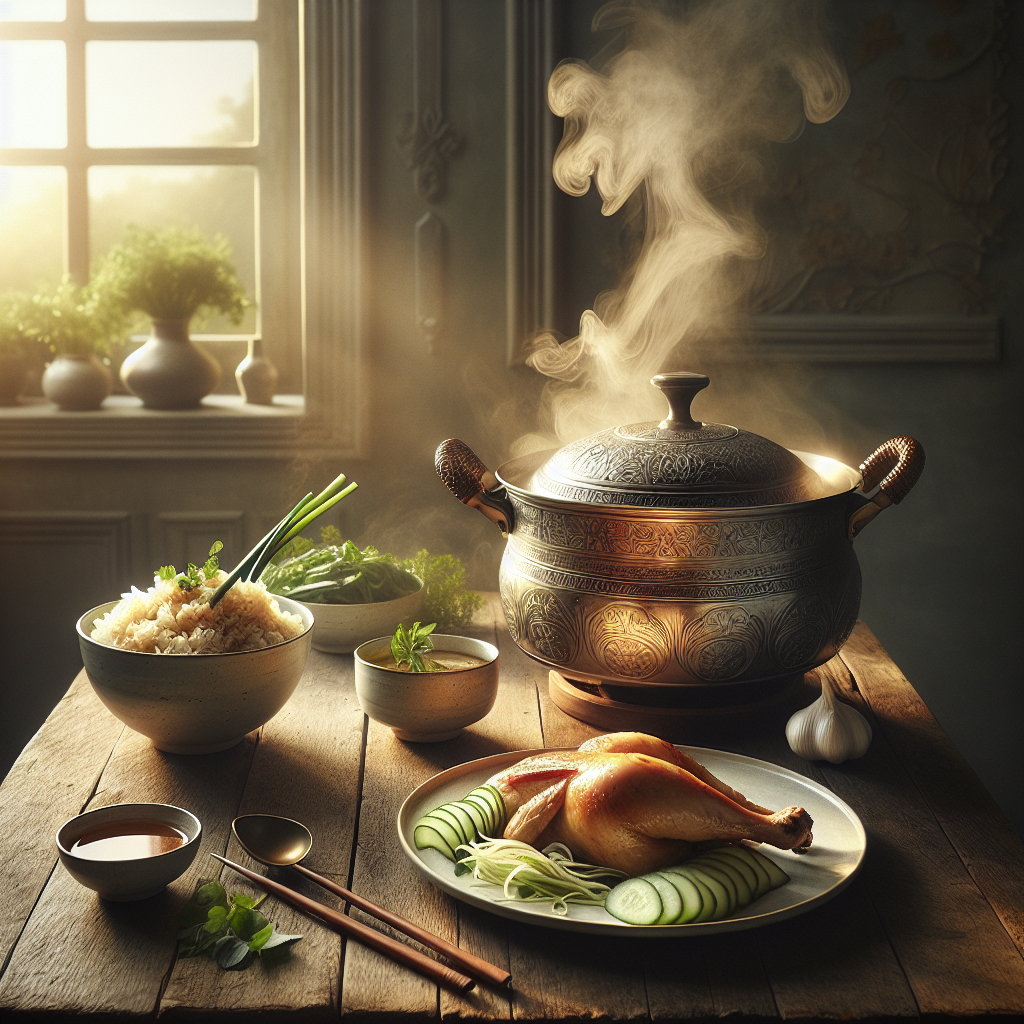
    If you love Hainanese chicken rice but don’t want to fuss with roasting or boiling a whole bird, this recipe from i am a food blog is made for you. Published June 15, 2025, the post offers a super-simple, satisfying one‑pot take on the classic: skin‑on boneless chicken steamed to juicy perfection while fragrant ginger‑and‑garlic rice cooks in the same pot.

    What makes this version so appealing is its ease and economy. Instead of a lengthy pretense of technique, the recipe leans into an honest, comfort‑forward approach—minimal mess, maximum flavor. The combination of steamed chicken and rice infused with ginger and garlic delivers the familiar, comforting notes of Hainanese chicken rice without a long list of steps or equipment.

    Whether it’s a busy weeknight or a lazy weekend dinner, this one‑pot method promises a plate that feels thoughtful and complete. As the blog writes: it’s what you want for dinner, right now. If you’re after a fast, flavorful meal that still tastes like home, this easy one‑pot Hainanese chicken rice is worth bookmarking.

  • Black Tea’s Everyday Upside: Six Reasons UCLA Health Says Your Cup Matters

    Black tea has been part of human life for thousands of years—and according to a UCLA Health article, it remains a surprisingly powerful everyday drink. With tea now the second most-consumed beverage in the world after water, UCLA Health makes the case that black tea isn’t just a comforting routine; it can offer real health benefits.

    ### A drink with a long history—and modern relevance
    UCLA Health notes that people have been drinking tea for about 5,000 years. That kind of staying power isn’t just about taste or tradition. The article emphasizes that tea, including black tea, is widely recognized by experts as a beverage with benefits.

    ### The “six benefits” takeaway
    The UCLA Health piece is centered on six health benefits of drinking black tea. While the headline message is straightforward—black tea can be good for you—the underlying point is even more practical: small daily habits can add up, and what you choose to drink is part of that.

    ### How you drink it matters
    One of the most grounded tips in the article is about what *not* to add. UCLA Health points out that drinking tea without milk and sugar may be healthier than tea sweetened or prepared with those additions—especially if you’re aiming to get “all the benefits.”

    The article also suggests paying attention to the form of the tea itself: to maximize benefits, UCLA Health recommends using loose tea leaves rather than a tea bag.

    ### The simple bottom line
    If you already like black tea, UCLA Health’s message is encouraging: your go-to cup may come with meaningful health perks. And if you’re trying to make that cup work a little harder for you, the article’s guidance is simple—keep it less sweetened and consider brewing from loose leaves.