Author: n8n-class

  • Geriatric Cyclists: Weighing the Health Boosts and the Safety Trade‑Offs

    Geriatric Cyclists: Weighing the Health Boosts and the Safety Trade‑Offs

    More older adults are turning to bicycles for transportation, exercise and simple enjoyment—and the trend makes sense. Bicycling is a familiar, accessible form of activity that many people of retirement age find easier to use, rewarding and fun. The research snapshot behind this shift paints a clear picture: cycling is common across the population (nearly one in three Americans ride each year), but only about one in five of the roughly 100 million cyclists ride weekly. That gap suggests both opportunity and room to help older riders make cycling a steadier part of their lives.

    The benefits for seniors are straightforward and evidence‑based. Regular physical activity helps blunt age‑related strength loss and muscle wasting, and bicycling offers an enjoyable, low‑impact way to keep moving. Many older adults cite ease of use and enjoyment as key reasons they return to or keep riding—factors that translate into sustained activity and the health advantages that come with it.

    At the same time, safety can’t be ignored. Older and teenage cyclists are among the groups with the highest numbers of head injuries and fatalities, a reminder that the risks of cycling rise with exposure and certain vulnerabilities. That has led researchers and public‑health experts to urge sensible precautions for geriatric cyclists.

    Simple, practical safety measures can reduce risk without taking away the benefits of riding. Wearing a helmet, choosing the right kind of bicycle, and favoring bike lanes, multiuse paths or low‑traffic routes are recommended to minimize injury risk. With those protections in place, experts conclude that bicycling should be encouraged among older adults—so long as it’s done under safe conditions—because the physical and social gains are significant.

    For seniors thinking about getting back in the saddle or stepping up from occasional rides, the takeaways are positive but clear: cycling can be an effective way to stay active, maintain strength and enjoy renewed freedom—so long as riders pair enthusiasm with sensible safety choices.

  • California Supreme Court Hands Victory to Rooftop Solar Owners

    California Supreme Court Hands Victory to Rooftop Solar Owners

    On Aug. 7, 2025, the California Supreme Court delivered a win for homeowners with rooftop solar. In a reversal of an earlier ruling, the justices overturned a decision that had upheld steep cuts — about 75% — to payments that solar owners receive for excess power sent back to the grid. The court’s action doesn’t settle the question permanently; instead it sends the matter back to a lower court to revisit the net‑metering decision.

    The ruling is a significant moment for rooftop solar advocates and the thousands of Californians who rely on selling surplus generation for compensation. By requiring a lower court to reexamine the policy that led to the large reduction in payments, the state’s high court has reopened the debate over how rooftop solar is valued and compensated.

    CalMatters reporter Malena Carollo covered the decision, noting that the reversal could have meaningful implications for solar owners as the lower court reconsiders the net‑metering changes. The case underscores that the future of rooftop solar compensation in California remains in flux — but that the highest court in the state has stepped in to ensure deeper judicial review of the cuts.

  • Build Your Dreams: BYD Takes Aim at Tesla

    Build Your Dreams: BYD Takes Aim at Tesla

    An article published May 13, 2024 highlights a striking shift in the EV world: the hunter has become the hunted. Tesla, once the disruptive upstart, sits today as the EV market leader — and that stature has made it a target. At the front of the pack aiming at Tesla is BYD — short for Build Your Dreams.

    The piece paints BYD as the lead contender among a string of up-and-coming Chinese manufacturers using the electric revolution as the ideal moment to launch into Europe. The article even jokes that you should “best forget about that slightly corny name,” while making clear BYD’s seriousness as a challenger.

    In short: BYD has moved from a lesser-known name to a visible rival to established EV players, emblematic of a wider wave of Chinese brands pressing into new markets and reshaping the competitive landscape.

  • Leeds United Kicks Off the 2026-27 Premier League Season with Exciting Fixtures

    Leeds United Kicks Off the 2026-27 Premier League Season with Exciting Fixtures

    As the 2026-27 Premier League season approaches, Leeds United fans are eagerly anticipating a dynamic lineup of matches. Managed by Daniel Farke, Leeds United will start their campaign with an away game against Nottingham Forest, signaling the beginning of an exciting journey.

    One of the most anticipated matches this season will take place at Elland Road, where Leeds will host rivals Manchester United over the weekend of October 17-18. This fixture promises to be a highlight for fans, offering the kind of intense rivalry and thrilling football that Premier League followers relish.

    In addition to facing Manchester United, the schedule includes challenging fixtures against top teams such as Tottenham Hotspur and Manchester City. Under the tactical guidance of Farke, Leeds aims to leverage these opportunities to prove their prowess on the field.

    The season will run its course until May 2027, concluding with a trip to Old Trafford followed by a home match against Sunderland. The final day of the season promises to bring all the excitement and drama of Premier League football to a fitting close.

    Leeds United’s fans can look forward to a season brimming with potential and high-stakes encounters, as they cheer their team on through another exciting chapter of English football.

  • Singapore’s 61st National Day Parade Returns to the National Stadium — Celebrating the “Go Beyond!” Spirit

    Singapore’s 61st National Day Parade Returns to the National Stadium — Celebrating the “Go Beyond!” Spirit

    As Singapore turns 61, the National Day Parade makes a symbolic return to the National Stadium, promising an evening that leans into the country’s forward-looking mantra: “Go Beyond!”

    The move back to the National Stadium sets the stage for a large-scale celebration in the heart of the city-state. Organizers have framed the event as a showcase of the “Go Beyond!” spirit, a theme that invites Singaporeans to look ahead while celebrating the nation’s achievements and community strengths.

    For attendees, gates open at 4:30 p.m., giving spectators time to settle in before the show begins. Returning to the stadium signals a renewed opportunity for shared, in-person celebration after years of adjustments to how public events have been staged.

    Whether you’re planning to attend or watching from afar, the 2026 National Day Parade at the National Stadium is positioned as a moment to reflect on Singapore’s journey and to embrace the optimism behind the “Go Beyond!” message.

  • Every Watch Has a Story: A Reddit Collection That Spans Patek to Casio

    Every Watch Has a Story: A Reddit Collection That Spans Patek to Casio

    On r/rolex a recent post by u/EmergencyKnee4057 carries a simple, honest headline: “State of Collection. Each watch has a story and each one has a purpose. What do you guys think of the collection?” The submission, which included a photo preview, struck a chord — it earned 280 votes and sparked 186 comments.

    What makes the post interesting is its celebration of variety. As the poster puts it, “My collection has Patek, AP, JLC, Casio to name just a few.” That single line captures a mindset many collectors share: value isn’t only about price or prestige, but about the narrative and role each piece plays in someone’s life. The array—from high horology names like Patek Philippe, Audemars Piguet and Jaeger‑LeCoultre to the everyday reliability of Casio—shows how different watches meet different needs.

    The thread also leans on an evocative analogy: “People pay extra for cars that try to reach 450mph.” It’s a reminder that collectors often pay for extremes, craftsmanship, or simply the idea of owning something exceptional. But the post’s core message pushes back toward balance: a collection can be diverse, personal, and purposeful without conforming to a single definition of value.

    Whether you prize horological pedigree, practical utility, or the story behind a piece, this Reddit snapshot is a neat illustration of why watch collecting remains so compelling. Each watch, the poster insists, has a use and a memory — and that, for many collectors, is what truly matters.

  • Last Roar for Now: Angel R. Barcellos Shares Final Piece of Her Godzilla Run

    Last Roar for Now: Angel R. Barcellos Shares Final Piece of Her Godzilla Run

    On January 16, 2026, artist Angel R. Barcellos (Instagram handle @angellovestocuddle) posted what she called “the last of my current Godzilla artwork,” promising that more would be coming soon. The brief, celebratory caption—accompanied by a small burst of engagement (3 likes and 2 comments)—served as a neat bookmark on a run of kaiju-focused pieces.

    Barcellos’s post leaned into the broader Godzilla fandom with hashtags that connected her work to multiple corners of the franchise: #godzilla, #godzillavskong, #godzillakingofthemonsters, #godzillaxkongthenewempire, and #godzillasingularpoint. Those tags signal an artist engaged with the modern MonsterVerse and other contemporary takes on the King of the Monsters, and they make it easy for fans hunting new fan art to find her work.

    Short and to the point, the post captures an artist’s small, public moment of pause—closing one chapter of creativity while teasing the next. For followers who’ve been following her Godzilla pieces, it’s a promise worth sticking around for: more monster art is on the way.

  • Quick clarification — which article should I use?

    I see you pasted search results, but I don’t have the full text of any single article yet. To write the blog post I need one complete article. Please either:

    – Paste the full article text you want me to use, or
    – Tell me which single link from your search results to use (e.g., “Reddit: ‘Rolex is positioning Tudor as an Omega competitor’” or “Revolution Watch: ‘How Rolex and Tudor are moving as a group of companies today’”), or
    – Upload the article URL and confirm you want me to base the post solely on that link.

    Optional: tell me your preferred length/tone (short 300–500 words, long 700–1000 words, casual or formal). Once you confirm/provide the article, I’ll write an engaging blog post using only that article’s content.

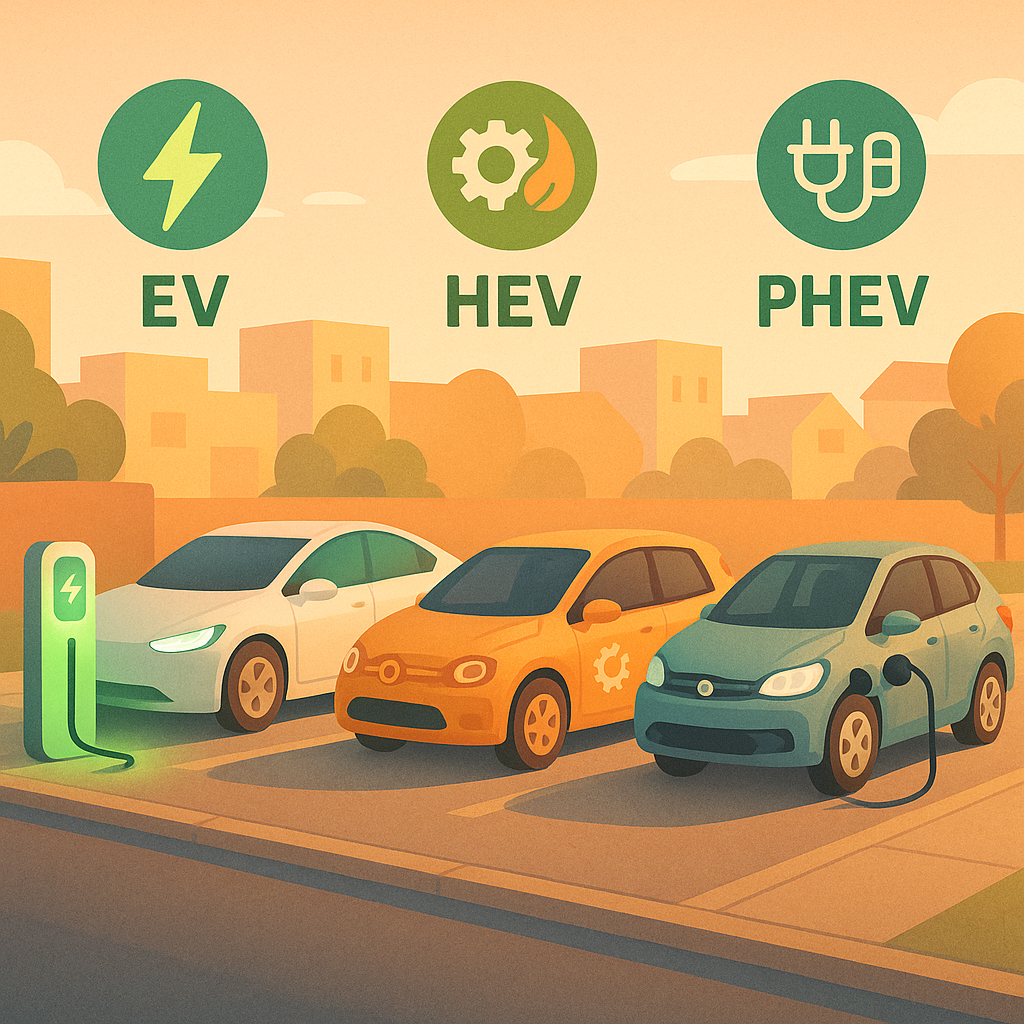
  • Which Powertrain Fits Your Life? A Practical Guide to Electric, Hybrid and Plug‑In Hybrid Cars

    Which Powertrain Fits Your Life? A Practical Guide to Electric, Hybrid and Plug‑In Hybrid Cars

    Choosing between an electric vehicle (EV), a conventional hybrid (HEV), or a plug‑in hybrid (PHEV) is less about labels and more about how and where you drive. A clear, practical comparison published by Car and Driver (David Gluckman, updated March 29, 2024) lays out the core differences, strengths, and tradeoffs so buyers can match a powertrain to real‑world needs. Here’s a readable take on what the article explains and the questions you should ask before you buy.

    How each powertrain works
    – EVs (battery‑electric vehicles) run solely on stored electricity. They use one or more electric motors and must be recharged from the grid or public chargers. There’s no internal‑combustion engine.
    – HEVs (conventional hybrids) pair a gasoline engine with electric motor(s) and a relatively small battery that is recharged by the engine and regenerative braking. The car switches or blends power automatically — you don’t plug it in.
    – PHEVs (plug‑in hybrids) bridge the two: they have a larger battery and an external charge port so they can run on electric‑only power for a limited distance before the gasoline engine takes over.

    Environmental and energy considerations
    EVs produce no tailpipe smog‑forming emissions at the point of use; however, their overall greenhouse‑gas footprint depends on how the electricity they use is generated. As electricity grids decarbonize, EVs generally become cleaner over time. The article also points out that battery production has environmental and mining impacts, though those impacts are evolving as battery technology and supply chains improve. HEVs have a smaller battery manufacturing footprint but continue to burn gasoline in everyday operation; PHEVs sit between HEVs and BEVs in lifecycle impact, depending heavily on how often owners actually charge and use electric range.

    Performance, packaging, and tradeoffs
    A pure EV often feels refined: instant torque, quiet operation, smooth delivery, and brisk acceleration are common. EVs also have fewer moving parts than a conventional internal‑combustion powertrain, which simplifies routine mechanical maintenance. That said, batteries add weight — larger batteries for longer range can increase curb weight, potentially affecting road wear and making some repairs (especially high‑voltage battery service) more costly. Hybrids are mechanically more complex because they combine engines, motors, and control systems, but they eliminate range‑anxiety by keeping gasoline refueling available. PHEVs let you drive short trips electrically while keeping the convenience of a gas engine for long journeys.

    Ownership, warranties, and used‑car cautions
    Manufacturers commonly offer EV battery warranties that reduce buyer risk — the article notes many warranties cover roughly eight years or 100,000 miles (some makers offer longer). That helps new‑car buyers, but the piece warns used‑EV shoppers to check battery health and remaining warranty coverage because replacing or repairing a high‑voltage pack can be expensive.

    Who each option is best for
    – EVs: a strong fit if you have reliable access to charging (home or work), drive routes where charging is convenient, and value quiet refinement and lower local emissions.
    – HEVs: a sensible choice for drivers without easy charging access (for example, many apartment dwellers) who want improved fuel economy without having to plug in.
    – PHEVs: a transitional option for drivers who want electric driving for daily commutes but still need gasoline range for longer or unpredictable trips — their environmental benefit depends on regular charging and frequent use of electric range.

    Costs and infrastructure (qualitative)
    The article emphasizes qualitative tradeoffs rather than exact dollar calculations: EVs often carry higher upfront prices for longer range and may have higher battery‑repair costs, but reduced moving‑part complexity and potentially lower routine maintenance. HEVs and PHEVs tend to be cheaper to buy initially and avoid dependence on charging, but continue consuming fuel. Whether an EV makes sense will hinge on charging access and the carbon intensity of the electricity you’ll use.

    What the article doesn’t provide
    This is a high‑level buyer’s guide: it does not include model‑by‑model comparisons, specific ranges, charging times, local incentives, numeric total‑cost‑of‑ownership calculations, or region‑specific infrastructure statistics. It also doesn’t offer long‑term empirical reliability data from large owner surveys or detailed lifecycle LCA numbers — all things writers or buyers should verify with up‑to‑date, region‑specific sources if they need precise figures.

    Bottom line
    Match the powertrain to your daily patterns: if home or workplace charging is easy and you prioritize low local emissions and refinement, an EV can be the right choice. If charging is difficult or you value convenience above all, a conventional hybrid remains a compelling option. For many, a PHEV is the middle ground — useful only if you actually plug it in. For specific model comparisons, incentives, and local infrastructure, consult recent, region‑specific data in addition to this high‑level guidance.

    Source: David Gluckman, “Electric vs. Hybrid Cars: Pros and Cons of Each,” Car and Driver (updated March 29, 2024).


  • Notice 626: How Singapore Is Tightening Banks’ Defences Against Illicit Funds

    Notice 626: How Singapore Is Tightening Banks’ Defences Against Illicit Funds

    The Monetary Authority of Singapore’s Notice 626 signals a clear message to banks: Singapore will not be a conduit for illicit money. Framed as requirements for anti‑money laundering (AML) and countering the financing of terrorism (CFT), the notice asks financial institutions operating in Singapore to put in place robust controls to detect and deter the flow of illicit funds through the city‑state.

    At its core, Notice 626 is about vigilance. It makes explicit that banks must actively identify risk, implement controls, and guard their systems against misuse. While designed specifically for banks, the notice underscores a broader regulatory tone — Singapore expects financial institutions to adopt strong preventive measures that protect the integrity of its financial system.

    For practitioners and observers alike, the notice reinforces Singapore’s emphasis on regulatory clarity and operational discipline in AML/CFT efforts. Institutions operating in the market should take the guidance as a reminder to review their detection and reporting frameworks, strengthen compliance practices, and ensure they can convincingly demonstrate controls that deter illicit flows.

    In a global environment where cross‑border financial activity can be exploited by criminals and terrorists, Notice 626 represents Singapore’s attempt to shore up defenses and preserve trust in its banking sector. The notice is both a regulatory requirement and a statement of intent: maintaining Singapore’s reputation as a well‑regulated financial hub depends on banks doing their part to stop illicit money in its tracks.