Author: day2 n8n

  • 《悲惨世界》40周年:传奇舞台的“Arena Spectacular”全球巡演将于新加坡限定登场

    《悲惨世界》40周年:传奇舞台的“Arena Spectacular”全球巡演将于新加坡限定登场

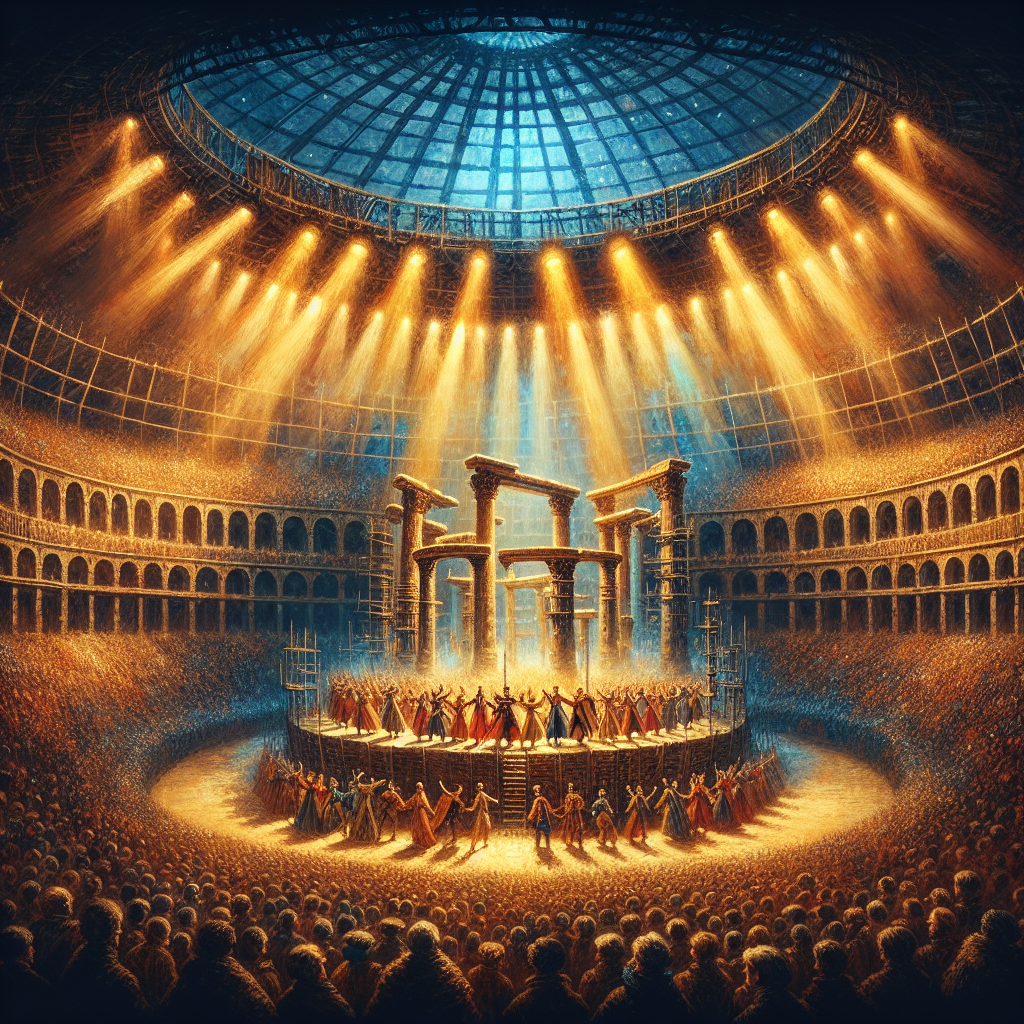
    自阿兰·鲍伯利(Alain Boublil)与克劳德-米歇尔·勋伯格(Claude-Michel Schönberg)创作以来,《悲惨世界》已成为音乐剧史上的不朽之作。由制作人卡梅隆·麦金托什(Cameron Mackintosh)全新打造的英文原版40周年纪念版音乐会——《LES MISÉRABLES THE ARENA SPECTACULAR》现已开启世界巡演,其气势与规模被悉心打磨成一场大型庆典式演出。

    这次的Arena Spectacular并非普通巡演:它以纪念40周年为契机,把原作的宏大情感与音乐冲击以演唱会式的呈现放大,让观众在更广阔的舞台视野中重温那些熟悉的旋律与人物命运。官方信息透露,这一纪念版将以英文原版面世,并在多个城市举行限时上演——其中,新加坡被列为2026年的重要站点,届时将上演特别限定场次。

    对喜爱《悲惨世界》的歌迷或想首次体验这部经典的观众而言,Arena Spectacular提供了一种既尊重原作又更具现场震撼力的观剧选择。无论是为纪念作品本身的四十年辉煌,还是想在大型舞台体验原版音乐剧的气场,这次全球巡演都值得期待——特别是那场将在新加坡上演的限定演出,注定会成为音乐剧迷交流与回味的特别时刻。

    如果你计划前往观赏,建议关注官方演出与票务公告,留意巡演站点与场次信息,抓住这难得的40周年纪念机会,亲临现场感受这部传奇作品在新时代舞台上的再度绽放。

  • Durian: The Spiky, Divisive Fruit That Splits Opinions

    Durian: The Spiky, Divisive Fruit That Splits Opinions

    I bought a durian in Chinatown and discovered firsthand why this tropical fruit from Southeast Asia sparks such strong reactions. Roughly the size of a soccer ball, the durian is heavy and unmistakable: a hard, thorny shell that protects a thick, tough outer flesh — and makes the fruit difficult to open for the uninitiated.

    Durian’s reputation is split between ardent admirers and emphatic detractors. Some call it a fragrant delicacy; others recoil at its aroma. As one colorful critic put it, its odor can be described as “pig‑shit, turpentine and onions,” a line that captures why people either love it or hate it.

    That polarizing scent contrasts with the curiosity it inspires. Even in places far from its native groves, like city Chinatown markets, people seek it out — whether to try it, to learn how to open it, or simply to see what the fuss is about.

    If you’ve never experienced durian, these simple facts are a good place to start: it’s a large, spiky fruit from Southeast Asia, heavy and hard to open, and widely considered either a treasured delicacy or an olfactory nuisance. Either way, it’s one of the world’s most divisive fruits — and that alone makes it worth a taste.

  • Walk Now, Not Later: A Small Study Finds Post-Meal Strolls Boost Short-Term Weight Loss

    Walk Now, Not Later: A Small Study Finds Post-Meal Strolls Boost Short-Term Weight Loss

    Many of us have heard the old advice to wait an hour after eating before exercising — a belief rooted in fears of fatigue, stomach ache, or other discomfort. But a preliminary experiment reported by Yasuyo Hijikata challenges that notion and suggests a simple change in timing could help with weight loss.

    What the study did
    The report describes two brief trials (conducted twice: once in April–May 2002 and again in August–September 2006) involving the author and a single volunteer. Both tried walking for 30 minutes immediately after lunch and dinner, and their results were compared with walking that began one hour after a meal. The author walked at a brisk pace; the volunteer walked more slowly.

    Key findings
    – Neither participant experienced the feared side effects (no notable fatigue, stomach ache, or other discomfort) when walking right after eating.
    – In one month of walking immediately after meals, the author lost nearly 3 kg and the volunteer lost nearly 1.5 kg.
    – The experiment was repeated on two occasions and produced the same pattern of results: walking as soon as possible after a meal produced more weight loss than waiting an hour.

    Why this might work
    The article offers a physiological explanation: suppressing the post-meal rise in blood glucose (postprandial hyperglycemia) can reduce insulin hypersecretion. Lower insulin spikes may in turn limit the body’s tendency to store energy as internal fat, which could help prevent obesity and aid weight loss.

    What to keep in mind
    These are preliminary, small-scale observations from just two people, so they can’t be taken as definitive proof for everyone. The author’s caveat — and practical advice from the experiment — is clear: for people who do not experience abdominal pain, marked fatigue, or other discomfort when walking immediately after eating, a brisk 30-minute walk right after lunch and dinner may lead to more short-term weight loss than delaying exercise for an hour.

    The take-home
    If you tolerate light activity after meals, this report suggests you might try a post-meal walk sooner rather than later. The findings are intriguing but limited in scope, and they point to the potential value of more extensive research to confirm whether immediate post-meal walking reliably supports weight loss and metabolic health.

  • Tiny Changes, Big Impact: How the American Heart Association Suggests Eating More Fruit and Vegetables

    Tiny Changes, Big Impact: How the American Heart Association Suggests Eating More Fruit and Vegetables

    Adding more fruit and vegetables to your plate doesn’t have to be complicated. In its guide “How to Eat More Fruit and Vegetables,” the American Heart Association reminds us that small, practical swaps can add up to meaningful health benefits — and that getting started can be as simple as changing how you shop and plate your meals.

    One straightforward tip: embrace frozen produce. Frozen fruits and vegetables are convenient, often just as nutritious as fresh, and make healthy choices easier to keep on hand. The AHA even gives easy examples you can reach for — grapes, peas or sliced bananas — showing that tasty, ready-to-eat options are within arm’s reach.

    Another concrete, high-impact habit is how you compose your dinner plate. The AHA recommends filling half your plate with vegetables and/or fruit at dinner. That visual rule makes it simple to boost the proportion of plant foods in any meal without needing to count portions or overhaul recipes.

    Together, these small changes — keeping frozen produce available and making half your plate fruits and vegetables at dinner — are realistic steps that help unlock the wider health benefits the AHA highlights from eating more plant foods. If you’re looking to eat healthier, start with these manageable moves and build from there.

  • Asia’s Economic Balancing Act as Oil Prices Climb

    Asia’s Economic Balancing Act as Oil Prices Climb

    Oil prices are rising again, and Asia is feeling the pressure—yet not in a single, uniform way. A new analysis from ING Think argues that the region’s heavy dependence on Middle Eastern oil leaves it exposed to prolonged supply disruptions, even as the near-term inflation risks appear “largely manageable.”

    That tension—vulnerability on one side, resilience on the other—sits at the heart of Asia’s outlook under higher oil prices. The article points to a familiar regional reality: many Asian economies are major energy importers, and when crude prices climb, it quickly filters into transportation, manufacturing costs, and household budgets. The worry isn’t just the headline price of oil; it’s the potential for sustained shocks to supply that can keep energy costs elevated and unpredictable.

    At the same time, ING’s assessment suggests that the inflation story may not automatically spiral out of control. “Manageable” doesn’t mean painless, but it does imply that policymakers and consumers may be better positioned than in past episodes to absorb higher energy costs—at least for now.

    Still, the article’s framing is clear: the bigger strategic risk for Asia is how concentrated its exposure remains. As long as the region relies so heavily on Middle Eastern oil, it will be forced into a recurring cycle of reacting to geopolitics and supply disruptions rather than steering its economic trajectory with confidence.

    In other words, higher oil prices don’t just test Asia’s inflation outlook—they test the region’s energy security assumptions. And according to ING Think, that’s the fault line worth watching as the next phase of the global energy landscape unfolds.

  • Waiting on the Article: Search Results Aren’t Enough to Tell the Story

    Waiting on the Article: Search Results Aren’t Enough to Tell the Story

    I can’t write a blog post from these web search results alone because they only include titles, snippets, and metadata—not the full content of a single news article.

    To proceed, please paste the full text of one article you want me to use (or share its full content/clean excerpt). Tell me which link from your list to base it on, and I’ll write an engaging blog post using only that article’s information.

  • Mandai’s Big Reveal: An Eco-Friendly Resort and Nature-Inspired Experiences Coming to Singapore’s Wildlife Reserve

    Mandai’s Big Reveal: An Eco-Friendly Resort and Nature-Inspired Experiences Coming to Singapore’s Wildlife Reserve

    Mandai Wildlife Reserve has unveiled some of its upcoming attractions, announcing plans that include an eco-friendly resort and a set of new nature-inspired experiences. The May 13, 2024 report highlights that Mandai is expanding beyond its current parks to offer fresh ways for visitors to connect with wildlife and the outdoors.

    Today Mandai comprises four well-known wildlife parks: the Singapore Zoo, the Night Safari, River Wonders and Bird Paradise. The latest announcement signals a deliberate push to broaden the visitor experience—adding overnight stays and immersive programmes designed with nature at the centre.

    For locals and travelers who already visit Mandai’s parks, the new resort and experiences promise an opportunity to stay longer and engage more deeply with the Reserve’s conservation and visitor offerings. While full details and opening timelines were not provided in the report, the move underlines Mandai’s continued evolution as a destination for wildlife encounters in Singapore.

    Keep an eye on official Mandai announcements for specifics on the eco-resort, the types of nature-inspired activities that will be offered, and when these new experiences will be available to the public.

  • I Need the Article Text to Write the Blog Post

    I Need the Article Text to Write the Blog Post

    I can’t write an accurate blog post from the search results alone because they only include titles and short snippets, not the article’s full content.

    Please paste the full text of the single article you want me to use (or provide the relevant sections), and tell me which link it is (for example: “12 Facts About Otters for Sea Otter Awareness Week” on DOI.gov). Once I have the article content, I’ll write an engaging blog post using only what’s in that article.

  • From Drag-and-Drop to Git: n8n Users Ask — Can We Convert Workflows to Code?

    From Drag-and-Drop to Git: n8n Users Ask — Can We Convert Workflows to Code?

    A thread on the n8n community forum (started Aug 18, 2023) captured a question many developers and automation architects have been wrestling with: can you convert visual n8n workflows into code — JavaScript or Python — so they can be committed, tested, and maintained like regular software?

    The original poster, hdotking, explained the motivation plainly: n8n’s low-code designer is great for building automations quickly, but as workflows grow and teams scale, testing, maintenance, and source control become essential. The idea was to export or convert existing workflows into actual code to enable robust tests, follow software engineering best practices, and keep everything in version control.

    The community response was thoughtful and mixed. On one hand, n8n staff acknowledged there wasn’t a built-in way to do a direct conversion at the time and passed the idea to the feature-requests area — signaling it’s a direction people are interested in. Several replies encouraged the discussion: turning no-code work into code could be valuable for adding capabilities later and for larger teams.

    On the other hand, contributors raised real technical caveats. A key point: exporting a workflow as code would mean you’d be testing the exported artifact, not necessarily the exact runtime behavior inside n8n — so the benefits of testing the code might not map perfectly back to what n8n actually executes. That mismatch could limit how useful a straight conversion would be for guaranteeing production correctness.

    Practically, the forum also highlighted existing workarounds. You can persist workflows to git by using the API and automation (for example, pulling workflows and committing them with a GitHub node). And while some git-based features are available, fully integrated git tooling in cloud-hosted n8n may require higher-tier or enterprise options. Community members pointed out these approaches let teams at least get workflows into version control even without a native “export to code” button.

    The thread captured the tension at the heart of many no-code platforms: visual editors accelerate iteration and democratize automation, but teams still need the guarantees, tests, and provenance that come with code and version control. The topic drew interest and suggestions but was eventually closed automatically after 90 days without a native conversion feature being added in that thread.

    If nothing else, the discussion is a useful snapshot of a community trying to bridge two worlds — the speed and accessibility of visual automation and the rigor of software engineering — and it makes clear why a well-designed conversion or tighter git integration would be a compelling feature for many n8n users.

  • 195 Pearl’s Hill Terrace Gets a Lifeline: Lease Extended to March 2028

    195 Pearl’s Hill Terrace Gets a Lifeline: Lease Extended to March 2028

    Singapore’s indie arts enclave at 195 Pearl’s Hill Terrace (195 PHT) has been granted more time.

    According to the article, the lease for the state property—described as a creative art and culture enclave—has been further extended until March 2028. This is a significant reprieve, as the lease had originally been slated to end in March 2025.

    The extension offers a measure of breathing room for the community that has been making use of the space, and it underscores the ongoing attention on Pearl’s Hill as a neighbourhood in transition—where arts and culture uses are continuing for now, even as the broader area is associated with new public housing plans.

    For visitors and supporters of 195 PHT, the headline takeaway is simple: the enclave isn’t disappearing in 2025 after all, and it will remain in place—at least through March 2028.