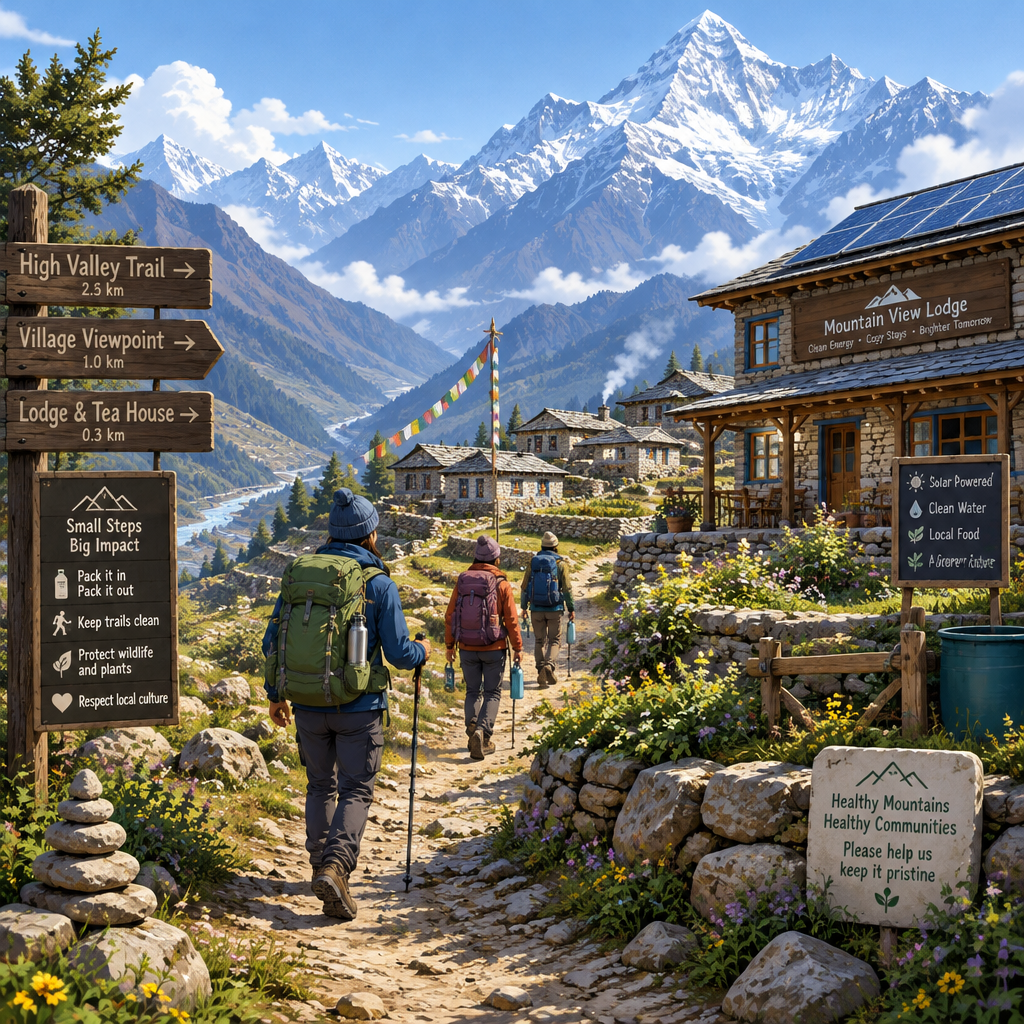
Everest’s trails have always drawn people toward a remarkable landscape. But the Khumbu region is feeling the weight of that popularity: nearly 59,000 people trekked to Everest Base Camp between mid-July 2024 and mid-July 2025, up from about 34,500 a decade earlier. With roughly 80% of visitors arriving during the spring and fall peaks, busy paths, crowded teahouses and mounting waste are putting pressure on local infrastructure and the fragile mountain environment.
A more considerate trek can begin with a different pace. The article suggests considering quieter months—December through February or May—and allowing extra time instead of rushing along the standard route. For travelers willing to explore beyond it, possibilities include the longer Jiri approach and routes through the Three Passes, Panch Pokhari, Pikey Peak, Chhukung Valley and Bhote Koshi Valley.
There is also more to the region than the trail to base camp. Spending time in villages such as Phortse and Thame offers a chance to learn about Sherpa communities and culture, rather than treating local places as brief stops on the way to a destination.
Small choices at lodges and along the trail matter, too. Where possible, choose accommodation that uses renewable energy, limit energy-intensive hot showers, and order locally sourced food. When booking a trekking company, check that guides and porters receive fair pay, insurance, suitable gear, food and accommodation—and are not expected to carry unreasonable loads.
Waste is another part of the journey to plan for. The article points trekkers to Sagarmatha Pollution Control Committee bins and its “Carry Me Back” initiative, which asks visitors to take recyclable waste from collection points in Pangboche or Namche Bazaar onward to Lukla.
No single decision can remove the pressures facing the Khumbu. But traveling more slowly, choosing less-crowded options and treating local communities and the mountain environment with care can make a trek more thoughtful. This is a guide to responsible travel choices—not a complete itinerary or a medical assessment of high-altitude risks—so those questions need separate planning.
Leave a Reply