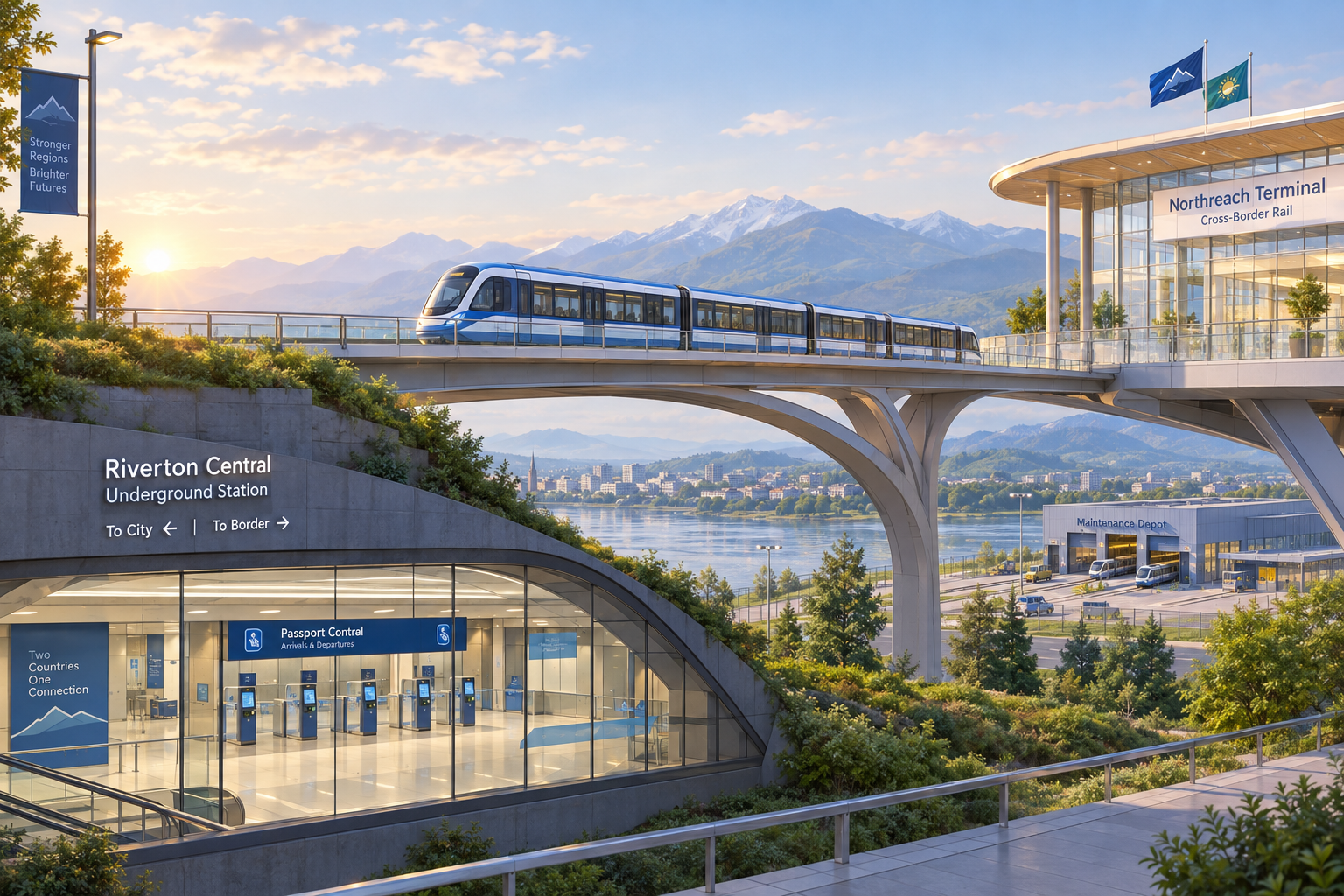
The Johor Bahru–Singapore RTS Link has crossed a long path from proposal to near-completion. First announced in May 2010, the cross-border rail project was initially meant to begin operating in 2018. Its planned opening moved more than once as the project’s design and timeline changed.
The line will connect Woodlands North in Singapore with Bukit Chagar in Johor Bahru. About 4km long, it is designed as a standalone light-rail system, with a depot planned at Wadi Hana in Johor Bahru. A 25-metre-high bridge will link Singapore’s underground station to Johor’s above-ground station.
For passengers, the journey is expected to take about five minutes. Trains are planned to run from 6am to midnight, with waits as short as 3.6 minutes. The system is designed to carry up to 10,000 passengers per hour in each direction.
A key part of the plan is to place customs, immigration and quarantine facilities at both stations. Passengers are expected to complete the necessary checks before boarding, without another immigration clearance after getting off. Singapore legislation passed in 2026 also addressed arrangements including criminal jurisdiction for certain incidents on the train and between two bridge piers.
The project’s schedule has shifted alongside its development. Passenger services had been planned for the end of 2024, but Malaysia’s review led to a suspension from 2019 until the project formally resumed in July 2020. The target then moved to the end of 2026. Construction milestones followed: about 65 per cent of structural work was complete by January 2024; the first train was unveiled in June 2025 and arrived at Woodlands North for a demonstration in February 2026. The station was completed on September 4, 2026.
On October 2, 2026, RTS Operations said passenger service was expected to begin in February 2027, after system tests and trial runs due to finish by the end of 2026. But the date was still conditional on independent safety certification and final regulatory approvals. After sixteen years of planning and construction, the line was approaching its next milestone—but its final opening date, fares and eventual ridership were not yet established.
Leave a Reply