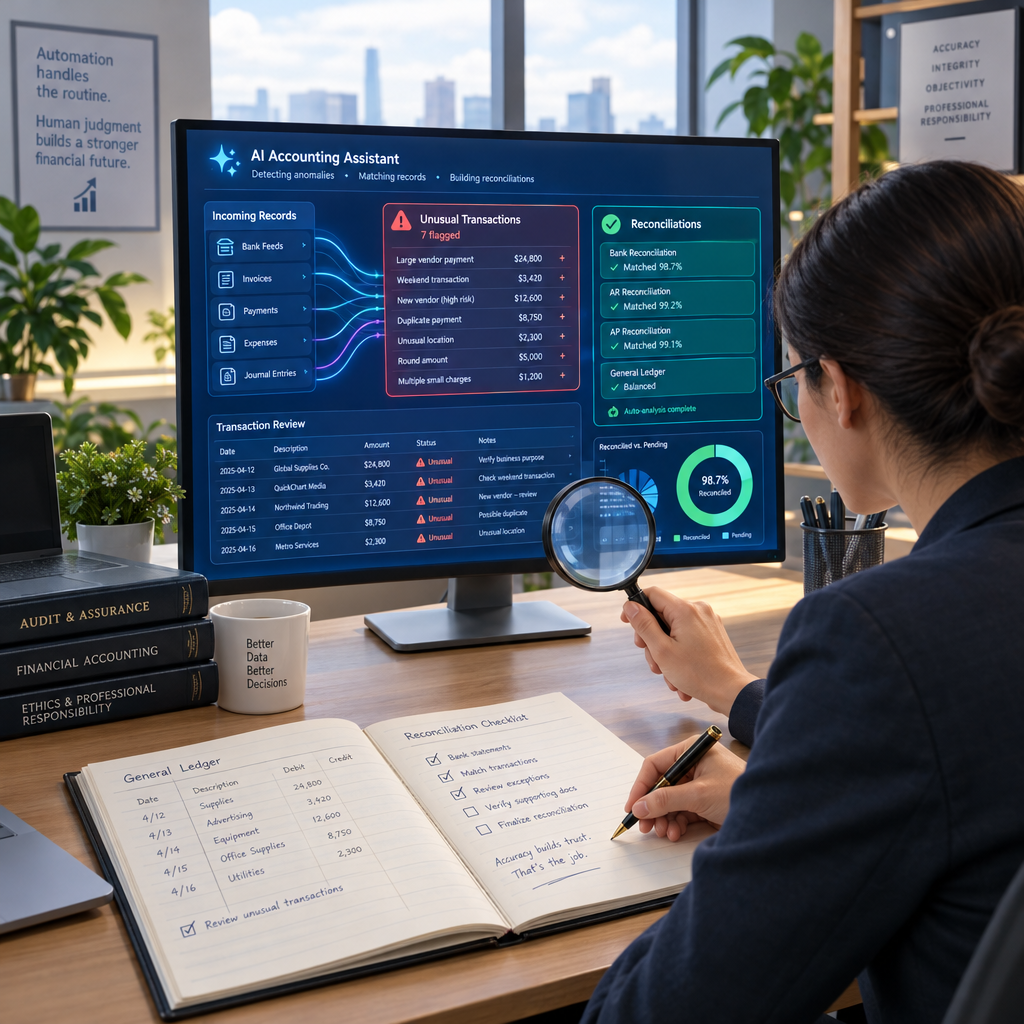
Will artificial intelligence eliminate the accounting profession, or reshape it? In Singapore, the more immediate shift is in the work itself: AI is taking on repetitive, data-heavy tasks, while accountants’ roles increasingly centre on interpreting results, applying judgment and taking responsibility.
AI tools can analyse large populations of transactions and flag unusual items for auditors to review. They can automate reconciliations, match records across systems and help draft disclosures from structured data. These capabilities may reduce routine processing, particularly in junior roles, but they also make digital literacy, data interpretation and analytical thinking more important.
That change does not remove the need for professional accountability. AI can process information, but accountants remain responsible for reviewing it, exercising professional judgment and standing behind the work. This is especially important in assurance, where generative AI is being used cautiously for tasks such as summarising documents, extracting data, supporting research and drafting. Sources, evidence and consistency with professional standards still need to be checked, since AI outputs can be inaccurate.
The figures cited in the article offer a snapshot of Singapore’s evolving sector. ISCA student membership grew by 50% in 2025, while fewer than 1% of ISCA members sought unemployment support that year. ACRA’s 2025 survey found that 85% of accounting entities had adopted at least one technology solution, up from 70% in 2023. The article also cites a 2025 trust survey in which 85% of senior business leaders in Singapore said they trusted Chartered Accountants to do the right thing.
These numbers do not settle the question of how AI will affect every accounting job. The article presents the perspective of ISCA’s CEO, and it does not provide detailed methodology for the reported figures. But its central message is clear: as technology changes the tasks accountants perform, human judgment, careful review and accountability remain essential.
Leave a Reply