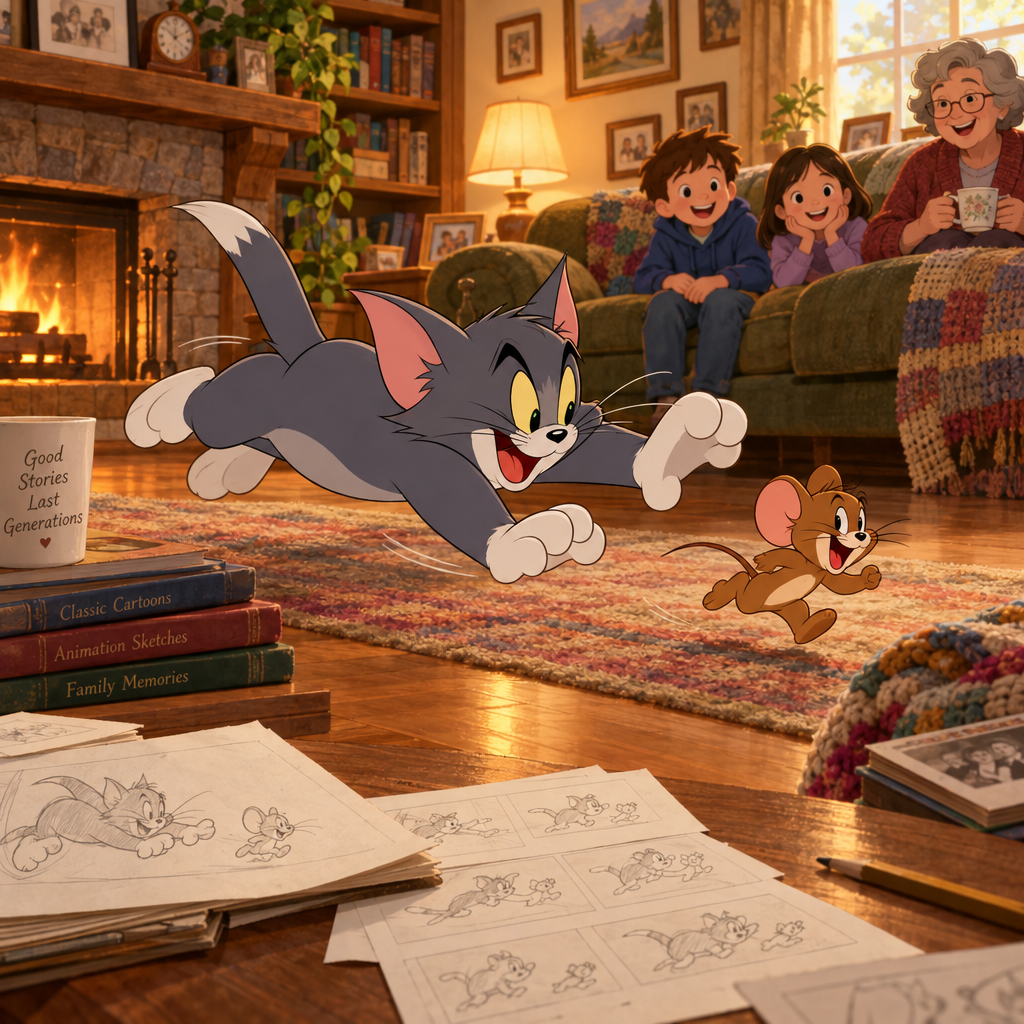
For 85 years, a cat and a mouse have turned a simple chase into a source of laughter, comfort and childhood memories. Marking the anniversary of *Tom and Jerry*, a retrospective feature looks back at the cartoon’s 1940 debut and the appeal that has carried its familiar rivalry across generations and language backgrounds.
Created by William Hanna and Joseph Barbera, the series began with the short *Puss Gets the Boot*. Its enduring formula is easy to recognize: Tom pursues Jerry, the chase escalates, and slapstick takes over. With little reliance on dialogue, the comedy can travel through expressions, movement and timing.
That rhythm is part of what viewers remember. In recollections shared by the article’s interviewees, the cartoons are funny and comforting, closely tied to childhood and time spent with family. An illustrator and an animation-studio executive also point to the expressive detail of the older films and the frame-by-frame work behind them, contrasting that process with later digital production. The animation has changed over time, but Tom and Jerry’s essential rivalry remains recognizable.
The anniversary feature also makes room for a more cautious view. A child psychology consultant highlights physical aggression, deception and manipulation in the cartoons, and suggests that parents talk with children about what they watch. It is a reminder that a beloved comedy can prompt conversation as well as laughter.
The feature’s portraits and recollections don’t amount to a comprehensive history or a measured study of popularity. But they do capture why the chase still resonates for many viewers: its visual humor is familiar, its characters are instantly recognizable, and its memories often belong to more than one generation.
Leave a Reply