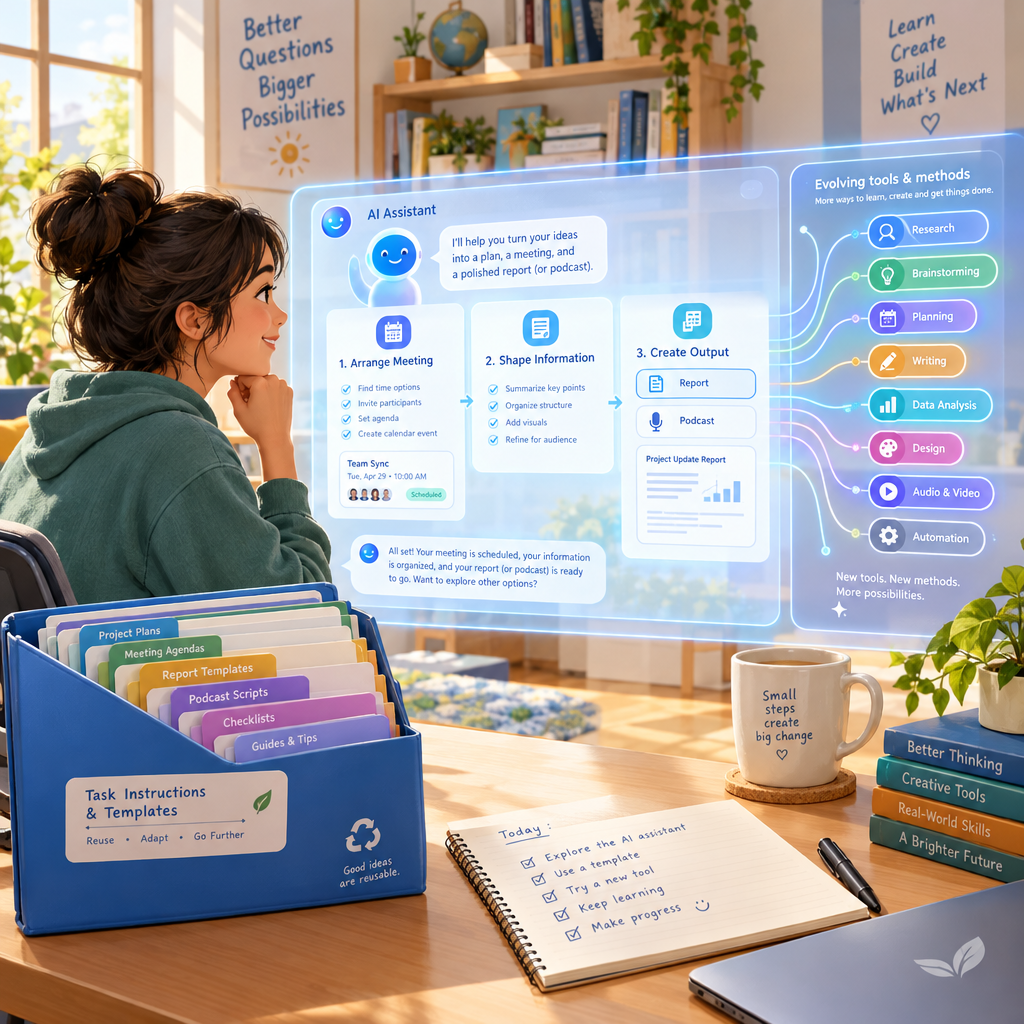
The phrase “AI skills” can mean two different things: the capabilities people need to work effectively with AI, and a technical way to teach AI agents how to handle particular tasks. Michael Webb’s article explores the connection between the two.
An Agent Skill is described as a standardised folder of instructions, optional code, and supporting resources such as templates or documents. Its main instruction file is called `SKILL.md`. By packaging a recurring process into a reusable Skill, users can give an AI tool a clearer guide to work it may need to do again—such as formatting reports or creating a podcast from a collection of news articles.
The idea can also complement an agent’s broader abilities. Webb gives the example of an agent arranging a meeting: it might check calendars, find a suitable time, and send invitations, while a Skill helps it follow the organisation’s preferred meeting practices. A Skill can be created by turning repeated instructions into a reusable process, or designed ahead of time for work that is likely to recur.
The format is presented as open and adopted by multiple vendors, but that does not mean every Skill will work identically everywhere. Some may need small changes, and compatibility can vary by platform. Webb’s account is a practitioner’s perspective, not a formal evaluation establishing how effective or reliable Skills are across tools.
For educators, the larger lesson is about preparing learners for change. Teaching AI literacy should include hands-on experience with emerging features, but it should not stop at today’s interfaces or prompt-writing techniques. If courses treat particular methods as permanent, they risk becoming outdated as tools evolve. Learners also need practice adapting—understanding how to explore new capabilities and apply them thoughtfully.
Agent Skills offer one way to make recurring AI-assisted work more explicit and reusable. The enduring skill, however, may be learning how to keep up as the tools and the ways of working with them change.
Leave a Reply