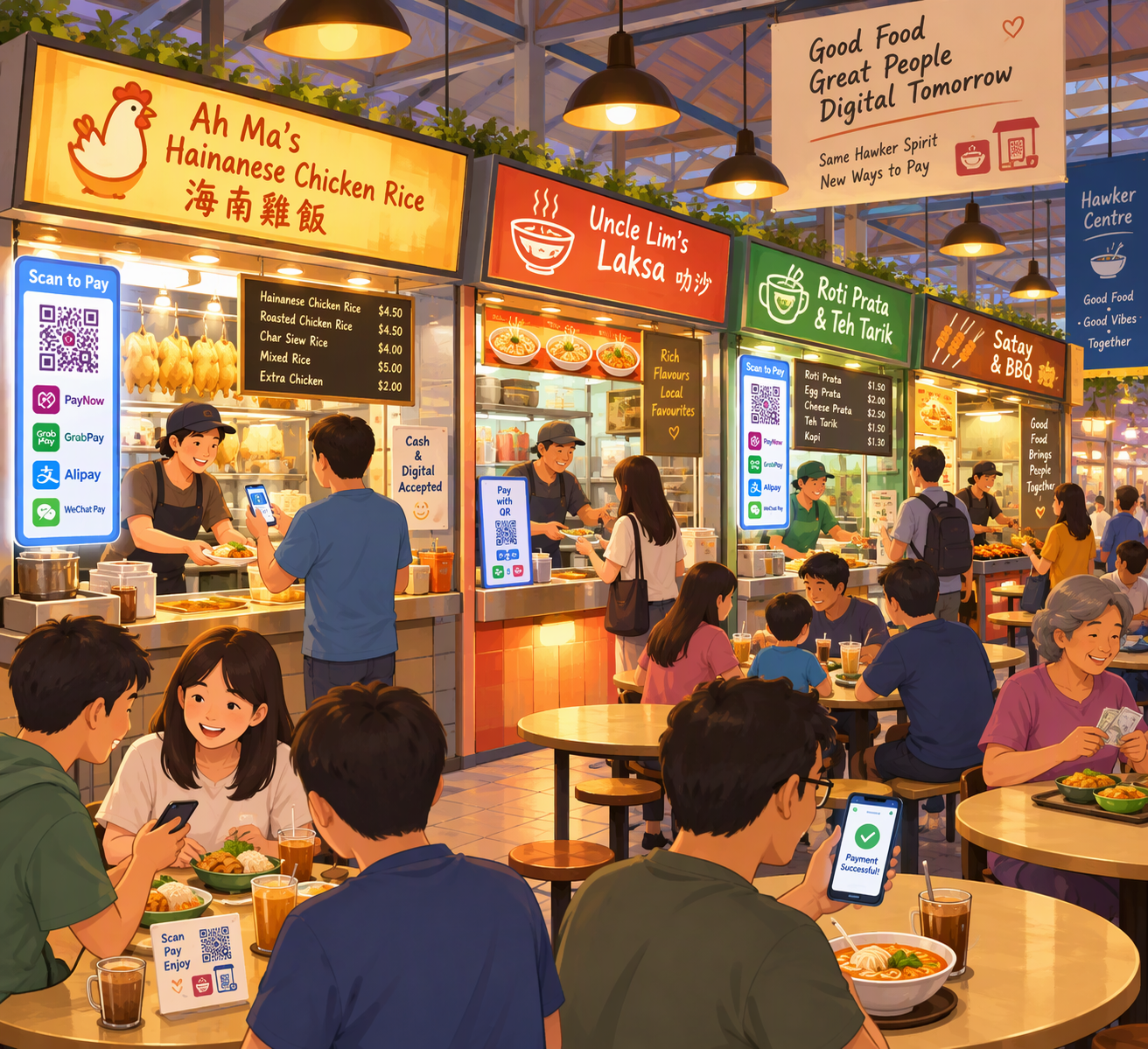
A meal at a hawker centre may be paid for with cash—or, at participating stalls, by scanning a QR code. In October 2024, Singapore’s Hawkers Go Digital programme was still encouraging stallholders to add that digital option, with a subsidy designed to make the transition easier.
By that month, more than 11,500 hawkers had adopted cashless payments through the programme. It supports stalls in government-run food centres, including those operated by the National Environment Agency and the Housing Board. Customers can pay electronically using QR codes on the Singapore Quick Response Code, or SGQR, platform.
The incentive addresses one practical concern for stallholders: transaction fees. At the time of the article, the government subsidy covered the 0.5 per cent fee on the first $20,000 of digital-payment transactions made by each stall per month. Enterprise Singapore and the Infocomm Media Development Authority extended the subsidy until the end of 2025.
The extension followed feedback from hawkers. The agencies said it was intended to help food-and-beverage stallholders continue adopting e-payments and adjust to paying transaction fees, particularly amid rising operating costs. The programme’s goal was to have about 18,000 stallholders in government-run food centres adopt digital payments.
The figures in the article suggest that use of the participating stalls’ payment system was growing. In August 2024, its monthly transaction value reached $60 million, compared with $45 million in August 2023. Transaction volume also increased, from 5.4 million to 7.6 million over the same period.
Those numbers describe activity through the programme’s e-payment system; they do not tell us what share of every purchase at Singapore hawker centres was paid digitally. Nor do they mean that every stall accepts cashless payments or that cash has disappeared. The article presents digital payment as an ongoing change, supported by QR codes and a temporary fee subsidy—not a completed move away from cash.
The subsidy had already been extended once before: it was initially due to end in 2023, then continued through the end of 2024. The October 2024 announcement pushed the support period further, to the end of 2025. For hawkers, the change offered more time to try digital payments and adapt to the costs involved; for customers, it meant a growing number of participating stalls where a QR scan could be another way to pay.
Source: Subsidy for hawkers to adopt digital payments extended to end-2025, The Straits Times
Leave a Reply