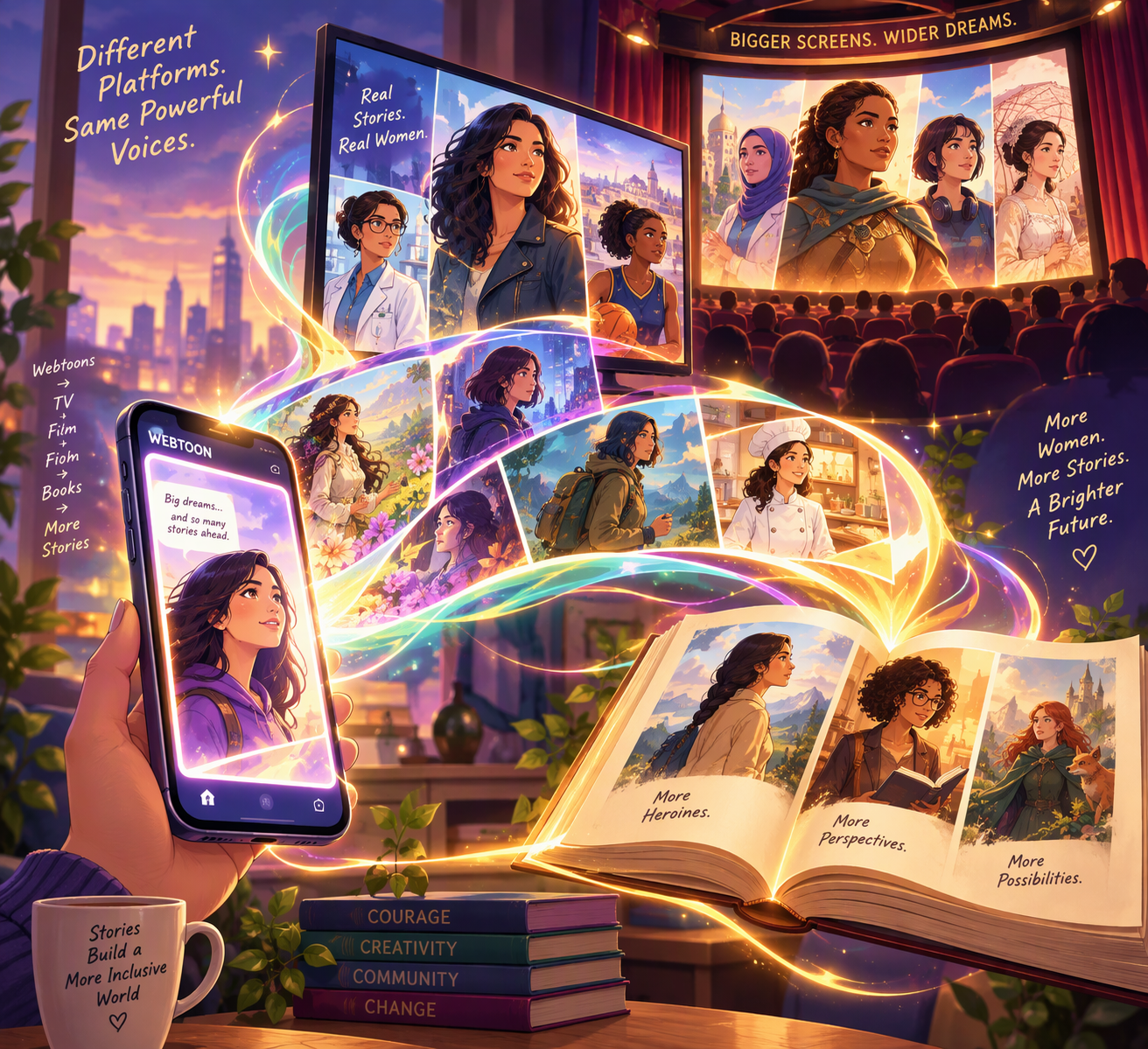
A story can begin as a scroll on a phone and travel far beyond its first readers. In South Korea, webtoons created by women are helping bring female-centred narratives into the spotlight—and some of those stories are reaching new audiences through K-drama adaptations.
A peer-reviewed article in The Comics Grid examines this shift against a broader backdrop: women and their stories have often been underrepresented in creative industries, while female characters have frequently been objectified or sexualised. The authors argue that South Korean webtoons are moving away from a traditional emphasis on male-centred stories, as women creators gain prominence and attract large audiences.
To explore the stories and their adaptations, the researchers used qualitative content analysis. They examined webtoons created by South Korean women and the K-dramas adapted from them, looking at gender narratives and international reach. They also drew on quantitative information from the works and from media organisations, government sources and statistical reports.
The article points to technology as part of the journey. Webtoon apps and streaming platforms can help make these works accessible to people beyond their original audiences. When a webtoon becomes a drama, its characters and themes can travel through a different format and reach viewers internationally.
What might those viewers encounter? The authors highlight stories that offer access to women’s experiences and perspectives, including narratives about social and gender issues in both private and public life. These stories can invite audiences to consider whose experiences are centred—and how everyday life is shaped by gender.
The article also connects storytelling with the business of entertainment. The commercial success of webtoon-based K-dramas challenges the assumption that female-centred stories appeal only to a niche audience. In the authors’ view, that success points to market potential for more diverse storytelling. It suggests that making room for different voices can matter both culturally and commercially.
The subject has wider significance in South Korea, which the article notes ranked 105th out of 146 countries in the 2023 Global Gender Gap Report. That figure provides context for why stories about gender and women’s experiences may resonate, but the study is focused on narratives and their circulation—not on proving that watching or reading them directly changes people’s attitudes or lives.
The article’s central idea is that stories travel, and so can the perspectives they carry. South Korean women creators are contributing to webtoons and screen adaptations that bring female-centred narratives to broader audiences. Their growing visibility also raises a compelling question for viewers and the entertainment industry alike: what new stories become possible when women’s experiences are treated as central, rather than peripheral?
Source: The Impact of South Korean Women’s Narratives: Amplifying Female Voices through Webtoons and Drama Adaptations, The Comics Grid: Journal of Comics Scholarship (published by the Open Library of Humanities)
Leave a Reply