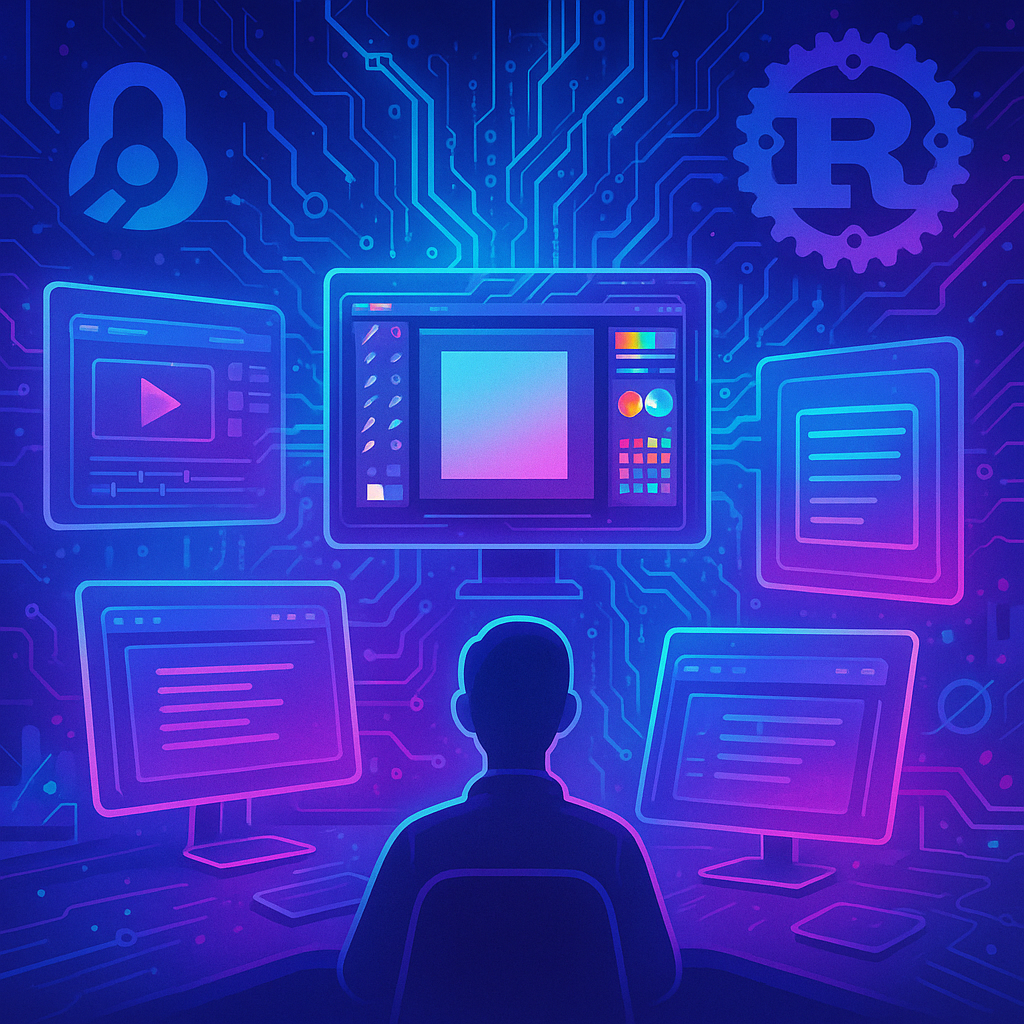
A groundbreaking development in the open-source world has given rise to ArtCraft, a suite of “clean-room” reimplementations of Adobe’s flagship software: Photoshop, Illustrator, Premiere, Lightroom, After Effects, InDesign, and Acrobat Pro. Driven by AI-assisted reverse engineering, this project was spearheaded by developer Brandon Thomas using Anthropic’s Claude Opus 5.5 AI model to replicate the rich functionalities and user interfaces of Adobe’s offerings.
Written in the systems programming language Rust, ArtCraft stands out not only for its AI-powered origins but also for its deployment flexibility. The suite includes WebAssembly versions that run directly in web browsers, allowing users to access these powerful creative tools across multiple platforms without installing native software. This represents a significant step toward expanding access and promoting cross-platform compatibility.
While ArtCraft is still in its early stages and does not yet match the full feature set or polished stability of Adobe’s original applications, the project’s progress showcases the impressive capabilities of combining AI with reverse engineering techniques in software development. It opens up exciting possibilities for the future, where creative professionals and hobbyists alike might enjoy open, customizable, and freely accessible tools that parallel industry standards.
Overall, ArtCraft demonstrates the transformative potential of AI in reinventing complex software ecosystems, offering a promising glimpse at what the next generation of open-source creative tools could look like.
Leave a Reply