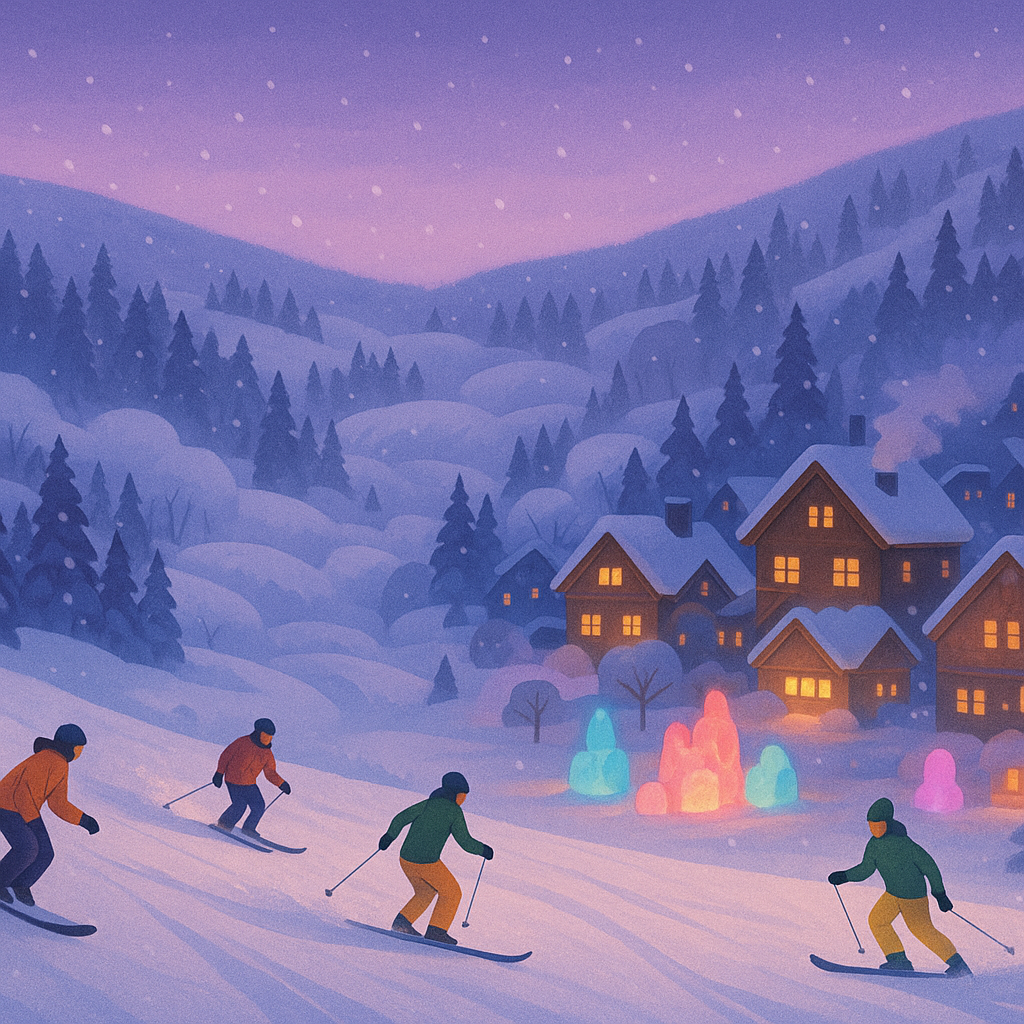
If you’ve ever chased powder, Hokkaido keeps coming up in the conversation for a reason: the island’s northerly position and Siberian winds produce exceptionally dry, deep snow — sometimes amounting to as much as about 18 metres a year — earning it the nickname “Japan’s powder capital.” The local character of the snow is well summed up by one simple line from the source: it’s “deep not steep,” which makes Hokkaido a brilliant place for mixed groups — families and beginners can find gentle, groomed runs while powder-seekers and confident off‑piste riders explore the deeper stuff.
Key winter attractions go beyond the slopes. The Sapporo Snow Festival in February showcases huge, illuminated snow and ice sculptures, and the island’s famed onsen (hot springs) offer the classic après-ski counterpoint. Resorts also cater for families with kid-friendly facilities, ski schools and indoor attractions that keep non-skiers entertained.
Resort snapshot: Niseko (Niseko United)
Niseko is presented as Hokkaido’s biggest and most developed ski area, made up of four connected resorts on Mt. Niseko/Annupuri: Grand Hirafu, Hanazono, Niseko Village and Annupuri. Together they offer a wide range of terrain, lively après options and easy access to onsen.
– Grand Hirafu: season listed as late November to early May; 21 courses (≈40% beginner, 37% intermediate, 23% advanced); 12 lifts; longest run ~5.6 km. Facilities include a ski park, halfpipe, night skiing, ski school, gear rental and children’s facilities.
– Hanazono: season late November to early May; 8 courses (≈30% beginner, 60% intermediate, 10% advanced); 3 lifts; longest run ~4.55 km. Noted features are a halfpipe, tree runs, a beginners’ area, backcountry access, family activities, gear rental and ski school.
– Niseko Village: season late November to early May; 27 courses (≈50% beginner, 30% intermediate, 20% advanced); 6 lifts; longest run ~5 km. Offers a ski park, night skiing, ski school, gear rental and kids’ facilities.
– Annupuri: season late November to early May; 13 courses (≈25% beginner, 45% intermediate, 30% advanced); 5 lifts; longest run ~4 km. The area is noted for access to a large adjacent area beyond groomed slopes.
Furano and Tomamu: alternatives worth mixing in
– Furano Ski Resort sits near the island’s geographic centre and balances powder appeal with family-friendly town comforts. Reported seasons are late November to early May for the Furano zone and mid-December to late March for the Kitanomine zone. Furano has 24 courses (≈40% beginner, 40% intermediate, 20% advanced), 10 lifts and a longest run of about 4 km, plus features such as a ski park, halfpipe, night skiing, ski school, gear rental and kids’ facilities.
– Tomamu is positioned as a family-focused, central-Hokkaido resort with wide tree-run courses, an on-site ice village and a large indoor wave pool — attractions that make it a strong pick for groups with mixed interests.
Getting there — practical routing notes
The article outlines typical access patterns through Shin-Chitose (New Chitose) Airport. For example, flights from Tokyo’s Haneda to Shin-Chitose are presented as roughly 90 minutes. From Shin-Chitose to Niseko you can use JR rail (to Kutchan/Niseko, approx. 2.5–3 hours) or one of several shuttle services (Chuo Bus, Hokkaido Resort Liner, White-Liner) with travel times quoted at roughly 180–213 minutes. Sample fares on the page range around JPY 2,600–4,000 one-way and about JPY 4,500 return for some shuttle options. For Furano, the Hokkaido Resort Liner from Shin-Chitose is listed at about 135 minutes (example fare ~JPY 4,000), while Asahikawa Airport to Furano via the Hokkaido Resort Liner is shown at roughly 80 minutes (example fare ~JPY 2,500).
What to expect on the mountain
Across resorts you’ll find night skiing, ski parks and halfpipes, ski schools and gear rental. There are family and kids’ facilities at the major areas, and options for tree runs and backcountry skiing at selected sites. The article highlights steeper options elsewhere on Hokkaido (for example Sapporo Teine and Kurodake) for skiers after more challenging terrain, while encouraging visitors to mix resorts to experience varied snow and resort styles.
What the source doesn’t cover (and why to double‑check)
The page provides a strong, high‑level foundation but it doesn’t carry live, season‑specific information: there are no current snow reports, daily lift prices, or real‑time opening/closing dates. It also doesn’t offer detailed lodging advice, avalanche‑safety guidance for backcountry travel, or image licensing for commercial use. The article’s practical routing times and sample fares are useful planning guides, but travellers should verify schedules, fares, lift statuses and booking details with official resort sites and transport operators before making final arrangements.
In short
If powder is your priority but you’re travelling with mixed abilities, Hokkaido’s “deep not steep” snow and varied resort profiles make it a smart destination: Niseko for scale and variety (with four linked areas), Furano for a central, all‑round resort, and Tomamu for family‑friendly amenities off the slopes. Pairing skiing with the Sapporo Snow Festival and a soak in an onsen rounds out a classic Hokkaido winter trip. Use the resort snapshots and access examples above as a planning backbone, and then check official resort and transport sources for the up‑to‑the‑minute details you’ll need before you go.
Leave a Reply