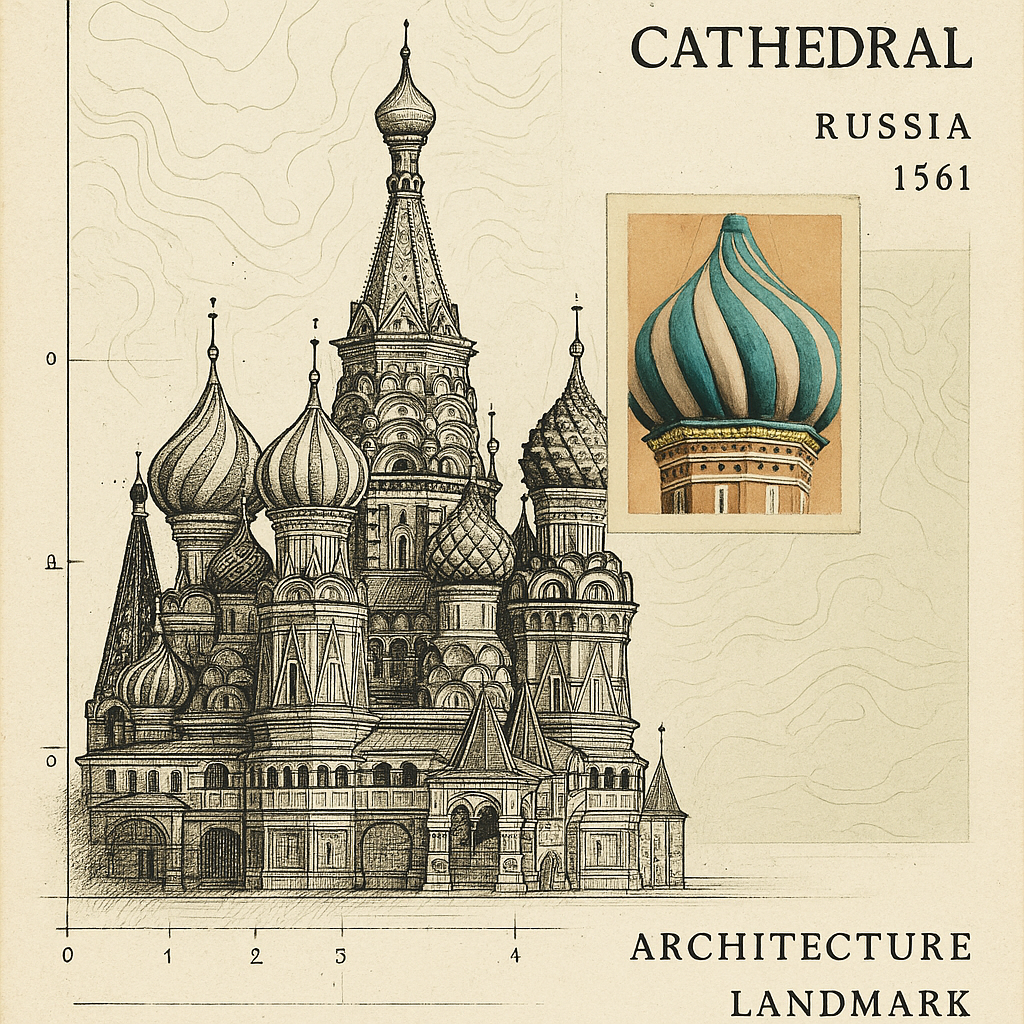
Architectural specimen cards are a unique design approach that masterfully blend elements from museum archives, architectural surveys, and vintage scientific documentation to present buildings and structures in a sophisticated and informative manner. These cards are not just artistic representations; they are curated studies that deeply honor the architectural significance of landmarks while evoking a strong sense of historical authenticity.
At the heart of these specimen cards is a monochrome architectural illustration—a detailed black-and-white drawing that serves as the focal point, capturing the structural essence of the landmark. Complementing this is a photographic fragment in original color, strategically placed to showcase a distinctive detail of the location, bridging the gap between artistic rendering and real-world experience.
Adding contextual depth is a simplified topographic map, subtly positioned behind the architectural illustration. This contour map provides viewers with a sense of the site’s geography, grounding the structure within its physical environment. The design also features architectural annotations, including tiny numbered reference points, measurement marks, arrows, elevation lines, and other symbols reminiscent of vintage architectural surveys and scientific documents. These elements enrich the narrative with layers of technical detail.
Visually, the card uses an aged cream paper background, complete with subtle grain and imperfections, to mimic the look and feel of historical documents. The color palette is carefully restrained, incorporating blacks, warm beige, muted olive, and an accent color drawn directly from the landmark itself—reflecting the muted yet rich hues often found in vintage scientific illustrations.
Typography plays a vital role: small, elegant fonts with an archival style present the location name, country, year, and descriptive keywords, further enhancing the vintage aesthetic. To round off the design’s authenticity, subtle imperfections such as screen printing effects, drafting ink smudges, pencil marks, and simulated old paper textures are integrated, evoking the tactile and visual qualities of aged architectural documentation.
This design inspiration can be traced to respected sources like the Smithsonian Institution’s architectural drawings and the National Archives’ collection of architectural drawings, both renowned for their meticulous preservation and presentation of historical architectural data. The Singapore Architecture Collection (SAC) also offers a wealth of inspiration with its rich archive of modern and contemporary architectural works from Singapore.
Through these thoughtfully combined elements, architectural specimen cards serve not only as a visual tribute but also as educational artifacts, connecting viewers to the historical and cultural significance of architectural landmarks while celebrating the art of architectural documentation itself.
Leave a Reply