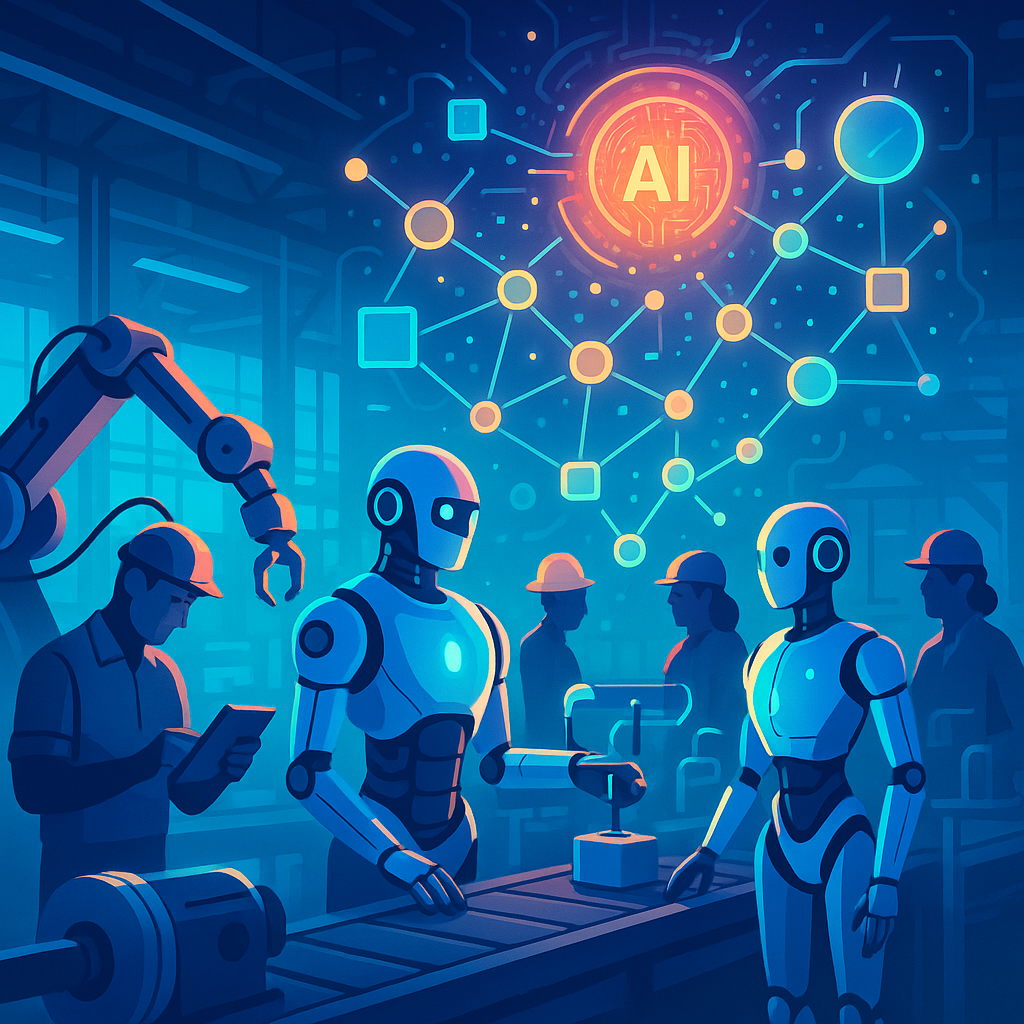
Artificial intelligence is rapidly evolving beyond traditional boundaries, and the next wave of innovation promises to reshape how machines interact with the world. Following the era of agentic AI, which focused on autonomous decision-making, the spotlight is now turning to physical AI, multi-agent orchestration, and model-native agentic AI—each representing a crucial step forward.
Physical AI marks a revolutionary integration of AI capabilities into tangible systems. Companies like Nvidia highlight how this fusion allows robots, autonomous vehicles, and other devices to perceive their surroundings, reason through complex data, and act decisively in the physical environment. Imagine manufacturing floors where humans and robots seamlessly collaborate, guided by machines interpreting sensory inputs and making real-time decisions. This melding of AI with the physical world transcends traditional software limitations, unlocking new potential for automation and smart interaction.
Parallel to this, multi-agent orchestration is transforming how AI systems handle complex, long-term tasks. Rather than relying on a single AI agent, networks of specialized agents work collaboratively—planning, delegating, and executing tasks more efficiently. This collective intelligence approach offers heightened adaptability and robustness, enabling organizations to tackle workflows that are too intricate for monolithic AI models.
Simultaneously, the AI community is advancing toward embedding autonomy deeper within models themselves through model-native agentic AI. This approach integrates capabilities such as self-planning, tool utilization, and memory directly within AI architectures, reducing dependence on external orchestration. Reinforcement Learning (RL) is a fundamental driver here, allowing AI systems to learn and adapt dynamically from experience, thereby enhancing their independence and effectiveness.
Together, these advancements illustrate a rich, multifaceted trajectory for AI development. From enabling machines to physically engage with the world, to fostering collaboration among specialized agents, and embedding autonomy directly within AI models, the future envisions intelligent systems that are seamlessly integrated, highly adaptive, and remarkably autonomous both digitally and physically. The journey beyond agentic AI promises to unlock remarkable new capabilities that will redefine the landscape of artificial intelligence.
Leave a Reply