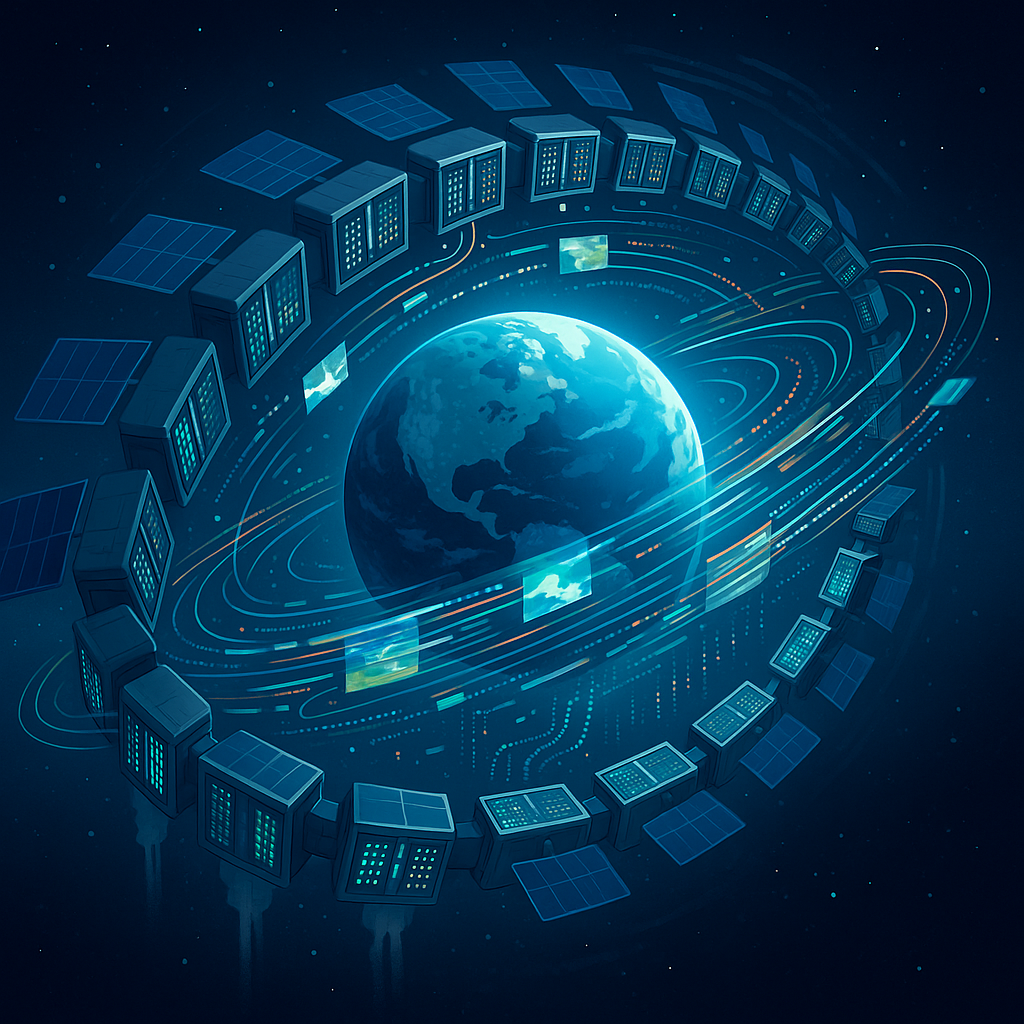
The race to build more computing power is running into a very earthly set of limits: electricity, heat, land and the difficulty of expanding massive facilities near the communities they serve. As AI workloads grow, some companies are looking above those constraints—literally.
The idea behind space-based data centers is to put computing infrastructure in orbit, where it could draw on continuous solar energy and use the conditions of space to reduce the burden of cooling. Proponents believe this approach could sharply cut energy costs and emissions compared with conventional facilities, which consume enormous power and depend on extensive cooling systems.
Space also offers a different answer to the problem of scale. On Earth, new data-center projects can be slowed by limited land, regulation and local opposition. In orbit, companies envision deploying large networks of satellites equipped with AI servers. Orbital, for example, is planning satellites that can process information in space rather than sending all of it back to Earth first.
That onboard computing model could matter most when speed is essential. Earth-observation systems and environmental monitoring generate huge volumes of data, and transmitting raw information to ground stations can introduce delays. TakeMe2Space is among the companies developing satellites designed to process such data in orbit, allowing useful insights to be delivered more quickly.
There is also a resilience argument. Instead of concentrating computing resources in a few vulnerable terrestrial sites, orbital systems could distribute them across satellites. That could make the infrastructure less exposed to physical attacks and natural disasters, while operating within the international framework that governs space activity.
Data centers in space remain an ambitious proposition, but the motivation is clear. As demand for AI and large-scale computing rises, orbit is being considered not simply as a destination for satellites, but as a potential new frontier for the infrastructure that powers the digital world.
Leave a Reply