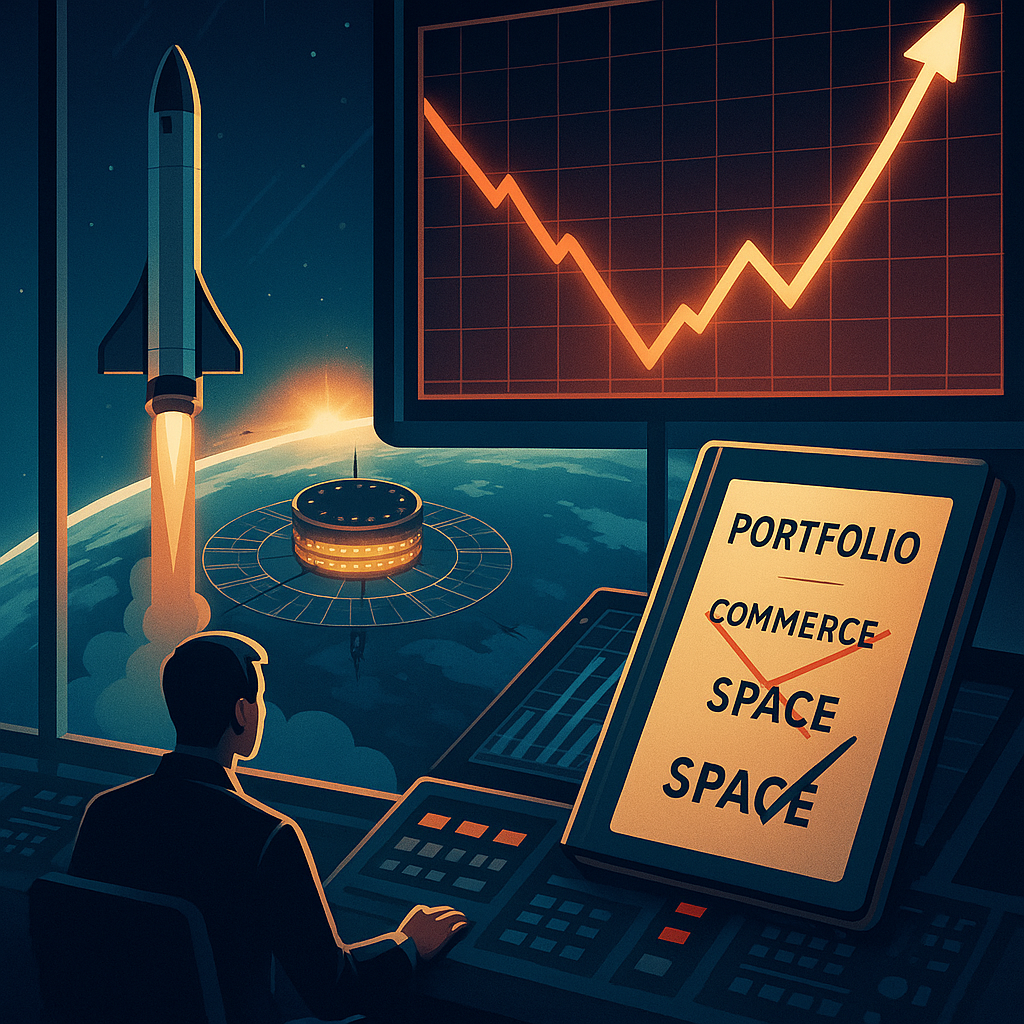
Cathie Wood is once again leaning into volatility. After SpaceX shares fell sharply following the company’s IPO, ARK Invest bought roughly $7 million more of the stock—its third purchase during a post-listing decline.
The move underscores Wood’s willingness to treat a selloff not as a warning, but as an opportunity. ARK had already made a far larger entrance on SpaceX’s first trading day, purchasing about 3.3 million shares in an investment estimated near $500 million across several ETFs. It later added another $32 million after an earlier downturn. The latest purchase came as SpaceX traded near $149, about 13% lower over five days and 29% below its peak closing price of $211.
To make room, ARK sold approximately 570,000 Alibaba shares. That choice made the portfolio message especially clear: SpaceX has become the higher-priority bet. In ARK’s flagship Innovation ETF, the company held around 1.78 million SpaceX shares worth nearly $266 million, representing about 4% of the fund and ranking as its seventh-largest position.
Wood’s conviction rests on a vision much broader than rocket launches. ARK sees SpaceX as a potential force in artificial intelligence, aerospace and orbital data centers, projecting an enterprise value of roughly $3.1 trillion by 2030, compared with a reported market capitalization of about $1.9 trillion at the time.
A crucial part of that thesis is launch economics. ARK’s research says SpaceX has lowered the cost of putting mass into space by about 95% since 2008, to around $1,000 per kilogram. The firm believes costs could someday approach $100 per kilogram, potentially opening the door to infrastructure projects that are currently difficult to imagine.
Orbital data centers sit at the center of that possibility—and of the debate. Elon Musk has argued that AI’s growing computing needs may eventually outstrip what can be supplied economically from Earth. Wood agrees that space-based computing could become necessary. But skeptics point to a formidable physical and financial challenge: generating even one gigawatt of power in space would require an immense solar-panel array, with major weight and launch-cost consequences. SoftBank’s Masayoshi Son has also favored building AI data centers on Earth rather than pursuing a capital-intensive, long-term orbital alternative.
For now, ARK’s latest trade is a familiar Cathie Wood story: a high-conviction purchase in the middle of a steep decline, backed by a sweeping technological forecast. Whether SpaceX’s future is defined by launches alone or by a far more ambitious role in AI infrastructure remains an open question.
Leave a Reply