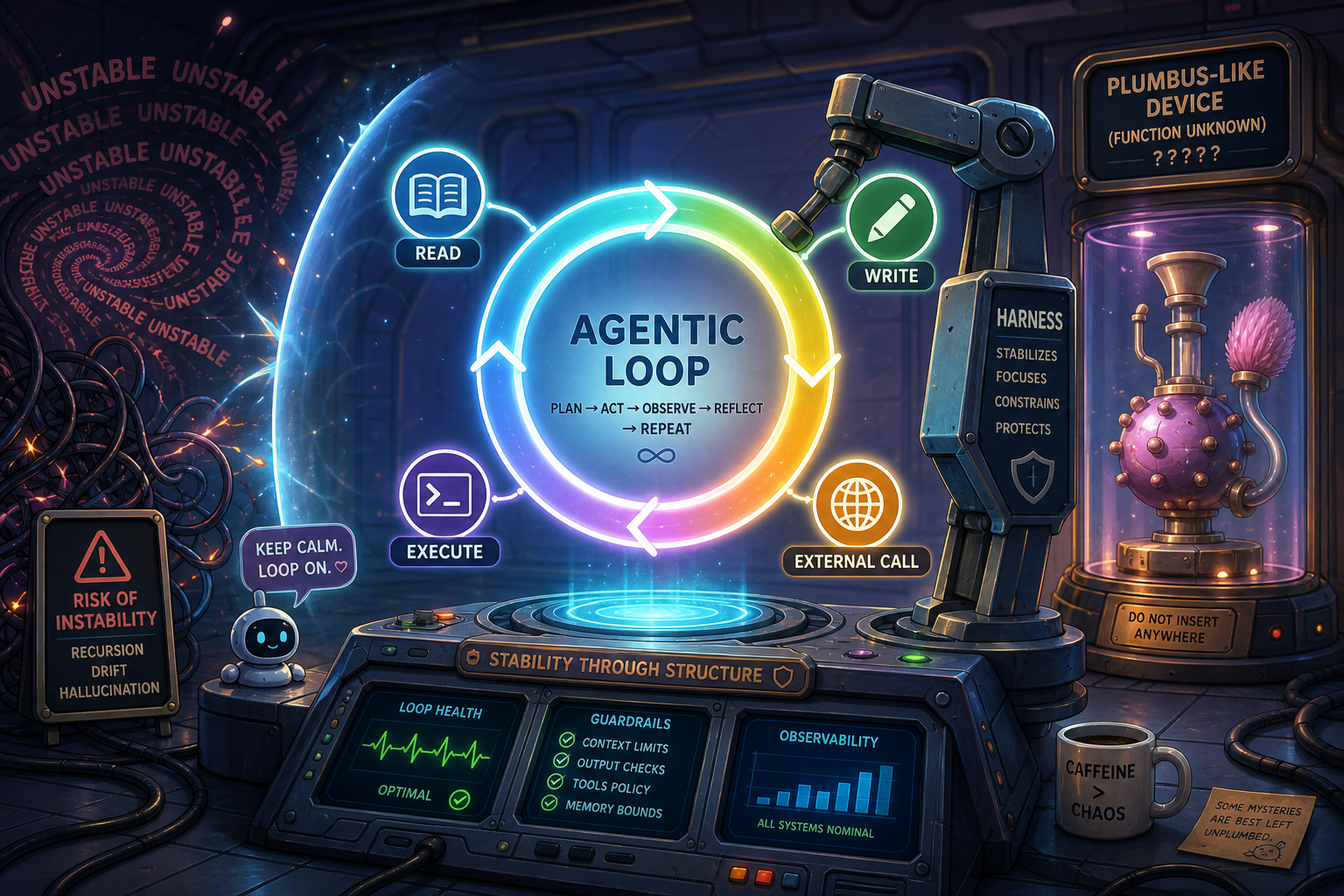
A recent LinkedIn post offers a clear, concise definition of what a “harness” is in the world of agentic AI. According to the article, a harness is essentially a system prompt equipped with basic tool definitions for actions such as read, write, execute, and make external calls. While some harnesses may also include features like sandboxing, extension systems for adding new tools, subagents, background or interactive execution, context compression, memory, interleaved toolcalls, and guardrails, these are considered optional.
At its core, the most crucial role of a harness is to support what is called a “stable agentic loop.” This loop ensures that an AI agent, empowered with various tools, operates reliably without breaking down. Failures in a harness often manifest as repetitive model responses (sometimes called “death loops”), failed edits, malfunctioning tool calls, or broken extensions.
The article humorously compares a harness to the mysterious “plumbus,” suggesting that while everyone uses them, few really know the specifics. Ultimately, the minimum requirement for a good harness is its ability to maintain this internal agentic loop—allowing agentic systems to function effectively and without disruption.
Leave a Reply