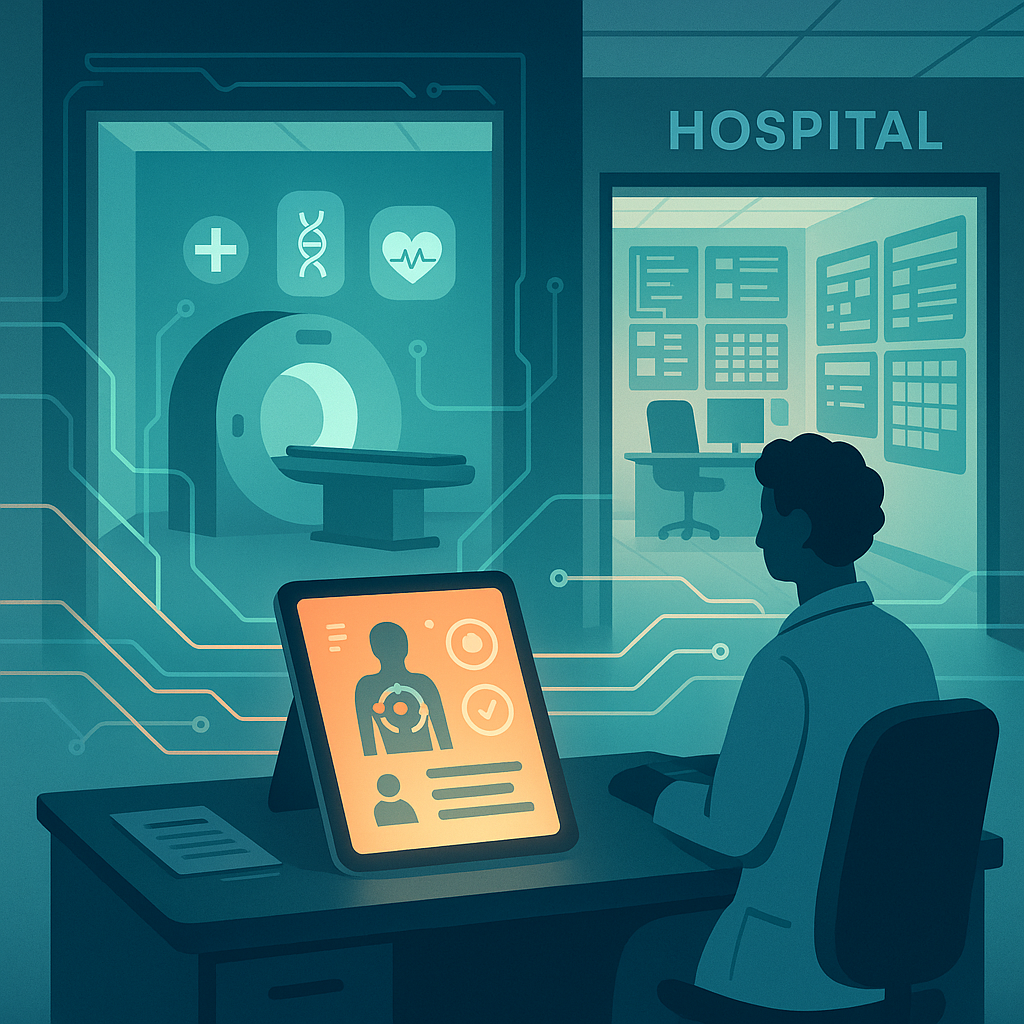
Artificial intelligence is steadily moving from a buzzword to a working layer inside modern healthcare—supporting clinicians at the bedside while also tightening the gears of day-to-day operations. A comprehensive review published in *Health Science Reports* lays out just how broad that shift has become, focusing on advances in diagnostics, treatment, and operational efficiency.
At the clinical level, the article describes AI as a tool that can enhance decision-making. Rather than replacing medical judgment, these systems are presented as a way to strengthen it—helping clinicians interpret information and make choices with added computational support. The review frames this as part of a wider set of advancements that touch multiple points in the care pathway, from identifying disease to guiding how care is delivered.
But the story isn’t only about what happens in exam rooms or imaging suites. The review also emphasizes a less visible—yet deeply consequential—impact: administrative and operational work. By streamlining routine processes, AI can improve how healthcare organizations function overall. In an industry where time, staffing, and coordination often determine how quickly a patient gets seen and how smoothly care is delivered, operational efficiency becomes its own form of clinical benefit.
Taken together, the article’s message is clear: AI’s influence in healthcare is not confined to a single breakthrough or specialty. It is spreading across diagnostics, treatment support, and the administrative backbone that keeps hospitals and clinics running. The real transformation, as the review suggests, may lie in this combination—where better-informed clinical decisions and more efficient operations reinforce each other to improve the system as a whole.
Leave a Reply