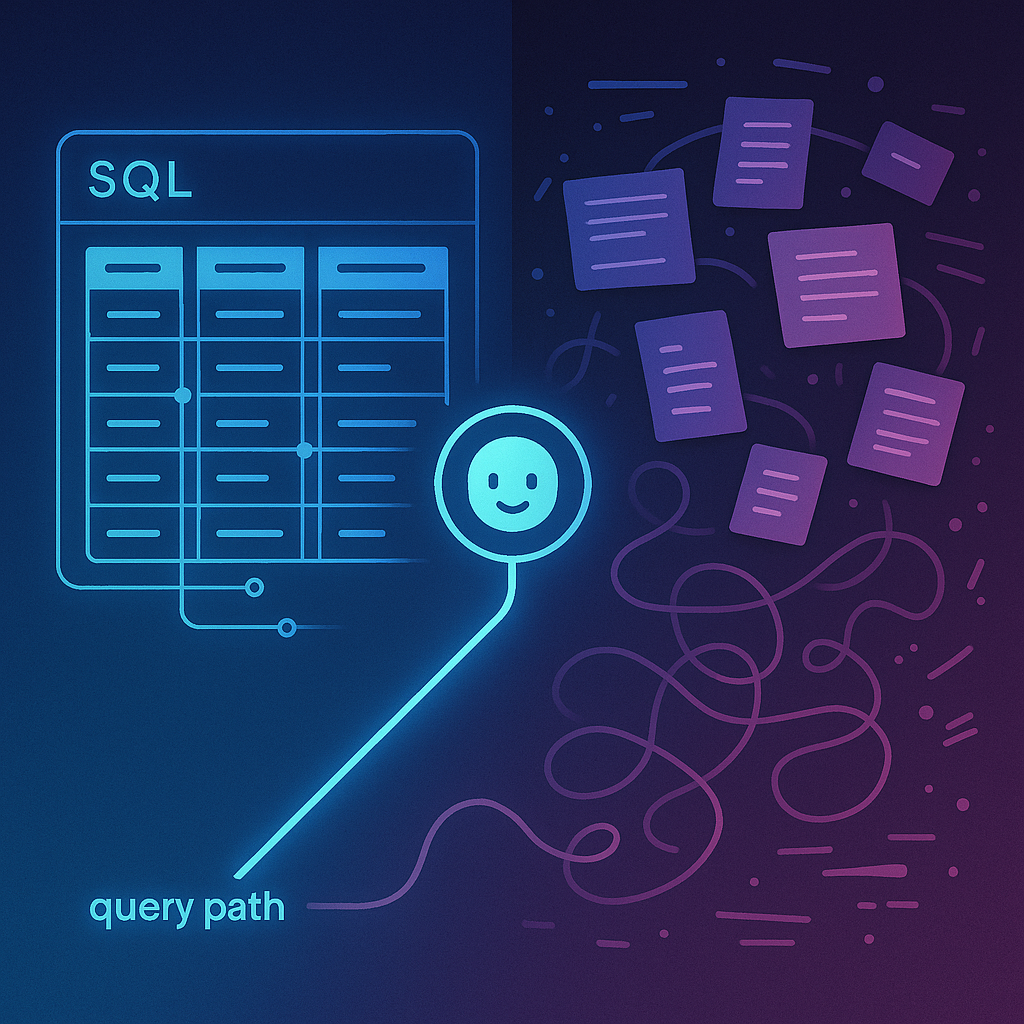
A lively Reddit discussion in r/AI_Agents is pushing back on a popular default in the AI builder’s toolkit: retrieval-augmented generation, or RAG. In the post, the author argues that while RAG is often treated as the go-to solution for giving agents “knowledge,” it can be the wrong approach for many agentic workflows—and they suggest a more old-school alternative instead.
The core recommendation is straightforward: build a solid SQL database. The post paints a picture of data that’s “neatly organized in rows and columns,” where each piece is tagged and easy to query. In that framing, the problem with RAG isn’t that retrieval is useless—it’s that relying on a “messy” approach to pulling text chunks back into a model can be less dependable than working from structured, queryable information.
The argument taps into a practical reality anyone building agents runs into quickly: agents don’t just need to sound right—they need to act correctly. When an agent must look something up, filter, sort, or select a single right answer, the post suggests it can be better to rely on a database designed for precision and repeatability. SQL, in this view, becomes the backbone for reliable agent behavior: explicit schema, clear fields, and queries that can be inspected and improved.
What makes the post notable is less a sweeping condemnation of RAG and more the reminder that “knowledge” isn’t one thing. Some information wants to live as documents; other information wants to live as records. The author’s point is that if your agent is operating on facts that naturally fit into tables—items, attributes, timestamps, categories—then treating them like loose text just because an LLM can read it may be a self-inflicted complication.
In a space where new agent frameworks and retrieval tricks appear constantly, the post lands as a contrarian nudge: before you reach for RAG, ask whether the job is actually a data-modeling problem. Sometimes the best upgrade for an AI agent isn’t a new prompt or a larger embedding index—it’s a well-structured database and a clean query path to the truth.
Leave a Reply