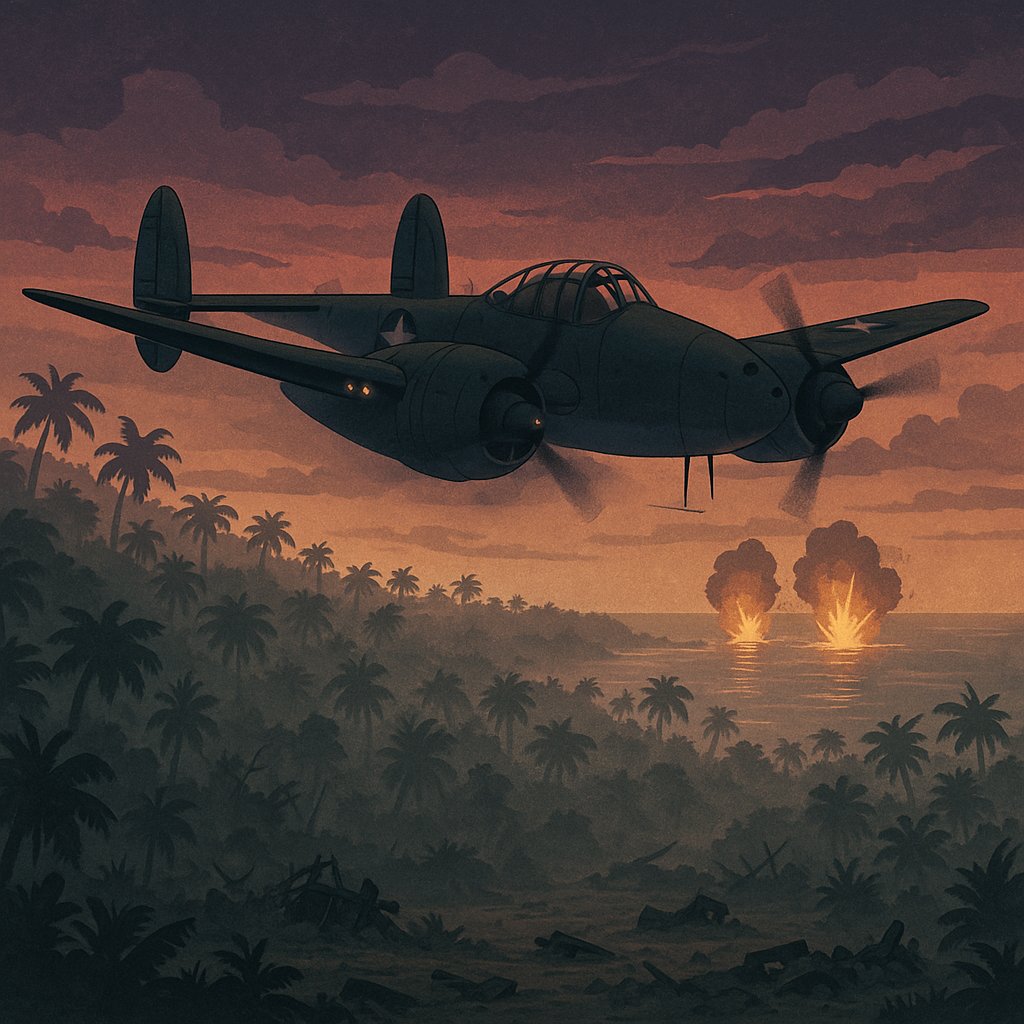
The Bristol Beaufighter emerged as one of World War II’s most versatile and effective combat aircraft, particularly in the Pacific Theater. Originally developed from the Bristol Beaufort torpedo bomber, the Beaufighter adapted quickly to fill multiple combat roles, from night fighting to anti-shipping strikes and ground attacks.
Arriving in the Pacific in mid-1942, the Royal Australian Air Force (RAAF) became a primary operator, receiving its first Beaufighter IC in April 1942 and continuing deliveries until August 1945. These aircraft were deployed strategically, with No. 30 Squadron operating in New Guinea and No. 31 Squadron stationed in North-West Australia. Their mission encompassed a wide range of combat objectives crucial to the Allied efforts in this region.
In the South-East Asian Theater, Beaufighter Mk.VIFs operated out of India, engaging in night fighting and attacking Japanese lines of communication in Burma and Thailand. Their capability to execute high-speed, low-level attacks was particularly valued, especially given the challenging weather and limited maintenance support conditions. Meanwhile, in the South-West Pacific Theater, the Beaufighter Mk.IC earned a reputation as a formidable anti-shipping aircraft. One of their most famous engagements was during the Battle of the Bismarck Sea, where they provided essential fire suppression alongside U.S. bombers. Armed with four 20mm cannons and six .303 machine guns, their firepower was devastating.
A unique characteristic of the Beaufighter was its quiet operation, thanks to sleeve-valve engines, which earned it the ominous Japanese nickname “Whispering Death.” This stealth element often allowed Beaufighters to strike before the enemy could react, amplifying their combat effectiveness.
The Bristol Beaufighter’s legacy is further enriched by the 364 units built in Australia by the Department of Aircraft Production (DAP). These DAP Beaufighter Mk.21s were outfitted with more powerful engines and enhanced armaments, demonstrating continual improvements to meet the rigors of Pacific warfare.
With a total production number of 5,928 aircraft, the Beaufighter’s robust service record and adaptability underscore the critical role it played in securing Allied success across the diverse and demanding challenges of the Pacific Theater.