Blog

  • Please paste the article text (the search results aren’t enough yet)

    Please paste the article text (the search results aren’t enough yet)

    I can write the kids-friendly blog post, but I need the actual content of one specific article.

    Right now you’ve shared a list of search results (titles/snippets/links), not the article itself—and I’m required to use only information from the provided article.

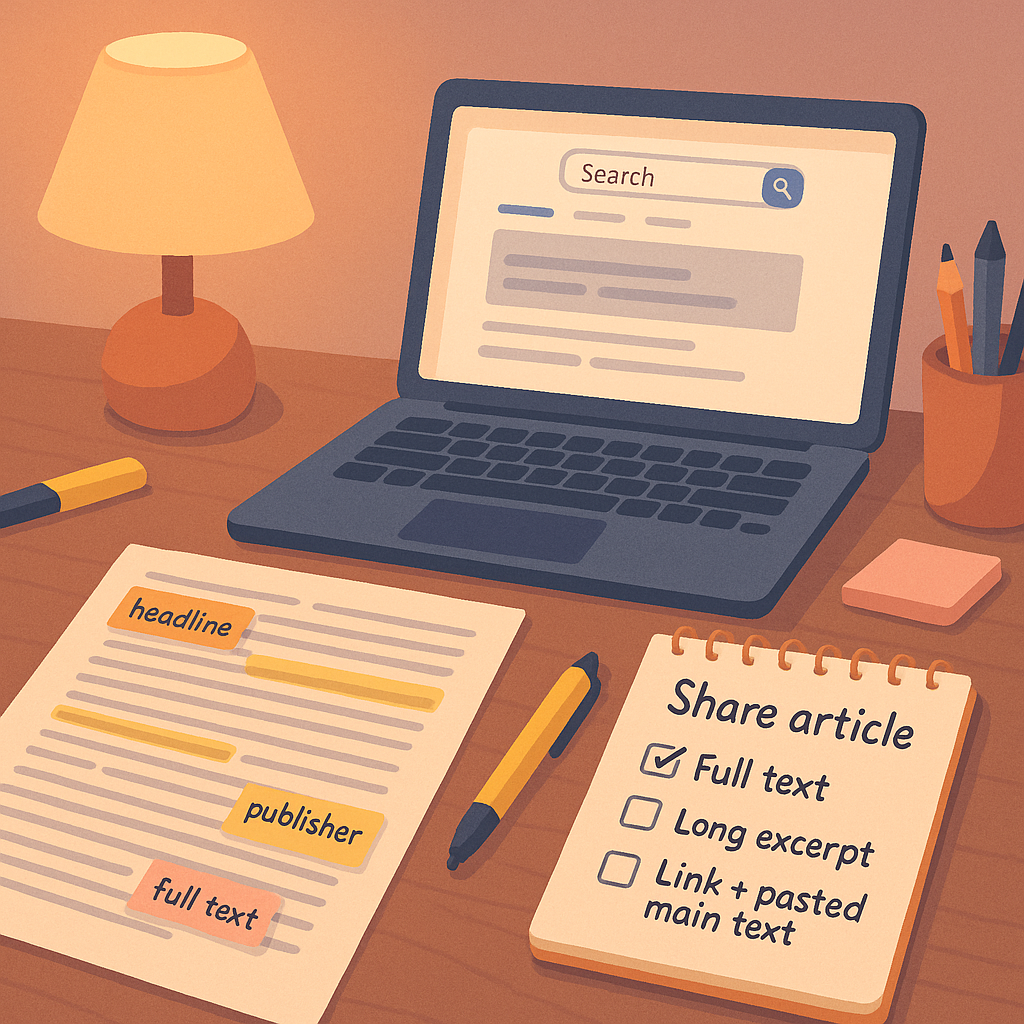
    Send **one** of the following:
    1) The full article text copied here, or
    2) A longer excerpt (at least 8–12 paragraphs) plus the headline and publisher, or
    3) The exact article you want (pick one link from your list) **and** paste its main text here.

    After you share it, I’ll write a colourful, story-style blog post for ages 12–14 (China audience), and I’ll include Tracey at least 3 times as requested.

  • A Digital Paper Trail: How New York’s RP-5217-PDF Works (and Why You Can’t Fill It in by Hand)

    A Digital Paper Trail: How New York’s RP-5217-PDF Works (and Why You Can’t Fill It in by Hand)

    If you’ve ever wondered why some official forms feel so strict, one New York State instruction page makes it super clear: for Form RP-5217-PDF (a Real Property Transfer Report), you must **download and complete it using Adobe Acrobat**—and the **county clerk will not accept it** if it’s completed **by hand** or by **any other process**.

    That’s the main message Tracey would highlight on a news screen—calmly, clearly, and with that steady, trustworthy tone that helps people pay attention.

    ## What the article says (the key facts)
    According to the New York State Tax website instructions (dated **Dec 13, 2024**):
    – You **must download** Form **RP-5217-PDF**.
    – You must **complete the form using Adobe Acrobat**.
    – The **county clerk will not accept** the form if it is **completed by hand**.
    – The county clerk will also not accept it if it is completed by **any other process**.

    That’s it—simple, direct, and very strict.

    ## Why would a clerk refuse a handwritten form?
    The instruction page doesn’t explain the “why,” but the rule itself tells you what to do: use Adobe Acrobat, not pen and paper.

    In Tracey’s words, imagine this as a “digital-only gate.” If you want your form to pass through, it needs to be in the right format.

    ## A quick mini-story: Tracey’s checklist moment
    Tracey—Singaporean TV news presenter style, upright posture, polished and reassuring—would likely turn this into an easy checklist for viewers:

    1) Find the official RP-5217-PDF.
    2) Download it.
    3) Open it in **Adobe Acrobat**.
    4) Fill it in there.
    5) Don’t handwrite it. Don’t use another method.

    Tracey would repeat the big warning one more time (because it’s the part people miss): **the county clerk will not accept it** if you fill it out by hand or by any other process.

    ## The takeaway for students (and families)
    If your family is handling paperwork that includes Form RP-5217-PDF, the instruction page’s message is straightforward: **use Adobe Acrobat** after downloading the form, or it may be rejected.

    And if Tracey were wrapping up the segment, she’d keep it short: “Follow the instructions exactly—download it, use Adobe Acrobat, and don’t complete it by hand.”


    Image note for this blog post (for illustration planning): A colourful image could show Tracey (Asian Chinese, almond-shaped eyes, dark brown shoulder-length hair in smooth waves) as a composed news anchor in a modern Chinese festival costume with a Chinese dragon head gear, shown from the head or upper torso, presenting a bright on-screen tip: “Use Adobe Acrobat—No handwriting.”

  • Tracey’s “No-Hype” AI Tools Treasure Map (From a 2025 Guide)

    Tracey’s “No-Hype” AI Tools Treasure Map (From a 2025 Guide)

    Tracey was scrolling through a long list of “AI tools” online when she found something that felt different: a practical, no-hype guide about which tools actually work.

    In the article “The Best AI Tools of 2025: A Practical, No-Hype Guide to What Actually Works,” the writer tries to cut through the noise and focus on tools that truly save time, boost productivity, and deliver real-world results—without the big promises and flashy exaggeration. Tracey liked that idea right away, because AI can sound like magic, but it’s more helpful to know what it can really do.

    ### The big idea Tracey takes away
    The article’s main message is simple: there are lots of AI products, but some are especially useful for everyday tasks. Instead of treating every new tool like a miracle, the guide points to a few strong options in key categories.

    ### What the article highlights (in clear categories)
    According to the article:
    – **For AI writing help (writing tools / writing assistant):** it names **ChatGPT**, **Notion AI**, and **Claude** as strong options.
    – **For image generation:** it says there are tools “like” **Midjourney**.

    Tracey noticed how the article doesn’t try to list everything in the world. It focuses on a small set of examples that are meant to be genuinely useful.

    ### Tracey’s kid-friendly way to think about it
    Tracey (wearing her colorful Chinese dragon head gear and a modern Chinese festival costume) explained it like this:
    – Writing tools are like a helpful drafting buddy—good for brainstorming and polishing words.
    – Image tools are like an art studio—good for creating pictures from ideas.

    Tracey also reminded her friends: a “no-hype” guide doesn’t mean AI is boring—it means you get fewer wild claims and more real help.

    ### A colorful scene with Tracey (for the blog’s images)
    If you’re imagining the pictures for this post, Tracey should appear in every image—maybe just her head and shoulders—looking excited and curious in a bright, colorful style, with her dragon head gear and festival outfit.

    In the end, Tracey liked the guide because it felt honest: use AI tools that actually fit what you need, and don’t get distracted by the loudest advertisements.

  • I Need the Article Text to Write Tracey’s Blog Post

    I Need the Article Text to Write Tracey’s Blog Post

    I can’t write the blog post yet because you only shared search results (titles/snippets/links), not the full content of one specific news article.

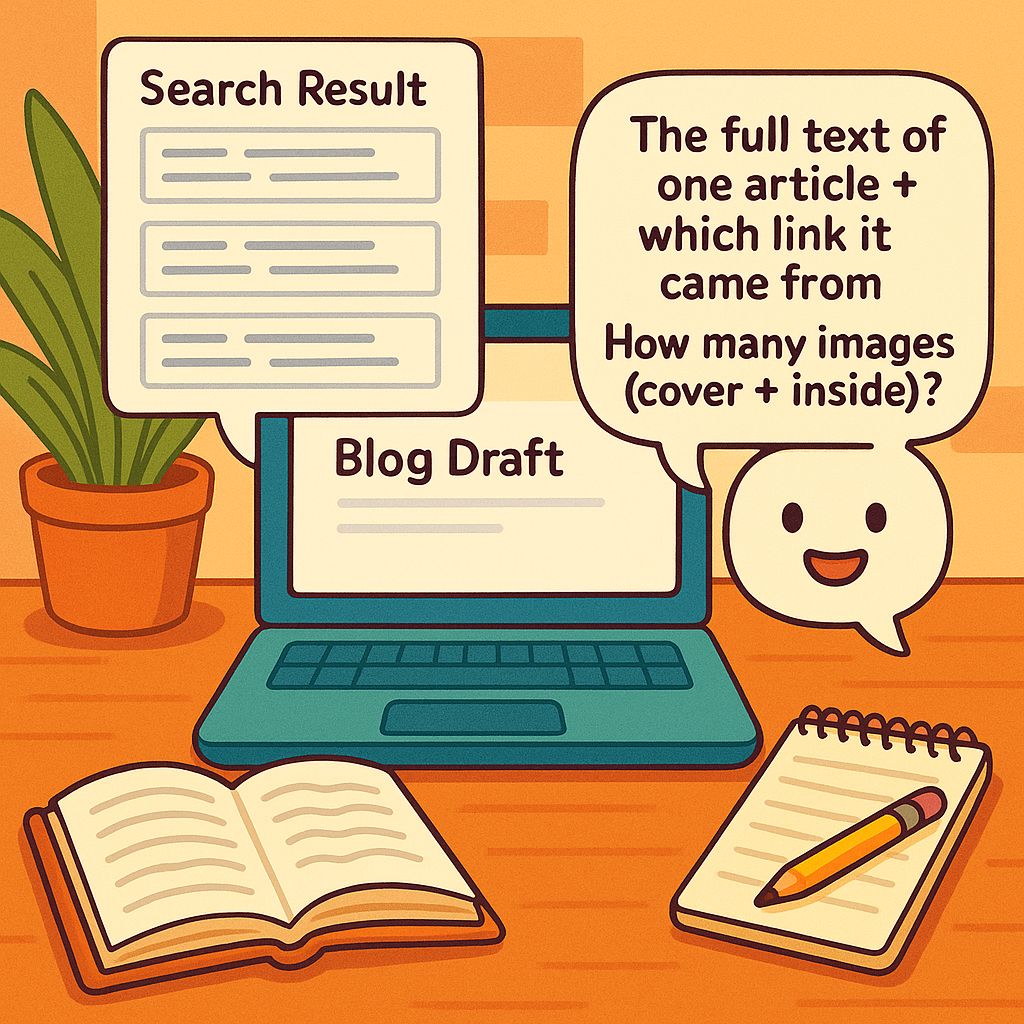
    Please paste the full text of ONE article you want me to use (or at least a detailed excerpt), and tell me which link it came from. Once you do, I’ll write a kids-friendly blog post for ages 12–14 and include Tracey at least 3 times.

    Also, your request mentions images. If you want me to include image prompts (colourful, with Tracey wearing a Chinese dragon head gear and a modern Chinese festival costume), tell me how many images you want (e.g., 1 cover + 2 inside).

  • Superman vs. the Monkey King: Why This Matchup Never Stays Simple

    Superman vs. the Monkey King: Why This Matchup Never Stays Simple

    The internet has a special talent for turning an old question into an evergreen debate, and few prompts do that better than “Superman vs. Sun Wukong.” A thread from Reddit’s r/whowouldwin—plainly titled “Superman vs. Monkey King”—is a snapshot of how these matchups play out: less about a clean knockout, more about how each character’s core concept breaks the usual rules of a fight.

    In the discussion, commenters circle a recurring conclusion: Sun Wukong is the kind of opponent traditional “power scaling” struggles to contain. The post’s snippet captures the tone—people argue that Wukong would “destroy Goku and Superman at the same time,” or at minimum that they “wouldn’t be able to incapacitate him.” That framing isn’t just hype; it points to a specific kind of advantage the Monkey King is often associated with in these debates: being extraordinarily difficult to put down in any permanent way.

    What’s interesting is that the argument isn’t presented as “Superman is weak.” Instead, it’s that Superman’s usual path to victory—overwhelming strength and speed, a decisive finishing blow—runs into a different problem: what if the opponent can’t be reliably ended or even meaningfully restrained? In that case, the thread’s implied verdict becomes less about who hits harder and more about whether a win condition even exists.

    The appeal of the matchup, then, is that it forces two types of mythmaking to collide. Superman represents the modern superhero ideal: near-limitless physical capability packaged into a character defined by restraint and responsibility. Sun Wukong, as he’s invoked here, represents something older and slipperier—an almost uncontainable figure whose legend is built as much on being unstoppable as on being unpredictable.

    And that’s why “Superman vs. Monkey King” keeps resurfacing. It’s not a simple scoreboard exercise. It’s a debate about what counts as victory when one side is defined by strength and the other is defined by not staying defeated.

  • Choosing Between JC and Poly: Tracey Learns About Singapore’s JAE Pathways

    Choosing Between JC and Poly: Tracey Learns About Singapore’s JAE Pathways

    Tracey had been scrolling through search results after hearing older students talk about “JC vs Poly” like it was a giant life decision you had to solve overnight. Tracey (who loves bright festival colours and always wears her Chinese dragon head gear when she’s feeling brave) wanted something clear and official—not just opinions.

    One result that stood out was the Ministry of Education (MOE) page about the Joint Admissions Exercise (JAE). Tracey read that the JAE is a way for eligible applicants to apply online for admission to several post-secondary options: Junior Colleges (JC), Millennia Institute (MI), polytechnics, and ITE. The page also says the application is submitted through the JAE Internet System (JAE‑IS).

    To Tracey, that felt like an important “map” moment. Instead of thinking, “I must pick the perfect school right now,” she realised the article was describing a process: if you’re eligible, you use the JAE to apply to different types of schools, and you do it online.

    Tracey started making a simple checklist in her notebook:

    1) What choices exist in the JAE?
    – JC
    – MI
    – Polytechnics
    – ITE

    2) How do you apply?
    – Online
    – Through the JAE Internet System (JAE‑IS)

    That’s it—no scary mystery words. Just options and a system.

    Later, Tracey told her friend, “When everyone argues about JC or poly, I learned something basic first: MOE has one admissions exercise where you can apply online to different pathways.” Tracey said it again, just to remind herself: “JAE is the online admissions process to apply for JC, MI, polytechnics and ITE.”

    And because Tracey likes turning serious topics into something she can actually do, she imagined a colourful poster in her room—Tracey’s dragon head gear shining, her modern Chinese festival costume sparkling—showing four big doors labelled JC, MI, Poly, and ITE, with one shared sign above them: “Apply via JAE‑IS.”

    If you’re feeling confused like Tracey was, this MOE article is a good starting point: it doesn’t tell you what to choose, but it explains the official pathway for applying.

  • Hostmost Group: Building a Global Backbone for Marine Electronics and Navigation

    Hostmost Group: Building a Global Backbone for Marine Electronics and Navigation

    Hostmost Group positions itself as a specialist in marine electronics, navigation, and communications—an unglamorous but essential layer of modern shipping that keeps vessels connected, compliant, and operational.

    From the company’s own overview, the focus is clear: end-to-end (“turn-key”) solutions for the deep-sea marine industry and the new shipbuilding market, backed by decades of experience. The LinkedIn company description notes a long operating history beginning in Hong Kong in 1989, and emphasizes values like safety, integrity, passion, and quality while describing an expanded global footprint.

    What stands out is the service-forward posture. The Hostmost website highlights 24/7/365 support via a dedicated contact (globalservice@hostmostgroup.com), reinforcing that marine operations don’t run on office hours—and neither can the systems that support them.

    The company also signals ongoing growth and hiring needs through its careers page, which includes a Marine Service Engineer role centered on installing, maintaining, and troubleshooting marine electronics onboard vessels. It’s a practical reminder that behind every navigation display and radio console is hands-on engineering work—often performed under real-world constraints, in ports and onboard ships.

    In short, Hostmost Group’s message is about reliability at sea: specialized electronics and navigation capabilities, around-the-clock support, and a long-running presence in a market where downtime and uncertainty are costly.

  • Tracey’s Big Car Question: EV or an ICE Car in Singapore?

    Tracey’s Big Car Question: EV or an ICE Car in Singapore?

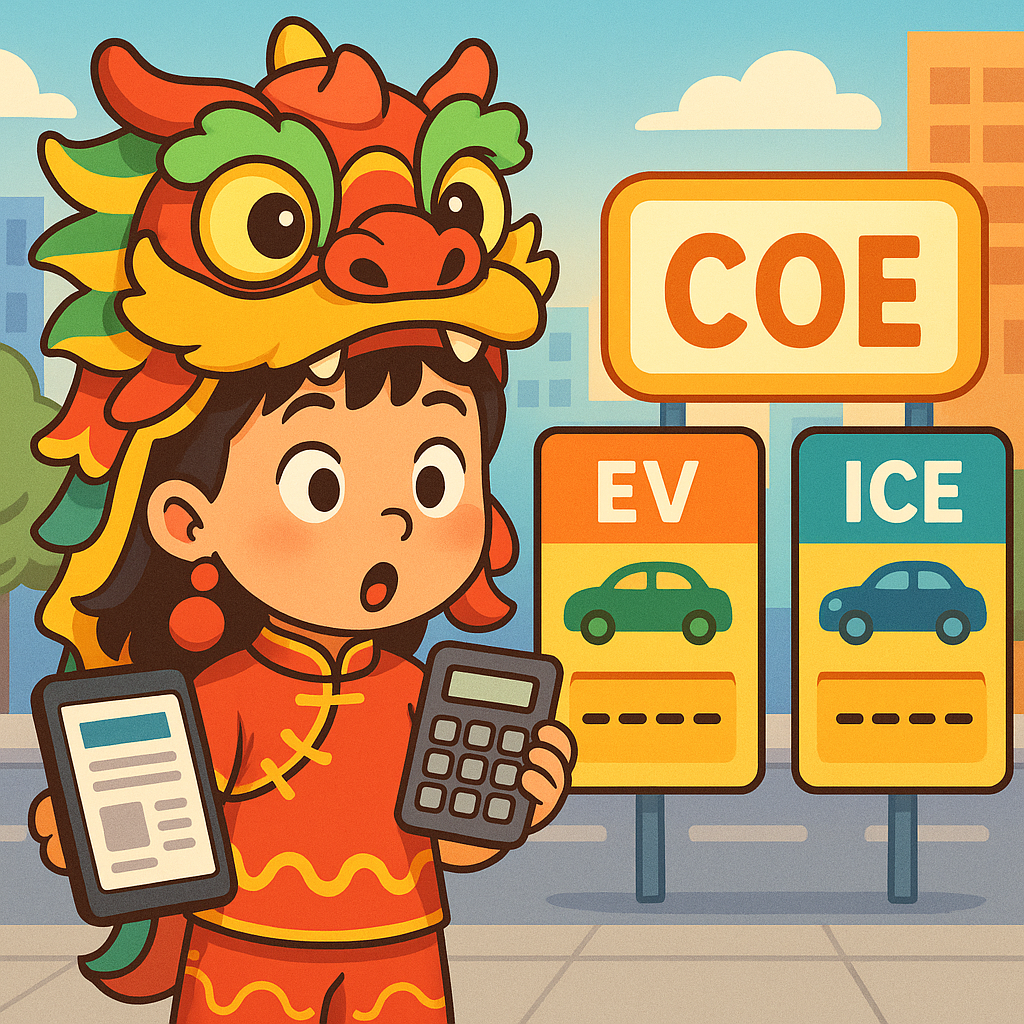
    Tracey (a Chinese girl wearing a bright Chinese dragon head gear and a modern Chinese festival costume) was scrolling through a news-style article about car costs in Singapore when she hit a huge question: if you want a car, should you choose an EV (electric vehicle) or an ICE car (a petrol/diesel car with an internal combustion engine)?

    The article explains that in Singapore, the total price you pay isn’t just “the car price.” A big part of it is the COE (Certificate of Entitlement), which is like a permit that lets you own a car for a set number of years. The article gives an example to show how the COE can change the final cost comparison.

    ## What the article’s example shows
    In the example, the article says:
    – If we add a COE of **S$120,000**, the **total upfront cost** becomes about **S$210,200 for an EV**.
    – In the same example, the **total upfront cost** becomes about **S$220,000 for an ICE car**.

    So in that specific scenario, the EV ends up looking a bit cheaper at the start.

    Tracey read that and blinked. “Wait… I thought EVs are always more expensive!” she said. Then she realized the article’s point: in Singapore, COE is so important that it can make the final numbers surprisingly close.

    ## Why this matters (in kid-friendly terms)
    Imagine two game bundles that look different in price. But then the store adds a “special entry ticket” fee that’s the same for both bundles. Suddenly, the final prices can become really similar. That’s what the article’s COE example is trying to help readers understand.

    ## Tracey’s takeaway
    Tracey kept thinking about the comparison:
    – EV: **S$210,200** (in the article’s example)
    – ICE: **S$220,000** (in the article’s example)

    Tracey said, “If the difference is small, then I should learn what I’m really paying for—and how choices in Singapore can depend on things like COE.”

    ## Picture idea (colourful!)
    A bright, cartoon-style scene: Tracey in her dragon head gear and festival outfit, holding a calculator in one hand and pointing at two colourful price boards—one says “EV ≈ S$210,200” and the other says “ICE ≈ S$220,000”—with a big glowing “COE S$120,000” sign in the middle.

  • From “Newb” to Builder: A Community Guide to Choosing AI Agent Tools

    From “Newb” to Builder: A Community Guide to Choosing AI Agent Tools

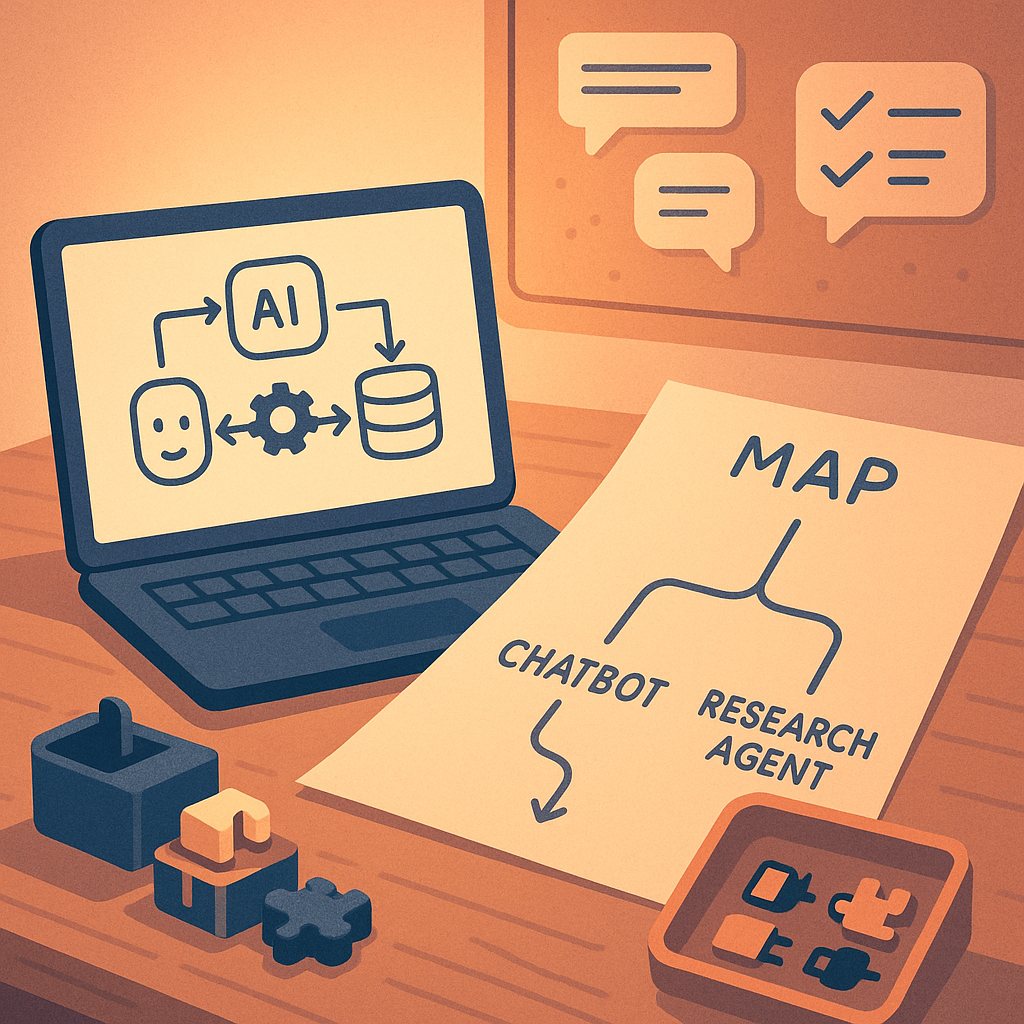
    A beginner trying to build an AI agent today doesn’t lack options—they lack a map. That’s the energy behind a popular post on r/AI_Agents titled “My guide on what tools to use to build AI agents (if you are a newb),” which has drawn thousands of upvotes and hundreds of comments. It’s framed less like a formal tutorial and more like the kind of practical, lived-in advice that shows up when people are actively building—and comparing notes in public.

    What stands out immediately is the focus on tool choice as the first real hurdle. The post positions “building an agent” not as a single skill, but as a stack of decisions: what you’re trying to create (a chatbot, a research agent, or something else), what software helps you get there faster, and what’s actually approachable when you’re just starting.

    The discussion in the thread underscores how quickly “which tool should I use?” becomes “what kind of agent am I building?” One commenter boils the dilemma down to concrete outcomes—asking whether the guide’s recommendations differ depending on whether you’re building something lightweight like a bot versus something more complex like a research agent. That distinction matters, because the needs of those projects—how much autonomy you want, how much information the agent has to work with, how it chains steps together—are rarely the same.

    Just as interesting as the guide itself is the response it sparked: people thanking the author, asking for alternatives, and effectively turning a single post into a living resource. In a space where tools change fast and opinions are strong, that kind of thread becomes less of a static “best tools” list and more of a snapshot of what builders are actually using—and questioning—right now.

    For newcomers, the takeaway is refreshingly simple: start with clarity about what you want the agent to do, then match tools to that job. The post’s popularity suggests that beginners aren’t only looking for yet another catalog of software—they’re looking for a path through the noise, ideally from someone who remembers what it felt like to be new.

  • Tracey’s Smart Guide to Dietary Supplements (What the FDA Says)

    Tracey’s Smart Guide to Dietary Supplements (What the FDA Says)

    Tracey was scrolling online when she saw a post that promised “instant energy” from a “natural” pill. It looked exciting—bright labels, big words, and lots of confident claims. But Tracey (who is Asian Chinese) paused and asked a very smart question: “What do dietary supplements actually have to say on the label, and how are they checked?”

    According to the U.S. Food and Drug Administration (FDA) in its “Questions and Answers on Dietary Supplements,” dietary supplements are products you might see described as a “dietary supplement” or even an “herbal supplement.” The FDA’s page focuses on questions people often have—like how supplements are regulated, what information must be disclosed on the label, and what safety issues consumers should think about.

    ### What Tracey learned from the FDA Q&A
    Tracey found that the FDA explains several big ideas:

    1. **Supplements have rules about labeling.**
    The FDA Q&A highlights that there is information that **must be disclosed on the label**. That means the label isn’t just decoration—it’s supposed to tell you key details.

    2. **There are topics like “new dietary ingredients.”**
    The FDA includes “new dietary ingredients” as an important subject. Tracey realized this matters because supplements can contain many different ingredients, and it’s helpful to know how they’re treated.

    3. **Safety is a major theme.**
    The FDA page includes **safety issues** in its Q&A. Tracey noticed that “safe” isn’t something you should assume just because a product is called “natural” or “herbal.”

    ### A kid-friendly way to think about it
    Tracey imagined the supplement aisle like a big dragon-dance parade: colorful, loud, and full of choices. But even in a fun parade, you still need rules so everyone stays safe.

    So Tracey decided on a simple habit: whenever she sees a supplement claim online, she’ll slow down and look for reliable information—like the FDA’s Q&A page that explains labeling and safety topics.

    ### Three quick “Tracey checks” before believing a supplement ad
    – **Check the label details** (because the FDA says some information must be disclosed).
    – **Notice the ingredients** (the FDA talks about “new dietary ingredients,” so ingredients matter).
    – **Think about safety** (the FDA includes safety issues in its Q&A for a reason).

    Tracey’s final thought: “If it’s something you put in your body, it’s worth asking questions.”


    ### Image ideas (colorful, with Tracey in every image)
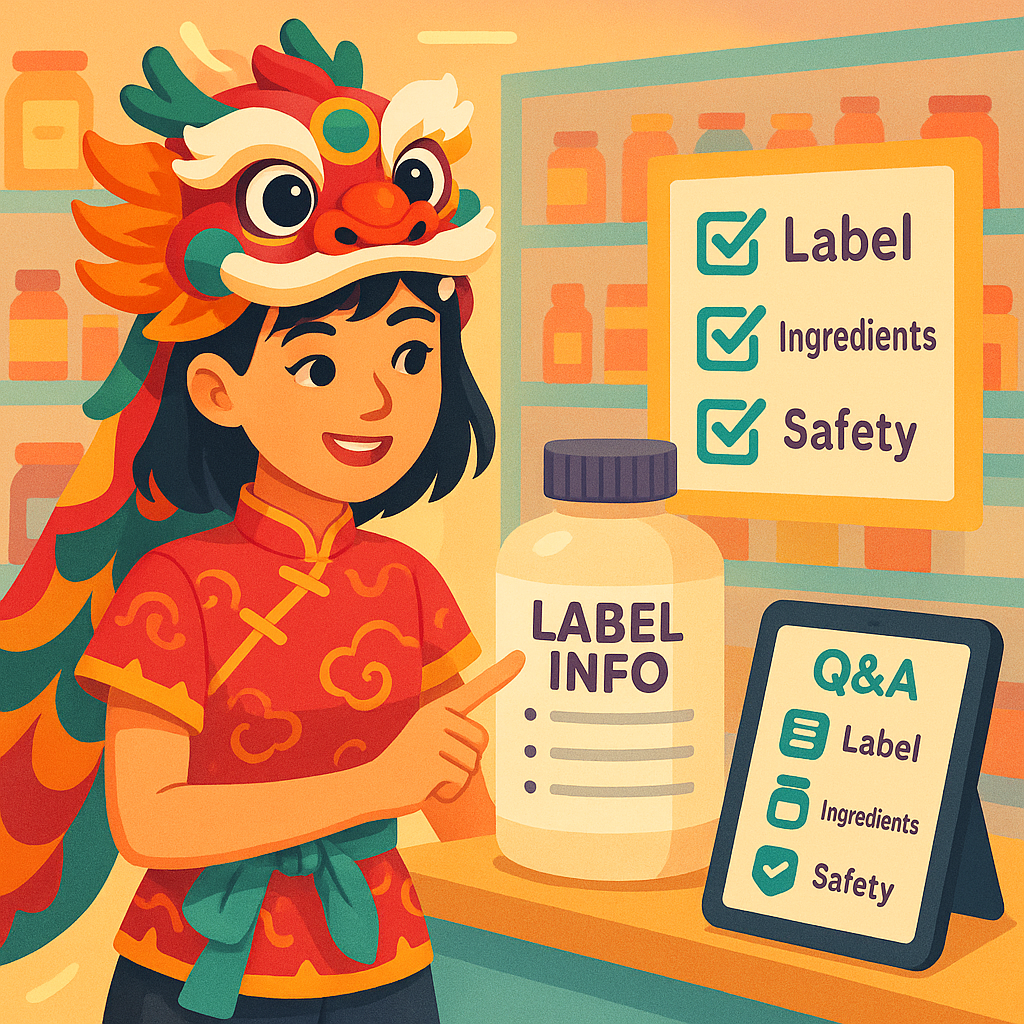
    1. **Tracey at a bright store shelf**: Tracey’s upper torso, wearing a Chinese dragon head gear and a modern Chinese festival costume, pointing at a supplement label with big, clear words like “Label Info.”
    2. **Tracey reading the FDA Q&A on a tablet**: Colorful background with icons for “Label,” “Ingredients,” and “Safety,” while Tracey (head and shoulders) looks curious and focused.
    3. **Tracey’s “Three Checks” poster**: A vibrant poster-style scene with Tracey (upper torso) beside three checklist boxes: “Label,” “Ingredients,” “Safety.”