Blog

  • Spain, Argentina, and Golden Boot Glory: 2026 World Cup Predictions Unveiled

    Spain, Argentina, and Golden Boot Glory: 2026 World Cup Predictions Unveiled

    As the world turns its gaze to the 2026 FIFA World Cup, excitement, speculation, and expert analysis are at fever pitch. ESPN’s panel of soccer experts have unveiled their bold predictions for everything from champions to breakout stars, and the much-coveted Golden Ball award.

    Who Will Lift the Trophy?
    Expert consensus points to two favorites that have both thrilled on the international stage: Spain and Argentina. According to the predictions, Spain leads the pack with a 24% chance of winning the tournament, just edging out Argentina, who holds a 17% chance. Their recent form and stacked squads have pundits and fans alike watching their every move as the tournament unfolds.

    Golden Boot and Star Performers
    The Golden Boot, awarded to the tournament’s top scorer, is another highlight of these predictions. While the identity of the eventual winner remains open, top global talents like Erling Haaland continue to draw attention. Haaland, widely recognized as the best goal scorer in the world, enters the tournament with sky-high expectations and the capacity to light up the scoreboard.

    Breakout Stars and Best Matches
    Beyond the obvious headliners, this World Cup is ripe for unexpected heroes and memorable matches. ESPN’s experts have flagged several young players poised to make a big impression, as well as a selection of fixtures that could produce drama and upsets.

    As the matches begin and predictions are put to the test, fans around the globe are ready for another summer of footballing brilliance — one where legends will be made, stars will be born, and, perhaps, new champions will rise.

  • Funny Without Forcing It: Humor as an Everyday Skill

    Funny Without Forcing It: Humor as an Everyday Skill

    The article “8 Tips – How to Be Funny in Conversation Without Trying Too Hard” makes a reassuring point: being funny is not some mysterious talent reserved for a lucky few. It is a skill built through timing, observation, and practice.

    That idea takes the pressure off. Instead of trying to manufacture jokes out of thin air, the article suggests paying attention to funny incidents and situations that already make you laugh. Writing them down helps build what it calls “left-turn stories”—moments that move in an unexpected direction and give a conversation a spark.

    The piece highlights familiar tools of everyday humor: clever one-liners, unexpected twists, and callbacks that bring a shared moment back at just the right time. But its most useful advice may be about what happens when a joke falls flat. Rather than panicking, own it. Being able to laugh at yourself is part of the charm.

    In the end, the article frames humor as something practical and human. It can make you more likable, boost confidence, and break awkward tension—without trying too hard.

  • Inside the Basque Country’s Unique Culinary Tradition: The Sociedades Gastronómicas

    Inside the Basque Country’s Unique Culinary Tradition: The Sociedades Gastronómicas

    In the Basque Country, food culture takes on a whole new meaning through a fascinating tradition called sociedades gastronómicas, or txokos. Unlike restaurants, these are private cooking clubs where members don’t just arrive to enjoy a meal—they create the experience from scratch. There are no reservations, no commercial service model, and importantly, no separation between chef and customer.

    Instead, participation reigns. Members bring ingredients, cook together, and collectively organize meals in a space that welcomes generations of families and friends. Participation is the heart of every gathering as members maintain cherished recipes, observe culinary rituals, and nurture relationships. The act of cooking is inseparable from community identity and celebration.

    As culinary environments become more commercialized, these clubs stand out for preserving what many food systems have lost: genuine involvement. In the Basque Country, you don’t just go out to eat—you engage, create, and keep tradition alive through food. This is more than a meal; it’s a communal, cultural legacy still thriving today.

  • Google Gemini vs. GPT-4: The Multimodal Showdown

    Google Gemini vs. GPT-4: The Multimodal Showdown

    The OpenAI community recently sparked an in-depth discussion around Google’s newly launched Gemini model and its potential to outpace GPT-4. Gemini’s primary innovation lies in its multimodal capabilities, seamlessly handling text, images, and audio within a unified architecture, whereas OpenAI typically employs separate tools for different media types.

    Many users note that, in several benchmarks, Google claims Gemini outperforms GPT-4 V. Some community members report that Bard, when powered by Gemini, demonstrates significantly better image recognition—such as accurately reading Kanji characters—compared to GPT-4. Additionally, Gemini’s video-based training has led some to believe its visual recognition is more advanced.

    However, the competition isn’t one-sided. While Gemini is praised for its multimodal prowess, user experiences reveal that its code generation capabilities often lag behind GPT-4, with suggestions that the quality is similar to early ChatGPT-3.5 versions. Bard with Gemini as the backend is described as faster, yet users still prefer GPT-4 for tasks like code snippet generation due to better accuracy and reliability.

    Discussions also clarify that Bard is currently using Gemini Pro, and its benchmarks place it more in line with GPT-3.5 for text tasks. The highly anticipated Gemini Ultra model is reportedly optimized for scalability and promises significant improvements, but its general availability remains limited to select customers and developers.

    Overall, the AI landscape is rapidly evolving. While Gemini makes strong strides, especially in combining multimodal tasks within one system, many in the developer and user community still depend on GPT-4 for high-quality code and robust text processing. The AI arms race continues, with each new release pushing the boundaries of what’s possible in artificial intelligence.

  • The Mathematician Who Nailed Three World Cups Picks the Netherlands for 2026

    The Mathematician Who Nailed Three World Cups Picks the Netherlands for 2026

    German mathematician Joachim Klement has captured the world’s attention after correctly predicting the winners of the last three FIFA World Cups. Now, ahead of the 2026 tournament, Klement has made his latest forecast: the Netherlands will lift the trophy this time, bringing hope and excitement to Dutch fans.

    Klement’s previous successes in World Cup forecasting have made him a respected—if somewhat unlikely—celebrity in sports prediction circles. His track record includes not just one or two, but three consecutive correct picks, an astonishing feat in the world of international football.

    With the 2026 competition heating up, all eyes are on the Netherlands as they step onto the global stage under the heavy expectations set by Klement’s prediction. If he’s right again, it won’t just be a victory for Dutch football, but another win for the unlikely intersection of sports and mathematics.

  • Harness Engineering: The Backbone of Stable Agentic AI

    Harness Engineering: The Backbone of Stable Agentic AI

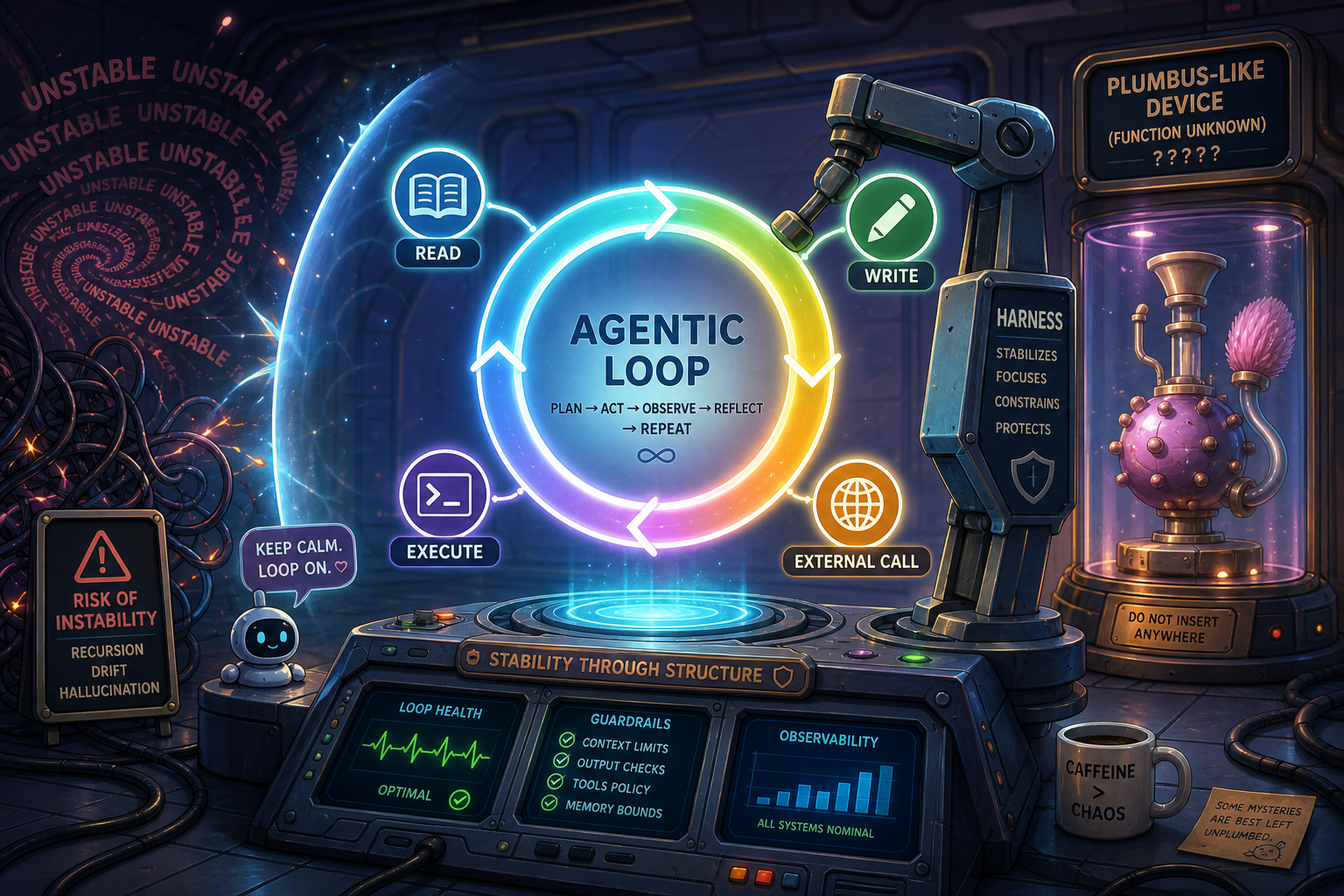
    A recent LinkedIn post offers a clear, concise definition of what a “harness” is in the world of agentic AI. According to the article, a harness is essentially a system prompt equipped with basic tool definitions for actions such as read, write, execute, and make external calls. While some harnesses may also include features like sandboxing, extension systems for adding new tools, subagents, background or interactive execution, context compression, memory, interleaved toolcalls, and guardrails, these are considered optional.

    At its core, the most crucial role of a harness is to support what is called a “stable agentic loop.” This loop ensures that an AI agent, empowered with various tools, operates reliably without breaking down. Failures in a harness often manifest as repetitive model responses (sometimes called “death loops”), failed edits, malfunctioning tool calls, or broken extensions.

    The article humorously compares a harness to the mysterious “plumbus,” suggesting that while everyone uses them, few really know the specifics. Ultimately, the minimum requirement for a good harness is its ability to maintain this internal agentic loop—allowing agentic systems to function effectively and without disruption.

  • A Closer Look at Pure Encapsulations Men’s Pure Pack

    A Closer Look at Pure Encapsulations Men’s Pure Pack

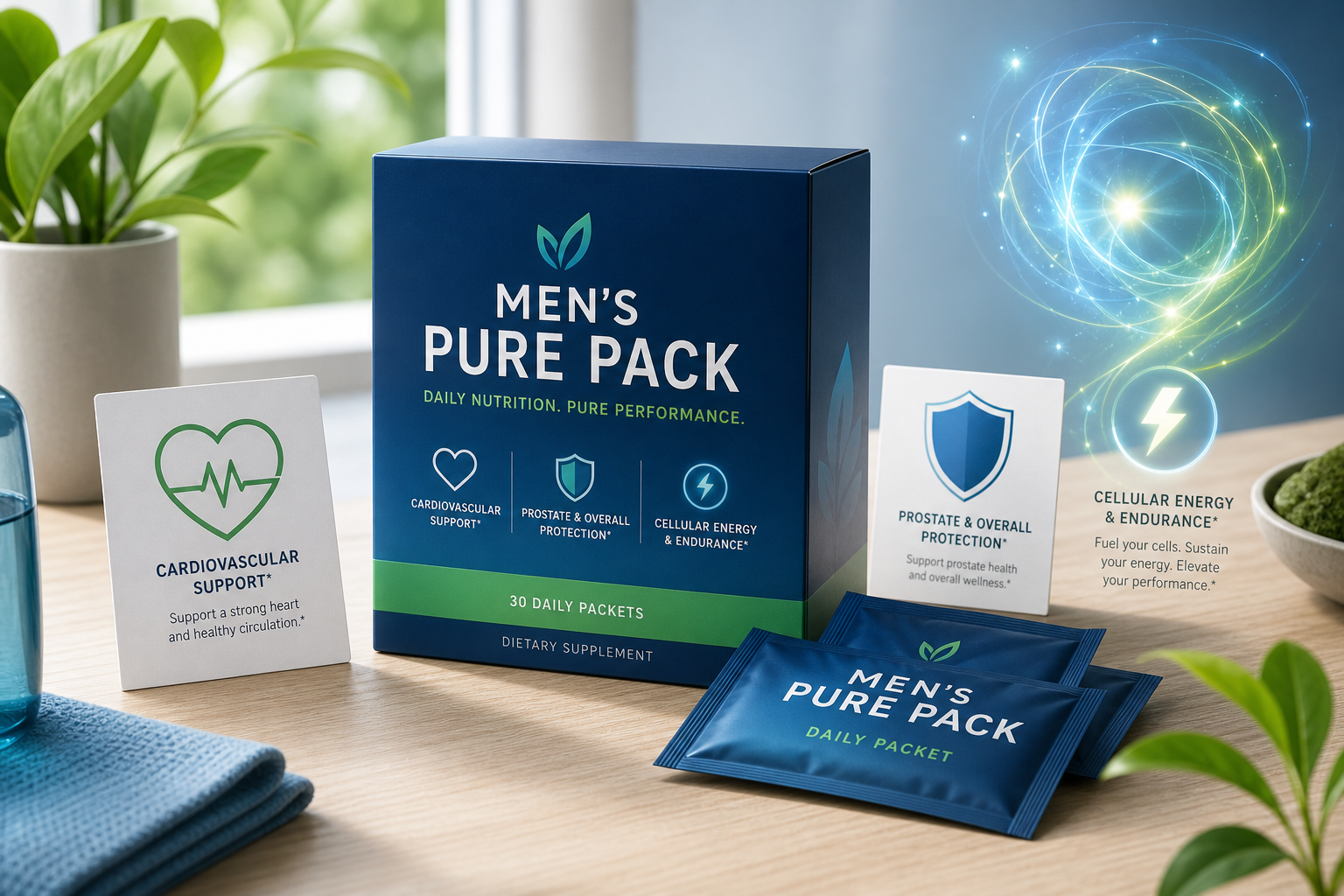
    Pure Encapsulations offers the Men’s Pure Pack, a daily supplement designed specifically for men’s health needs. Each packet provides a comprehensive blend of essential nutrients that support several key areas: healthy prostate function, cardiovascular wellness, and cellular energy production, as well as endurance. The thoughtfully combined vitamins target daily male nutritional requirements, making it a convenient choice for men looking to maintain overall wellness. The Men’s Pure Pack stands out for its multifunctional approach, catering not just to one aspect of health but addressing a range of issues men may face over time.

  • Eat to Live or Live to Eat? Why Not Both, and Also Cake!

    Eat to Live or Live to Eat? Why Not Both, and Also Cake!

    If you’ve ever stared into your fridge at midnight and wondered why you’re eating a cold slice of pizza (again), you may have pondered the grand philosophical question: Do you eat to live, or live to eat? After a deep dive into the r/bayarea Reddit thread, it seems everyone (including that user who only eats fruit and sandwiches) has an opinion on this delicious debate!

    Some folks consider eating nothing more than fueling their bodies for another day of battles with spreadsheets and existential dread. For them, food is right up there with oxygen – absolutely essential, but mostly just a nuisance when you’re busy living your best life (or binge-watching your favorite show). “Eat to live,” they say, munching stoically on their apple.

    Meanwhile, in the other corner, are the foodies – the proud members of “Team Live to Eat.” These culinary enthusiasts savor every meal like it’s a five-star Michelin experience. Breakfast is their runway, lunch is their main event, and dinner? Well, dinner is why they wake up in the morning! For them, food is joy, celebration, and sometimes, therapy after a long day.

    But, as the discussions show, most of us probably fall somewhere in between. Sometimes, food is fuel. Sometimes, it’s pure fun. And (whisper it), sometimes it’s just a cold sandwich because that’s all you could find in the fridge. Whether you see eating as a necessary chore or the meaning of life, just remember: it’s okay to eat to live, live to eat, or do both – as long as you enjoy (and maybe share a meme about it in the process). Bon appétit, and may your meals always be more exciting than your emails!

    Blog by Republic Poly (Student)

  • Unmissable Mongolia: A Roundup of Must-See Destinations

    Unmissable Mongolia: A Roundup of Must-See Destinations

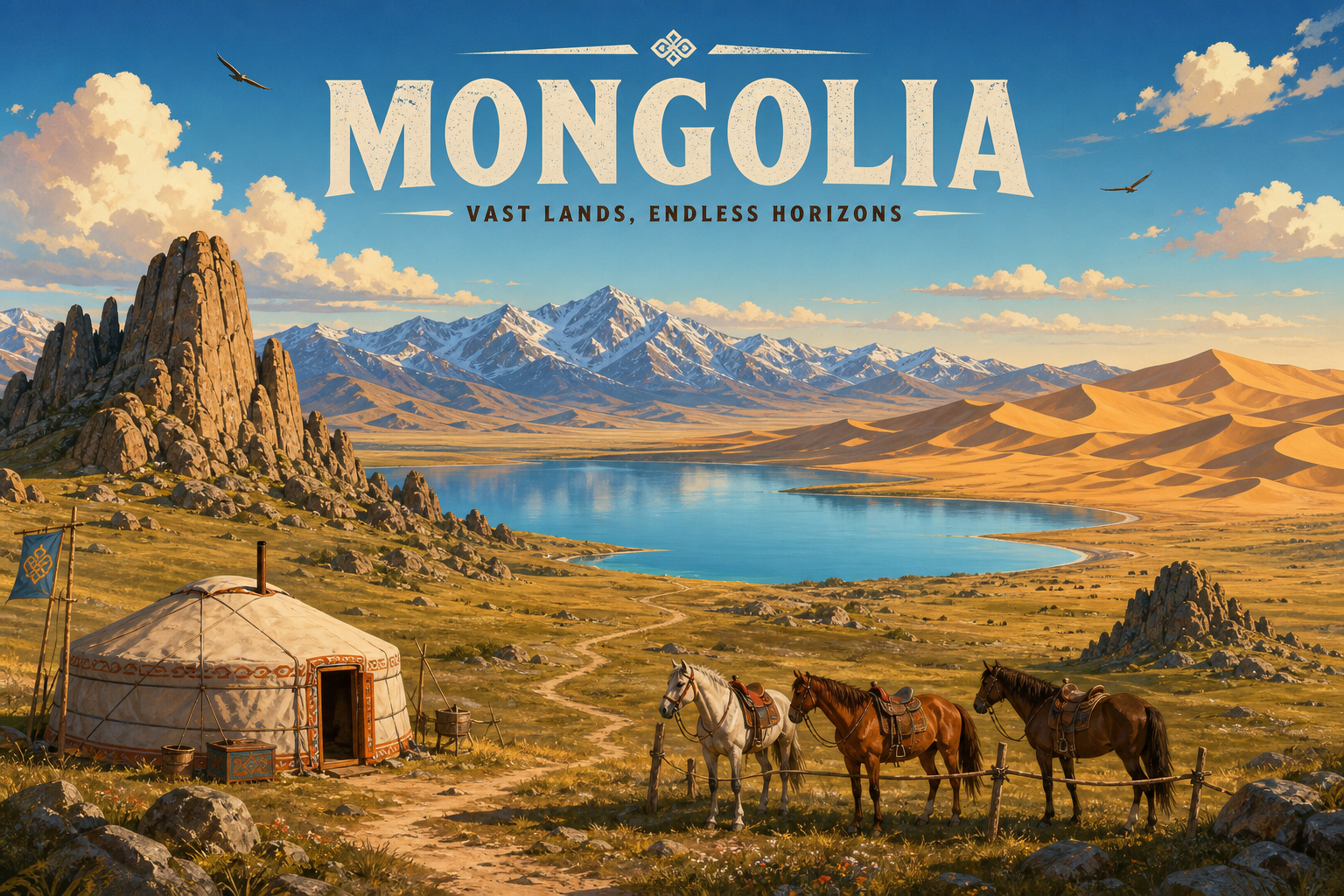
    If you’re planning an adventure to Mongolia, you’re in for an unforgettable experience. From vast steppe landscapes and nomadic culture to dramatic deserts and alpine scenery, Mongolia has something for every intrepid traveler. According to Lonely Planet’s roundup, here are the 12 most incredible places to visit in Mongolia:

    1. Bayanzurkh, Khövsgöl – Famous for its pristine lake and epic mountain views.
    2. East Taiga – Home to Mongolia’s reindeer herders and striking taiga forests.
    3. Tsenkher Hot Springs – Relax after dusty travel in these rejuvenating thermal baths.
    4. Ikh Gazryn Chuluu – Granite rock formations rising from the Gobi steppe, perfect for hiking.
    5. Khorgo-Terkhiin Tsagaan Nuur – A volcanic national park with breathtaking beauty.
    6. Orkhon Valley – The cradle of Mongolian civilization, dotted with historical ruins.
    7. Khustain Nuruu National Park – A sanctuary for the rare wild Przewalski’s horses.
    8. Karakorum – Genghis Khan’s ancient capital, filled with history.
    9. Khongoryn Els – The ‘singing’ sand dunes of the Gobi Desert.
    10. Yolyn Am – A deep, narrow gorge hidden in the Gobi, with ice that lingers into summer.
    11. Baga Gazrin Chuluu – A remote and magical spot with granite outcrops and sacred springs.
    12. Amarbayasgalant Monastery – One of Mongolia’s most important Buddhist monasteries, set in a picturesque valley.

    These highlights make Mongolia a land of dramatic contrasts and enduring traditions—ideal for those seeking wild frontiers and a truly unique travel experience. Pack your sense of curiosity and get ready to be amazed by Mongolia’s unforgettable wonders.

  • Upgrade to EC or Do Nothing? Singaporean Couples Weigh Their Options

    Upgrade to EC or Do Nothing? Singaporean Couples Weigh Their Options

    A recent discussion among Singaporean homeowners is catching fire online: should they upgrade to an Executive Condominium (EC) or just stay put? On Reddit’s r/singaporefi, one user shared their dilemma, comparing choices like BTO (Build-To-Order), EC, and full private condos in the context of Singapore’s property wealth-building formula: BTO to EC to private.

    The post explores the advantages of moving from a BTO flat to an EC. Many families see ECs as a “middle ground”—more affordable than private condos but with many similar amenities. Upgraders often look to sell their BTO after five years (the Minimum Occupation Period), using the profit as a down payment on the next property, sometimes making an upgrade possible with little to no cash upfront.

    Community members in the thread debated whether to follow this track or to wait, factoring in the EC income ceiling and steep down payments. Some cautioned that while ECs are attractive, their prices are inching closer to private condos, making the upgrade less clear-cut. Others highlighted that ECs serve those who have outgrown their first HDB flat but aren’t comfortable buying private yet.

    Ultimately, the article captures a familiar question for many homeowners in Singapore: is it time to take the leap, or is patience—and maybe doing nothing—the smartest move for now? The lively conversation points to both financial opportunity and the very different personal priorities shaping each couple’s decision.