Category: Uncategorized

  • I Need the Article Text (Not Search Results) to Write the Blog Post

    I Need the Article Text (Not Search Results) to Write the Blog Post

    You’ve shared web search results, but not the content of a single news article. I can only write the blog post using information from one provided article.

    Please paste the full text of the specific article you want me to use (or share the article’s main body/sections), and tell me which result it is (e.g., “CSIS — If Trump Strikes Iran…”). Once I have that, I’ll produce the blog post in the required JSON format.

  • “Hello, World!”: The Small Program That Became a Big Tradition

    “Hello, World!”: The Small Program That Became a Big Tradition

    The humble “Hello, World!” program is one of computing’s most recognizable rituals: a tiny piece of code that does one job—display a simple greeting, often to a console or screen.

    As described in the article, it’s typically the first program people write when they’re learning a new programming language. That’s part of its lasting appeal: it’s not meant to be impressive, it’s meant to be reassuring. You write a minimal program, run it, and see immediate proof that your tools are installed correctly, your code can be compiled or interpreted, and your environment is working.

    What makes “Hello, World!” endure isn’t complexity—it’s clarity. By focusing on a single, easy-to-verify outcome (printing “Hello, World!”), the program strips away distractions and lets beginners concentrate on the essentials: what source code looks like, how a program is executed, and how output appears.

    In a world where software projects can balloon into thousands of files and layers of dependencies, the “Hello, World!” program remains a reminder of where nearly every coding journey begins: a first successful run, a first visible result, and a simple message that says you’ve started.

  • I’m Missing the Article Text—Only Search Results Came Through

    I’m Missing the Article Text—Only Search Results Came Through

    You provided a list of web search results (titles, links, snippets), but not the content of a single article. Because I’m required to use only the information from the provided article—and not infer or expand from snippets—I can’t write the blog post yet.

    Please paste the full text of the one article you want me to base the post on (or paste substantial excerpts), and tell me which result it is (e.g., the CNBC link, NPR link, Treasury remarks, etc.). Once I have the article text, I’ll produce the blog post as JSON with a title and content.

  • I’m Missing the Article Text—Please Paste It So I Can Write the Blog Post

    I’m Missing the Article Text—Please Paste It So I Can Write the Blog Post

    I can’t write an accurate blog post from the search results list alone. Your message includes multiple links (Unitree pages, WIRED, Rest of World, CNBC, SCMP, Reddit), but not the actual article content.

    Please do one of the following:
    1) Tell me which single article to use (paste the URL), and
    2) Paste the full text of that article (or as much as you can, including key paragraphs).

    Once you share the article text, I’ll write an engaging blog post based strictly on that one source and return it as JSON with a title and content.

  • Merz in China: A Business-Heavy Visit Framed as “Cooperation” in a Tense Trade Moment

    Merz in China: A Business-Heavy Visit Framed as “Cooperation” in a Tense Trade Moment

    German Chancellor Friedrich Merz’s trip to China was cast, above all, as a push for closer cooperation—one that both Berlin and Beijing publicly described in upbeat terms, even as the broader geopolitical weather remains unsettled.

    In DW’s live coverage of the visit, Merz pointed to what he called a “great opportunity” for industrial exporters. That framing matters: it places trade and industry at the center of the trip’s logic, highlighting how strongly German economic interests shape high-level diplomacy with China.

    Chinese President Xi Jinping, for his part, used the meeting to call for “enhanced strategic cooperation.” The language signals Beijing’s interest in keeping channels with major European economies open and active—especially at a time when China has been courting Western leaders amid trade tensions linked to US President Donald Trump.

    Put together, the messaging from both sides tells a clear story. Germany’s chancellor arrived emphasizing export-driven opportunity; China’s leader responded with a call to deepen strategic cooperation; and the backdrop was a global trading environment defined by friction and shifting alignments. Whatever the closed-door details, the public narrative was unmistakable: in a period of heightened trade strain, both leaders wanted the meeting to read as an argument for more engagement, not less.

  • Xi and Merz in Beijing: A Bid to Steady China–Germany Ties Through Partnership and Cooperation

    Xi and Merz in Beijing: A Bid to Steady China–Germany Ties Through Partnership and Cooperation

    German Chancellor Friedrich Merz’s official visit to China put the spotlight back on one of Europe’s most consequential relationships: the China–Germany partnership. According to a report carried by China’s State Council website (sourced from Xinhua), Merz met Chinese President Xi Jinping at Beijing’s Diaoyutai State Guesthouse as both sides signaled an intention to deepen cooperation.

    The message from the meeting was framed in the language of “partnership” and “win-win cooperation,” with an emphasis on strengthening the broader relationship between the two countries. The article portrays the visit as a moment of engagement at the highest level—an opportunity for Beijing and Berlin to reaffirm the value they see in sustained dialogue and practical collaboration.

    While the report is brief, its core narrative is clear: China and Germany are presenting Merz’s trip as a step toward deepening ties and pushing the relationship forward. In diplomatic terms, that kind of public signaling matters. High-level meetings don’t just summarize where relations stand—they also set the tone for what both sides want the world, and their own domestic audiences, to hear.

    For observers, the takeaway from the article is the deliberate effort to highlight stability and cooperation during Merz’s visit. In a global environment where major economic relationships are often tested by politics and competition, the coverage underscores a familiar diplomatic aim: keep the partnership intact, keep talking, and keep looking for areas where both sides can claim progress.

  • Singapore’s 2027 Ban on Caged Lorries Marks a Turning Point for Worker Transport Safety

    Singapore’s 2027 Ban on Caged Lorries Marks a Turning Point for Worker Transport Safety

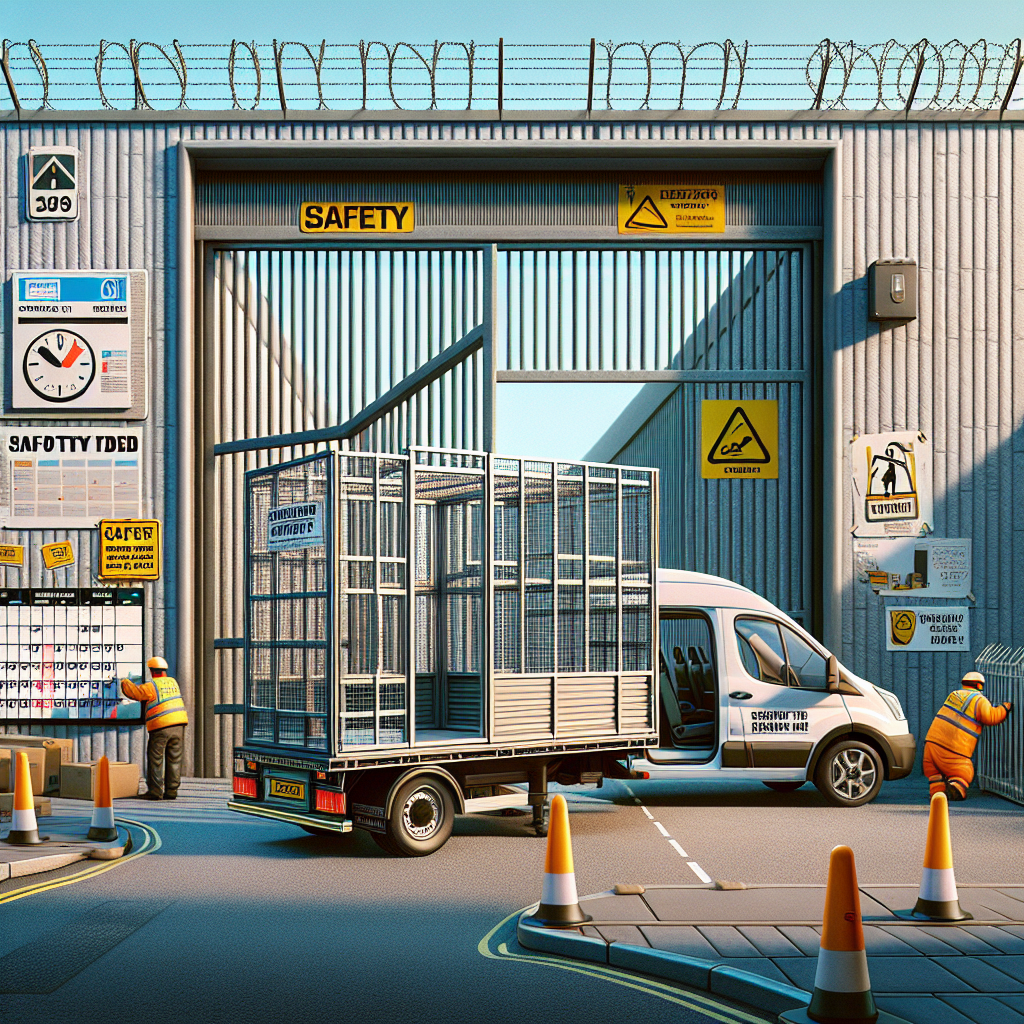
    Singapore will ban the use of caged lorries to transport workers from Jan 1, 2027, a policy shift that follows years of debate about the safety of ferrying people on lorry decks.

    At the heart of the change is a clear safety concern: caged rear decks can become dangerous in emergencies. In situations such as accidents or fires, the cage structure may trap workers and make escape more difficult. By moving to prohibit this mode of transport, the authorities are directly addressing a risk that has long worried workers, advocates, and members of the public.

    The announcement also signals that compliance will not be optional. Companies that fail to meet the new requirement will face penalties, with details to be shared ahead of the 2027 deadline. Between now and then, firms are expected to ensure workers have safe access to and from lorry decks.

    While the ban sets a definitive end date for caged lorry transport, it also underscores a broader point: how workers travel to and from worksites is a workplace safety issue, not a logistical afterthought. With 2027 on the horizon, the next chapter will be defined by how quickly and effectively companies adapt to safer arrangements—and how firmly the new rules are enforced once they take effect.

  • 《悲惨世界》40周年:传奇舞台的“Arena Spectacular”全球巡演将于新加坡限定登场

    《悲惨世界》40周年:传奇舞台的“Arena Spectacular”全球巡演将于新加坡限定登场

    自阿兰·鲍伯利(Alain Boublil)与克劳德-米歇尔·勋伯格(Claude-Michel Schönberg)创作以来,《悲惨世界》已成为音乐剧史上的不朽之作。由制作人卡梅隆·麦金托什(Cameron Mackintosh)全新打造的英文原版40周年纪念版音乐会——《LES MISÉRABLES THE ARENA SPECTACULAR》现已开启世界巡演,其气势与规模被悉心打磨成一场大型庆典式演出。

    这次的Arena Spectacular并非普通巡演:它以纪念40周年为契机,把原作的宏大情感与音乐冲击以演唱会式的呈现放大,让观众在更广阔的舞台视野中重温那些熟悉的旋律与人物命运。官方信息透露,这一纪念版将以英文原版面世,并在多个城市举行限时上演——其中,新加坡被列为2026年的重要站点,届时将上演特别限定场次。

    对喜爱《悲惨世界》的歌迷或想首次体验这部经典的观众而言,Arena Spectacular提供了一种既尊重原作又更具现场震撼力的观剧选择。无论是为纪念作品本身的四十年辉煌,还是想在大型舞台体验原版音乐剧的气场,这次全球巡演都值得期待——特别是那场将在新加坡上演的限定演出,注定会成为音乐剧迷交流与回味的特别时刻。

    如果你计划前往观赏,建议关注官方演出与票务公告,留意巡演站点与场次信息,抓住这难得的40周年纪念机会,亲临现场感受这部传奇作品在新时代舞台上的再度绽放。

  • Durian: The Spiky, Divisive Fruit That Splits Opinions

    Durian: The Spiky, Divisive Fruit That Splits Opinions

    I bought a durian in Chinatown and discovered firsthand why this tropical fruit from Southeast Asia sparks such strong reactions. Roughly the size of a soccer ball, the durian is heavy and unmistakable: a hard, thorny shell that protects a thick, tough outer flesh — and makes the fruit difficult to open for the uninitiated.

    Durian’s reputation is split between ardent admirers and emphatic detractors. Some call it a fragrant delicacy; others recoil at its aroma. As one colorful critic put it, its odor can be described as “pig‑shit, turpentine and onions,” a line that captures why people either love it or hate it.

    That polarizing scent contrasts with the curiosity it inspires. Even in places far from its native groves, like city Chinatown markets, people seek it out — whether to try it, to learn how to open it, or simply to see what the fuss is about.

    If you’ve never experienced durian, these simple facts are a good place to start: it’s a large, spiky fruit from Southeast Asia, heavy and hard to open, and widely considered either a treasured delicacy or an olfactory nuisance. Either way, it’s one of the world’s most divisive fruits — and that alone makes it worth a taste.

  • Walk Now, Not Later: A Small Study Finds Post-Meal Strolls Boost Short-Term Weight Loss

    Walk Now, Not Later: A Small Study Finds Post-Meal Strolls Boost Short-Term Weight Loss

    Many of us have heard the old advice to wait an hour after eating before exercising — a belief rooted in fears of fatigue, stomach ache, or other discomfort. But a preliminary experiment reported by Yasuyo Hijikata challenges that notion and suggests a simple change in timing could help with weight loss.

    What the study did
    The report describes two brief trials (conducted twice: once in April–May 2002 and again in August–September 2006) involving the author and a single volunteer. Both tried walking for 30 minutes immediately after lunch and dinner, and their results were compared with walking that began one hour after a meal. The author walked at a brisk pace; the volunteer walked more slowly.

    Key findings
    – Neither participant experienced the feared side effects (no notable fatigue, stomach ache, or other discomfort) when walking right after eating.
    – In one month of walking immediately after meals, the author lost nearly 3 kg and the volunteer lost nearly 1.5 kg.
    – The experiment was repeated on two occasions and produced the same pattern of results: walking as soon as possible after a meal produced more weight loss than waiting an hour.

    Why this might work
    The article offers a physiological explanation: suppressing the post-meal rise in blood glucose (postprandial hyperglycemia) can reduce insulin hypersecretion. Lower insulin spikes may in turn limit the body’s tendency to store energy as internal fat, which could help prevent obesity and aid weight loss.

    What to keep in mind
    These are preliminary, small-scale observations from just two people, so they can’t be taken as definitive proof for everyone. The author’s caveat — and practical advice from the experiment — is clear: for people who do not experience abdominal pain, marked fatigue, or other discomfort when walking immediately after eating, a brisk 30-minute walk right after lunch and dinner may lead to more short-term weight loss than delaying exercise for an hour.

    The take-home
    If you tolerate light activity after meals, this report suggests you might try a post-meal walk sooner rather than later. The findings are intriguing but limited in scope, and they point to the potential value of more extensive research to confirm whether immediate post-meal walking reliably supports weight loss and metabolic health.