Author: n8n-class

  • BenchLM’s August 2026 LLM Pricing: Qwen3.7 Flash Leads on Cost

    BenchLM’s August 2026 LLM Pricing: Qwen3.7 Flash Leads on Cost

    BenchLM’s August 2026 LLM pricing snapshot highlights how wide the cost spectrum has become — and points to some clear budget winners. According to the article, the cheapest LLM API at the moment is Qwen3.7 Flash, priced at $0.03 (input) / $0.13 (output) per million tokens. For teams that still require production-grade quality, BenchLM identifies Grok 4.5 as the cheapest option in the “production-grade (score 70+)” category.

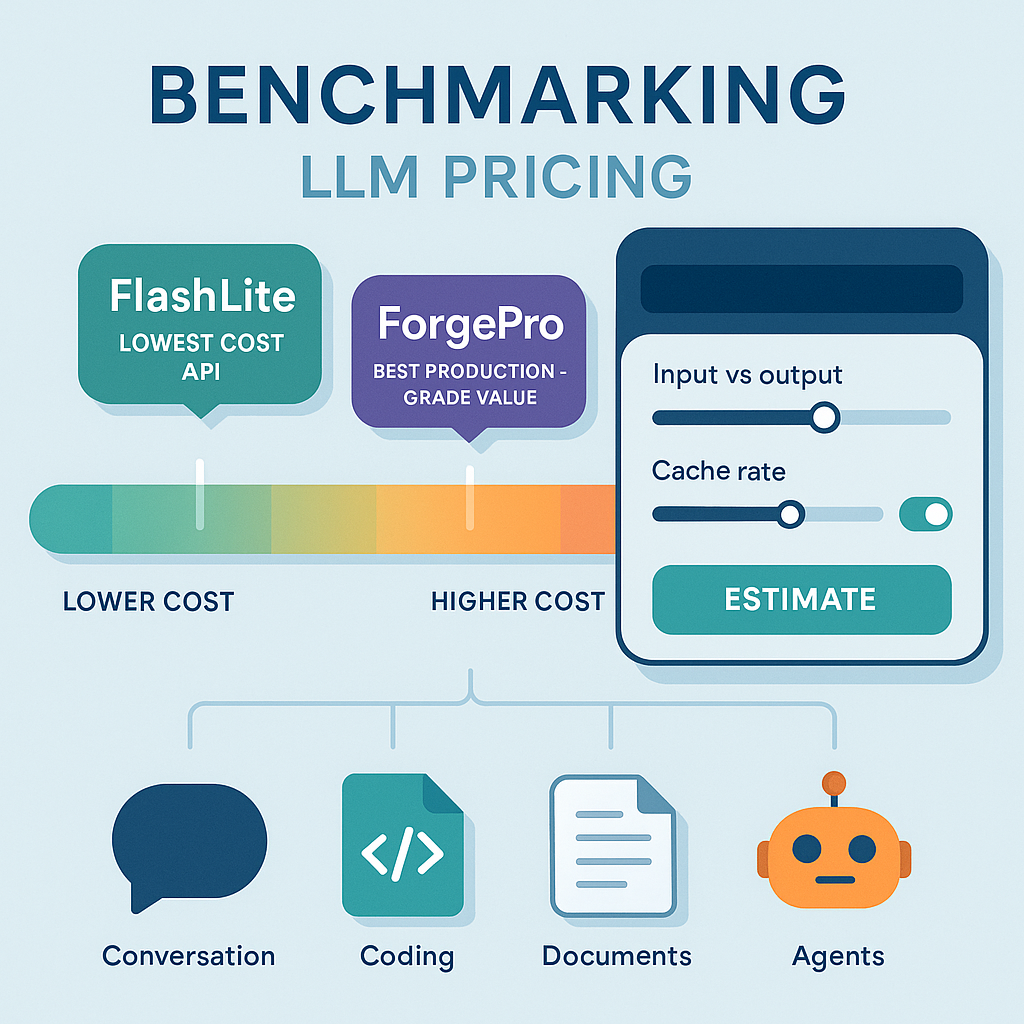
    Beyond listing per‑token prices, BenchLM provides a practical comparison and calculator: it lets readers compare LLM API pricing by input, output, and cache rate, and calculate cost per request and per month for different workloads (chat, code, documents, and agents). That combination — raw pricing plus workload‑focused calculation — is the core value BenchLM presents in this update.

    The takeaway from BenchLM’s August 2026 piece is simple: per‑token rates vary significantly across models, and tools that translate those rates into real workload costs (requests/month, cache effects, input vs output split) are essential for anyone trying to budget LLM usage. BenchLM’s listing of Qwen3.7 Flash as the lowest‑cost API and Grok 4.5 as the most affordable production‑grade choice gives readers concrete data points to start from when comparing options.

  • Pokémon GO’s 10th Anniversary Hands Out a Free Hundo Mewtwo — What to Do Next

    Pokémon GO’s 10th Anniversary Hands Out a Free Hundo Mewtwo — What to Do Next

    Niantic is celebrating Pokémon GO’s 10th anniversary by giving every Trainer a very generous gift: complete the free Timed Research by September 6 and you’ll receive a guaranteed 100% IV (hundo) Mewtwo — with a chance it could be Shiny — plus a Master Ball.

    The headline here is simple and exciting: this isn’t a random drop or a raid-only reward. The anniversary Timed Research ensures every player who finishes the tasks by the deadline gets a perfect-IV Mewtwo and the convenience of a Master Ball to catch it. That combination makes this one of the most player-friendly anniversary rewards Niantic has offered.

    If you want this Mewtwo in your collection, don’t sleep on the deadline. Complete the Timed Research before September 6 and claim the rewards in-game. The article also teases tips and bonuses tied to the celebration, so it’s worth checking the full write-up for ideas on how to maximize the event while you’re completing the research.

    Bottom line: this is a rare, free opportunity to add a guaranteed hundo Mewtwo (and a Master Ball) to your lineup. If you play Pokémon GO at all, log in, complete the Timed Research, and claim your anniversary gifts before September 6.

  • Hands‑Free in Singapore: A Practical Guide to LUGGME’s Luggage Transfer

    Hands‑Free in Singapore: A Practical Guide to LUGGME’s Luggage Transfer

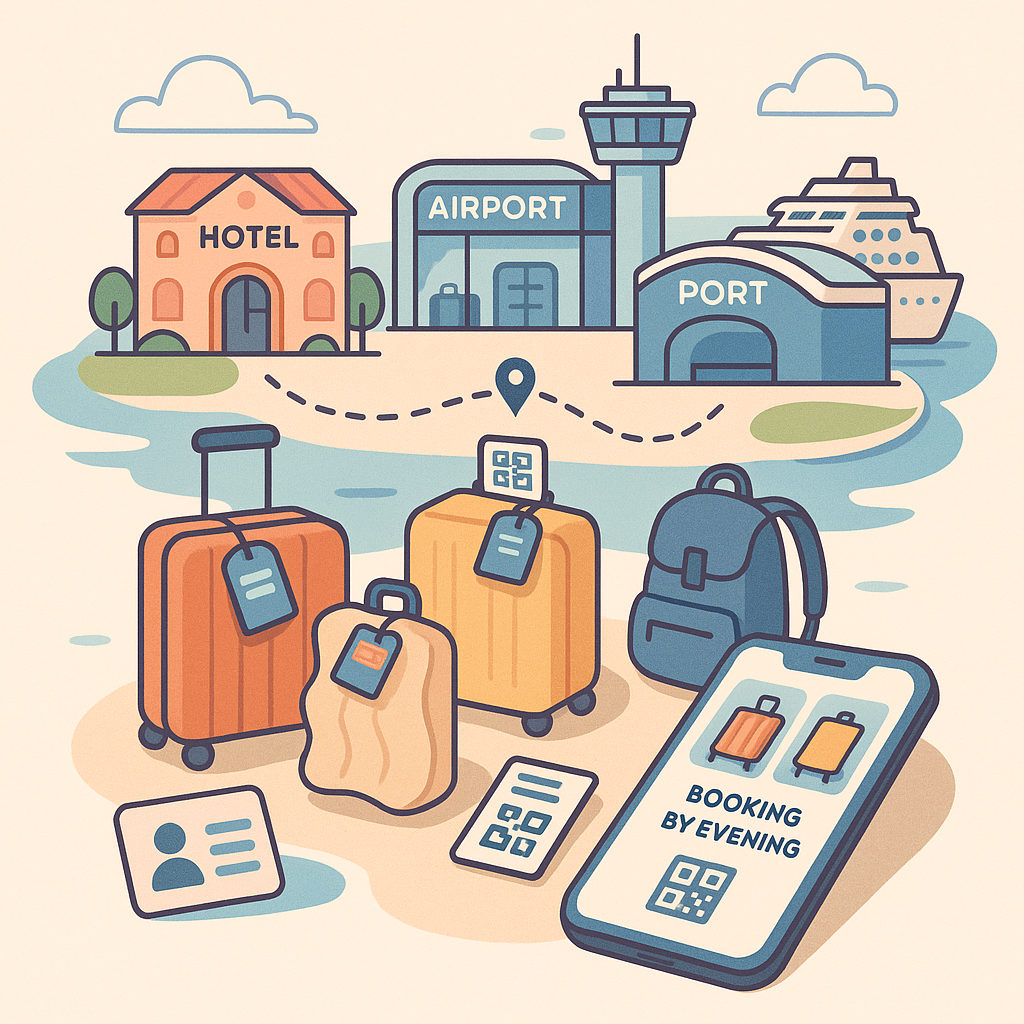
    Travel light and move freely — that’s the promise on LUGGME’s luggage transfer page. The company positions its on‑demand service as a simple way for travellers in Singapore to hand off bags and carry on with sightseeing, meetings or boarding a cruise without hauling luggage around. The service covers common city routes: hotel↔hotel, hotel↔airport, airport↔hotel, airport↔Marina Bay Cruise Centre Singapore (MBCCS), and MBCCS↔airport, with pickup and drop‑off at specified airport counters, hotel lobbies and the cruise terminal.

    How the service works (practical example)
    LUGGME asks customers to book online and provides concrete booking and timing windows so you can plan a same‑day transfer. Bookings must be completed by 18:00 the day before the service. For hotel→hotel or hotel→airport transfers the example workflow on the page is: drop your luggage at the hotel lobby by noon on the service day; LUGGME staff will typically pick up between 12:00–15:00 SGT; if going to the airport the page shows customers collecting luggage after 18:00 at the airport storage desk. For airport→hotel transfers the page shows a requirement to drop off at the airport by 16:00 with pickup before 16:00 and delivery to the hotel afterwards. Cruise transfers list a meet point at MBCCS (Left Baggage counter, level 1) with pickup times shown (example: pick up by 14:00).

    Pricing snapshot
    The site lists per‑item rates by baggage type. As shown for the Hotel→Hotel sample row, the rates are: S$23 for a Cabin bag (10kg), S$28 for Odd‑size items, and S$10 for Loose items. The page displays a small rates table but does not publish an exhaustive price list for every route — the site advises customers to confirm exact pricing when booking.

    Where your bag is dropped or picked up
    For Changi Airport the page identifies specific baggage storage desks as collection/drop points (examples include the Jewel/T1 baggage storage next to the Early Check‑in Lounge on L1, the Terminal 3 baggage storage near the Crowne Plaza entrance on L1, and Terminal 4 arrival hall baggage storage). For MBCCS the stated meet point is the Left Baggage counter on level 1. At hotels the process is handled through the hotel lobby and you are asked to show the booking message card screenshot to hotel staff when handing over.

    ID, security and prohibited items
    When collecting luggage at airport desks you must present your passport and the name on the passport must match the booking. The page points customers to Changi Airport’s prohibited items guidance — if prohibited items are found the luggage cannot be stored at the airport desk and additional procedures (including an ETA swab test at the baggage desk and potential manual search in the presence of airport police if the swab “fails”) may apply, according to the site text.

    Booking, payment and contact
    Bookings are made through LUGGME’s online booking flow, which requires you to enter handover/collection details, specify baggage type and number of bags, provide personal details and upload photos of the luggage. Online card payment is shown as the default payment method. The page lists contact details for last‑minute or operational queries: Tel +65 6259 5100, WhatsApp +65 8436 6808, and email Luggagesvc@Luggme.biz. The site also indicates a luggage tracking function is available.

    What to prepare — a quick checklist
    – Book by 18:00 the day before service.
    – Upload photos of each bag during booking.
    – Drop bags at the hotel lobby by the stated time (examples: by noon for hotel→airport/hotel→hotel transfers).
    – Show the booking message card screenshot to hotel staff on drop‑off.
    – Do not attach neck pillows or hanging items to your luggage.
    – Carry your passport for airport desk collections (name must match booking).
    – Check Changi Airport’s prohibited items guidance (linked from the LUGGME page) before packing.

    Limitations noted on the page
    The service page does not show a publication or last‑updated date, and it does not include full terms and conditions, liability or detailed claims/insurance information. It also does not provide independent user reviews or performance metrics. While the page lists route examples and sample prices, it does not present a complete, itemised price list for every possible route — the site encourages customers to confirm final pricing and terms at booking.

    Bottom line
    LUGGME’s transfer service is presented as a convenient, scheduled way to move luggage around Singapore — useful for same‑day sightseeing, hotel check‑in timing or cruise transfers. The page gives concrete booking windows, pickup/drop locations and a sample price row to help you plan, but travellers should confirm exact pricing and review terms at booking (and consult Changi Airport’s guidance on prohibited items) before handing over their bags.

  • When G‑Shock Meets Luxury: A Reddit Debate on the MR‑G Line

    When G‑Shock Meets Luxury: A Reddit Debate on the MR‑G Line

    On June 10, 2024 a Reddit user (u/qiis) kicked off a lively thread asking a simple but provocative question: how does Casio’s premium MR‑G line compare to established luxury houses like Rolex, Cartier and Omega? The post — which drew 29 upvotes and 81 comments — tapped into a broader conversation about value, prestige and what defines a “luxury” watch.

    At the heart of the thread was a familiar point: G‑Shock and Casio are widely known for exceptional value for money. That reputation has made the brand a favorite for practical, multifunctional timepieces. The MR‑G family, however, was singled out in the post as a series that prompts comparison with high‑end Swiss and European makers; the question posed was whether MR‑G’s placement within Casio’s lineup changes how enthusiasts view the brand’s relationship to luxury.

    What made the Reddit discussion interesting wasn’t a definitive answer but the range of perspectives it attracted — collectors, casual fans and skeptics all chimed in. Some participants weighed the idea of craftsmanship and brand cachet against durability and affordability, while others treated the MR‑G as an example of a mainstream maker pushing into more premium territory. The comments show there’s no single consensus, only differing priorities among buyers.

    If you’ve wondered where the MR‑G stands in the spectrum between practical value and luxury status, the Reddit thread is a useful snapshot of contemporary watch culture: passionate, divided and curious. For a closer look at the debate and the wide variety of viewpoints, the original r/gshock thread is worth a read.

  • When a Luxury Car Sparks an Online Firestorm: Reddit Debates Parental Fairness

    When a Luxury Car Sparks an Online Firestorm: Reddit Debates Parental Fairness

    A Reddit thread on r/AITAH titled “AITA for getting our son a luxury car when I never have money for my Ex Wife’s kids?” sparked a torrent of reaction when it was posted by u/Worried-Bug2025 on Aug 13, 2025. The post drew heavy attention — 1,692 votes and 1,227 comments — and quickly turned into a heated conversation about fairness, parenting and money.

    At the heart of the discussion was a simple but explosive scenario: one parent chose to buy a luxury car for their son while asserting they have no money to support their ex-wife’s children. That choice, captured in the thread title, pushed readers to pick sides and unpack what “fair” looks like after a separation.

    Voices in the comments were blunt and emotional. One commenter put it this way: “So for her to tell you it is not fair you to buy a car for your only son is gaslighting and manipulation, pure and simple. She has a new family…” That line — visible in the thread’s preview — hints at the deeper tensions: accusations of manipulation, the presence of new partners and blended-family dynamics.

    What made the thread so resonant was how it exposed common fractures in modern family life. On one side are questions about parental obligation and equitable treatment of children from different relationships; on the other are personal choices about how to reward or provide for one’s child. With hundreds of commenters weighing in, the Reddit discussion became a snapshot of how messy and opinionated those lines can be.

    Even without knowing every detail of the original poster’s situation, the conversation itself reveals two things: money decisions after divorce rarely stay private, and online communities are eager to judge where fairness begins and ends. Whether you agree with the choice to buy a luxury car or see it as unfair, the thread shows that such decisions often open up broader arguments about responsibility, resentment, and what parents owe to children inside — and outside — a current household.

  • Send Your Luggage Ahead: A Practical Guide to Eurosender’s Excess & Unaccompanied Baggage Service

    Send Your Luggage Ahead: A Practical Guide to Eurosender’s Excess & Unaccompanied Baggage Service

    Travelling with too much luggage is one of those predictable inconveniences: heavy bags to drag through airports, surprise airline excess-fee bills at check-in, or long waits at baggage claim. Eurosender’s “Excess and Unaccompanied Baggage” page presents a door‑to‑door courier alternative that aims to let you travel hands‑free by sending suitcases ahead of time.

    What it is, in one line
    Eurosender positions itself as a platform that aggregates a network of couriers to offer door‑to‑door delivery of excess or unaccompanied luggage domestically and internationally. The site advertises instant quotes, parcel tracking, and shipments that are “automatically insured” with options for additional services. A site header also highlights social proof (“Based on 42,754 reviews”). (Page accessed Aug 14, 2026; the page does not show a clear publication or last‑updated date.)

    How the service works
    Eurosender lays out a simple three‑step booking flow:
    1) Select pickup and delivery countries and get an instant price via the booking engine.
    2) Schedule a collection before you travel.
    3) Send your suitcase ahead so you can travel hands‑free and pick it up at your destination.
    The booking engine returns an immediate quote; Eurosender notes that the actual price depends on dimensions, weight, route and urgency.

    Service options and where they’ll take your bags
    Eurosender offers multiple service tiers — for example, a Standard option (available within Europe) and a Priority/Express option (recommended for destinations outside Europe or when faster delivery is needed). The site claims worldwide coverage through its courier network (Europe, North America, South America, Asia, Africa) and lists delivery destinations such as hotels (the booking form requests hotel details and the site advises confirming reception), homes, train stations, airports and cruise ports. It also points to specialist offerings aimed at students and expats.

    Packing and preparation: the practical checklist from Eurosender
    The page gives clear packing guidance you should follow to protect your shipment and preserve insurance cover:
    – Secure loose items inside the suitcase so they cannot move.
    – Place your suitcase inside a sturdy cardboard box; wrap in plastic film if needed.
    – Remove old airline tags and attach the shipping label provided.
    – For soft or sports bags, pack them inside boxes with cushioning.
    Eurosender warns that insufficient packaging can void insurance and liability, so following these steps matters.

    Pricing and cost claims
    Eurosender suggests that, in many cases, booking a courier to ship excess baggage is cheaper than paying airline excess‑baggage fees — particularly when shipping multiple pieces. The page displays a starting price cue (“Prices from €2.99”) but stresses that final costs are quote‑dependent and vary by size, weight, route and delivery speed. The booking engine is the way to get a concrete, route‑specific price.

    Extra features and add‑ons
    Beyond standard baggage delivery, the page lists related services and options: storage, same‑day couriers where available, relocation services, door‑to‑door baggage delivery and API/enterprise solutions. Tracking is highlighted as part of the offering, and shipments are described as automatically insured with options to select additional coverage through the platform.

    FAQs and customer‑facing points
    Eurosender answers common traveller questions directly on the page: yes, you can send excess baggage ahead; yes, you can send to a hotel (but confirm reception); and shipping is often cheaper than airline fees depending on route and quantity. The page also points readers to check specific carrier (airline, train, bus, cruise) baggage policies for limits and restrictions.

    What the page doesn’t show (important gaps to know)
    – No clear publication or last‑updated date is visible on the page (page accessed Aug 14, 2026).
    – No independent route‑by‑route price comparisons versus specific airlines are provided on the page — the “usually cheaper” claim is presented generally rather than with audited sample routes.
    – The landing page does not publish performance history (on‑time delivery rates, average transit times per tier) or a detailed fees table for common origin–destination pairs.
    – There are no detailed case studies, timings on claims handling, or example insurance payouts shown on this page.

    Quick decision checklist for travellers (based on Eurosender’s guidance)
    – Use the booking engine to request an instant quote for your route and compare it with airline excess fees.
    – Schedule collection before you travel and provide accurate destination details (hotel name, contact info).
    – Follow the platform’s packing instructions exactly — sturdy box, cushioning, remove old tags, attach shipping label.
    – Note insurance: the page states shipments are automatically insured and warns that poor packaging can affect liability — check the platform’s coverage options if you’re sending high‑value items.
    – Keep valuables with you in carry‑on and photograph the packed items before handing them to the courier (the page’s packing and insurance notes support exercising caution).

    Bottom line
    Eurosender’s Excess & Unaccompanied Baggage page is a practical company guide to sending suitcases ahead: it explains the booking flow, service tiers, packing rules and common FAQs, and it highlights instant quotes, tracking and insured shipments. The site’s cost‑saving claim and worldwide coverage are useful starting points, but the page itself lacks independent route‑by‑route comparisons and performance metrics — so use the booking engine for a concrete quote and, where possible, compare that quote against airline fees and traveller reviews before you commit.

  • Are Singapore’s Seniors Living Longer — and Better? Revisiting Mobility Limits from 1995–2011

    Are Singapore’s Seniors Living Longer — and Better? Revisiting Mobility Limits from 1995–2011

    Singapore’s life expectancy has been steadily rising, but a key question lingers: how much of those extra years are lived with mobility limitations? In “Revisiting Mobility Limitations of Seniors in Singapore, 1995 to 2011,” Soon‑Hock Kang uses national survey data to dig into that very issue, comparing patterns observed in 2011 with earlier findings from 2005 (and referencing trends since the 1990s).

    The study relies on the National Survey of Senior Citizens and applies the prevalence‑based Sullivan method to estimate how many remaining years of life are spent free of mobility limitations. Rather than simply counting years alive, this approach combines mortality with the prevalence of mobility problems to produce a clearer picture of healthy, functional life expectancy.

    Key takeaways from the research are encouraging but nuanced. The data point to changing prevalence rates of mobility limitation among older adults and suggest a shift toward a potential compression of morbidity in 2011 — meaning a greater share of additional life years may be lived without serious mobility problems. This contrasts with the expansion of morbidity signaled in the earlier 2005 survey, and hints that public health, clinical care or social supports between surveys may have altered the experience of ageing for some seniors.

    At the same time, the study highlights persistent inequalities: women remain disadvantaged as they age, experiencing more mobility limitation relative to men. The research also notes changing functional profiles among older men — for example, an increase in the proportion who remained ambulant and physically independent but required walking aids during the period examined — underscoring that independence and need for assistive devices can coexist.

    Why this matters: planners and policymakers need to know not just how long people live, but how well. Shifts toward compression of morbidity reduce long‑term care demands and improve quality of life, but gender gaps and changing dependency patterns mean targeted interventions — from preventive health measures to mobility aids and community supports — remain essential.

    Kang’s revisitation of national survey data provides a measured, evidence‑based perspective on ageing in Singapore: life expectancy is up, and there are signs that more of those years might be lived with better mobility — yet the gains are uneven, and continued attention to mobility, assistive devices, and gendered differences in ageing is warranted.

  • Who’s Red’s True Starter? Inside the Reddit Debate Over Bulbasaur, Charmander, and Pikachu

    Who’s Red’s True Starter? Inside the Reddit Debate Over Bulbasaur, Charmander, and Pikachu

    A lively Reddit thread recently asked a deceptively simple question: between Bulbasaur, Charmander, and Pikachu, which do you consider to be Red’s “correct” starter Pokémon? Posted by u/A-Mf-Throwaway, the discussion quickly exploded—at the time of this writing the post has hundreds of votes and well over two hundred comments, proof that the question still sparks strong opinions among fans.

    The core of the debate, as raised in the thread, comes down to conflicting sources. One commenter points out that, from two out of three main sources cited in the conversation, Bulbasaur is shown as Red’s starter. At the same time, Pikachu is said to appear as Red’s starter in two out of the same three sources, leaving room for disagreement and interpretation. That overlap—where more than one Pokémon can claim support from multiple sources—fuels the back-and-forth among enthusiasts.

    What makes the exchange interesting isn’t just the ambiguity of the sources but how fans interpret those clues. Some readers treat certain adaptations or promotional materials as definitive, while others insist that only primary game canon should count. The result is a thread full of close reads, nostalgic arguments, and a few entertaining detours—exactly the sort of conversation longtime Pokémon followers enjoy.

    Whether you side with Bulbasaur, Charmander, Pikachu, or prefer to accept the mystery, the Reddit thread is a reminder of how small details can ignite big debates in fandom. It’s less about settling the question forever and more about sharing perspectives and memories—so pick your starter and join the conversation.

  • Notice 626: Reinforcing AML/CFT Controls for Banks in Singapore

    Notice 626: Reinforcing AML/CFT Controls for Banks in Singapore

    The Monetary Authority of Singapore’s Notice 626 — titled “Prevention of Money Laundering and Countering the Financing of Terrorism – Banks” — sets a clear expectation for banks and financial institutions operating in Singapore: put in place robust controls to detect and deter the flow of illicit funds.

    At its core, the notice is about strengthening anti-money laundering (AML) and countering the financing of terrorism (CFT) measures. Financial institutions are required to adopt controls that identify suspicious activity and stop illicit funds from moving through Singapore’s financial channels. The guidance underscores the regulator’s focus on prevention, early detection and deterrence.

    For banks, the message is straightforward: compliance with Notice 626 is not optional. The notice formalises the requirements around AML/CFT and signals that institutions must maintain effective systems and processes to manage these risks.

    While the notice is directed at banks, its broader implication is clear — safeguarding the integrity of financial flows in Singapore depends on vigilant, well‑implemented controls across the industry. Notice 626 therefore represents a significant touchstone for financial-sector compliance and risk management in Singapore.

  • Singapore’s Flavor Roadmap: 25 Must-Eat Dishes and Where to Find Them

    Singapore’s Flavor Roadmap: 25 Must-Eat Dishes and Where to Find Them

    If you want a single, mouthwatering primer on what to eat in Singapore, Mark Wiens’ Singapore Food Guide on Migrationology is exactly that: a compact roadmap of 25 must-eat dishes — and the hawker stalls and restaurants where you can try them. Published on the Migrationology food-travel blog and updated in May 2024, the piece is an invitation to explore the city’s food culture one plate at a time.

    What the guide does best is pair dishes with places, making it more than just a list. It points you straight to the stalls and restaurants locals and visitors flock to, so you spend less time guessing and more time tasting. One notable callout in the article: Tian Tian Chicken Rice, described as possibly one of the most famous hawker stalls in all of Singapore — a name recognized by both locals and tourists.

    Whether you’re planning a first visit or a return trip, the guide reads like a friendly local showing you around their favorite food spots. Its tone is eager and practical — summed up perfectly in the article’s own exhortation: get ready to start eating! If you love food-centered travel stories and want a clear, reliable eating itinerary for Singapore, this Migrationology guide is a delicious place to start.